
Published on July 6, 2026 — by Ellen Bennett, Women’s Health Researcher
Medical & Affiliate Disclosure: This article is for educational purposes only and is not medical advice. Always consult your doctor before starting any supplement, especially if you take prescription medication. Some links below are affiliate links; if you buy through them we may earn a commission at no extra cost to you.
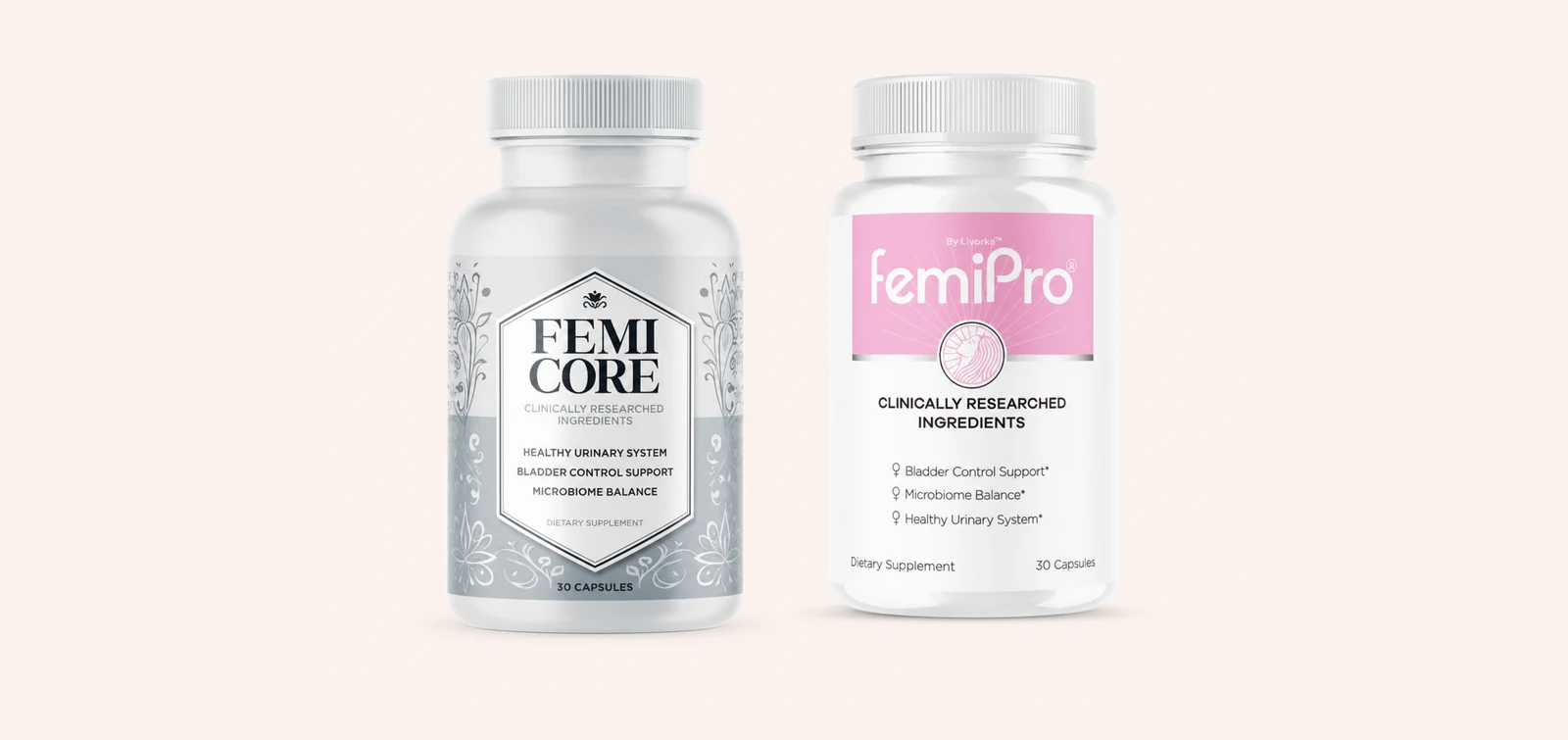
If you have been searching for a way to calm an overactive bladder or stop those little leaks, you have probably run into two names that look almost identical on paper: FemiCore and FemiPro. Same promise, same “urinary microbiome” language, similar herbal blends, nearly the same price. When I first lined the two up side by side, I honestly had to read the ingredient panels three times to tell them apart. So let me save you that afternoon.
I am Ellen Bennett, and I research women’s bladder health for a living. I have spent the better part of a year reading the studies behind these ingredients, tracking what real women say in reviews, and yes, ordering bottles myself so I am not just parroting a sales page. This is the honest, head-to-head comparison the search results are missing.
Quick Answer: FemiCore and FemiPro share a nearly identical botanical base (cranberry, bearberry, berberine, mimosa pudica) plus a Lactobacillus probiotic. So which one is better? The deciding factor is transparency: FemiCore lists its five probiotic strains and the exact herbal dose on the label, while FemiPro does not disclose its strains or CFU count. For a supplement whose whole pitch is the urinary microbiome, knowing exactly what you are feeding that microbiome matters. On disclosure, guarantee terms, and value per bottle, FemiCore edges ahead — though for many women the two will feel similar in practice, and neither is a cure.
FemiCore vs FemiPro: The Verdict
- Winner: FemiCore. Same botanical base, but FemiCore names its five probiotic strains and FemiPro does not.
- Why that matters: in a microbiome formula, the strains are the product. L. crispatus is the one with the best research, and FemiCore lists it.
- Best for: women 40+ with urgency, nighttime trips, or recurrent UTIs, especially since menopause.
- Safety net: 60-day money-back guarantee processed by ClickBank, official site only.
FemiCore — the formula that names its strains
What Is FemiCore, Exactly?
FemiCore is a once-daily capsule marketed to women for bladder control and urinary tract health. Its angle is the urinary microbiome — the idea that a healthy population of good bacteria in the urinary and vaginal tract helps crowd out the troublemakers that drive recurrent infections and irritation.
The formula pairs a roughly 350 mg herbal blend — mimosa pudica, cranberry standardized to 30% proanthocyanidins, bearberry (uva ursi), and berberine — with about 50 mg of five named Lactobacillus strains: L. crispatus, L. acidophilus, L. plantarum, L. gasseri, and L. casei. It is made in the USA in a GMP-certified facility, non-GMO, and comes with a 60-day money-back guarantee. If you want the deep dive, I broke the whole thing down in my full FemiCore review. The safety side has its own breakdown: FemiCore side effects and drug interactions.
What Is FemiPro, Exactly?
FemiPro is also a once-daily women’s bladder-support capsule built around the same urinary-microbiome story. Its published ingredient list reads almost like a mirror image of FemiCore’s: mimosa pudica, berberine, cranberry extract, bearberry, and a Lactobacillus probiotic blend. It is likewise marketed as made in the USA and non-GMO.
Here is the catch, and it is the single most important thing on this page. According to product reviews of FemiPro, the specific probiotic strains and the CFU count in its blend are not disclosed on the label. For a formula whose entire premise is rebalancing bacteria, that is a meaningful gap — you are asked to trust the outcome without seeing the roster. Another brand hides even more than this one does, as I show in FemiCore vs Bladder Relief 911.
FemiCore vs FemiPro: Key Differences at a Glance
Because the two are so close on the botanical side, the real differences show up in the details that are easy to skim past. Here is the honest scorecard.
| Feature | FemiCore | FemiPro |
|---|---|---|
| Core herbal blend | Mimosa pudica, cranberry (30% PACs), bearberry, berberine | Mimosa pudica, cranberry, bearberry, berberine |
| Probiotic strains named? | Yes: 5 Lactobacillus strains listed | No: “proprietary blend,” strains not disclosed |
| CFU count disclosed? | Blend weight (~50 mg) shown | Not disclosed |
| Cranberry standardized? | Yes: 30% proanthocyanidins | Standardization not clearly stated |
| Money-back guarantee | 60 days | Varies by seller/bundle |
| Best multi-bottle value | ~$49/bottle (6-bottle) | Comparable, varies |
| Amazon “look-alikes” | Yes: verify official source | Yes: verify official source |
| My rating | 4.3 / 5 | 3.8 / 5 |
Neither product earns a 5 from me, and that is deliberate. No bladder supplement “fixes” incontinence, and the strongest evidence behind these shared ingredients is for recurrent urinary tract infections, not leakage. I will come back to that honesty point, because it is exactly what the hyped-up reviews leave out.
Ingredient Comparison: Where They Overlap and Where They Split
When two formulas share four of five headline ingredients, the comparison is less about “which has better herbs” and more about dose, standardization, and disclosure. Let me split it into what they share and what sets them apart.
Shared ingredients (nearly identical)
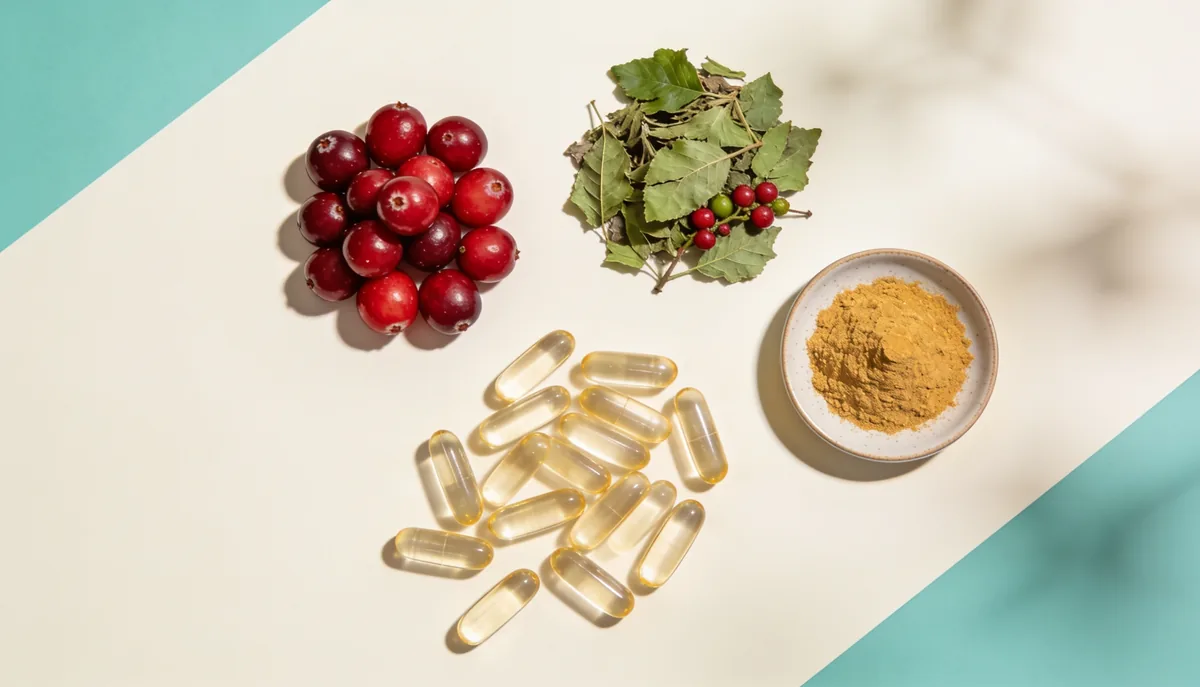
- Cranberry. Both use it for the same reason: proanthocyanidins (PACs) may help stop E. coli from sticking to the bladder wall. The difference is that FemiCore states a 30% PAC standardization, while FemiPro’s PAC level is not clearly published. With cranberry, the PAC dose is the whole game, so that number matters.
- Bearberry (uva ursi). A traditional urinary herb both include for its antibacterial arbutin content. It is meant for short-term use, not indefinite daily dosing — a nuance neither sales page emphasizes.
- Berberine. A plant alkaloid with broad antibacterial and anti-inflammatory activity. Also the ingredient most likely to interact with medication, which is why both should be run past your doctor if you take drugs for blood sugar or your heart.
- Mimosa pudica. Included for gut and mucosal support. The human evidence here is thin in both products — it is more tradition than trial.
What FemiCore does that FemiPro doesn’t
FemiCore names all five of its Lactobacillus strains and shows the blend weight. That lets you check something real: L. crispatus is the strain with the strongest published research for the female urinary and vaginal microbiome. Seeing it on the label — rather than hoping it is somewhere inside a “proprietary blend” — is the difference between an evidence-informed choice and a leap of faith.
What FemiPro does that FemiCore doesn’t
In fairness to FemiPro: its marketing leans a little harder on the combined “bladder plus vaginal balance” angle, and some reviewers like that framing. But a marketing angle is not a formula advantage. When I strip away the copy, I cannot point to a single disclosed ingredient FemiPro has that FemiCore lacks. The honest read is that FemiPro is a very close cousin with less on the label. A different rival earns an even larger concession from me in FemiCore vs Confitrol24.
Clinical Evidence: What the Research Actually Says
Neither brand has a published clinical trial on the finished product — that is true of almost every supplement in this category, and any review claiming otherwise is selling you something. What we can look at is the evidence behind the shared ingredients, and here honesty cuts both ways.
How I compare these two. I did not spend four months on either product, and I am not a physician: you will find pages claiming both. What I did do is pull the published label for each formula, check every shared ingredient against the primary literature (Cochrane, PubMed, NCCIH), compare the disclosed strains and doses side by side, and price both on the official sites on the same day. Where a company does not publish a number, I say so rather than guess. I applied the same four tests to a very different formula in my Confitrol24 review, where the evidence lands in an unexpected place.
A 2023 Cochrane review pooling 45 randomized trials found cranberry products reduced the risk of recurrent urinary tract infections by roughly 26% in women prone to them. Separately, a 2011 randomized trial by Stapleton and colleagues found an intravaginal L. crispatus probiotic cut recurrent UTI from 27% on placebo to 15% on the probiotic. That is the real foundation both products stand on — and notice it is about UTIs, which are infections, not about stress or urge leakage, which are control problems.
So if you are buying either supplement mainly to stop leaks when you cough or sneeze, temper your expectations. The evidence for bladder leakage points much more strongly toward pelvic floor training and lifestyle changes than toward any capsule. A supplement can play a supporting role in urinary health; it does not replace the pelvic floor work. I say the same thing in my complete guide to bladder leaks.
FemiCore — Our #1 Rated Bladder Health Supplement
Fully disclosed 5-strain probiotic · Cranberry standardized to 30% PACs · 60-day money-back guarantee · Made in a GMP-certified USA facility
Price and Value: Which Is the Smarter Buy?
Pricing on both products follows the familiar bundle logic — one bottle costs the most per unit, and the three- or six-bottle packs bring the per-bottle price down with free shipping. On the official FemiCore site, the six-bottle bundle lands around $49 per bottle, with the three-bottle bundle around $69. FemiPro’s official pricing sits in a comparable range, though it shifts by seller and promotion.
| Package | FemiCore (approx.) | Best for |
|---|---|---|
| 1 bottle | ~$79 + shipping | Trying it for the first time |
| 3 bottles | ~$69/bottle, free shipping | A realistic 8–12 week trial |
| 6 bottles | ~$49/bottle, free shipping | Best value if it works for you |
Because the sticker prices are so close, value comes down to two things: the guarantee and what you actually get for the money. FemiCore’s 60-day money-back guarantee gives you a genuine window to trial it — and since these ingredients typically need four to eight weeks of daily use before anything is noticeable, a real refund window is not a small detail. My advice for either brand is the same: buy enough for a proper trial (three bottles), not a single bottle you will judge too early. I walk through the safe way to buy in my where to buy FemiCore guide.
What Each One Actually Costs Per Day
Bottle prices are how supplements are sold, and they are close to useless for comparing two products. What you want is cost per day, because that is what leaves your account while you wait to find out whether the thing works.
FemiCore, sometimes written femi core, is one capsule a day and 30 capsules a bottle, so a bottle is a month and the math is clean:
| Package | Per bottle | Per day | Cost of a 60-day trial |
|---|---|---|---|
| 2 bottles | $79 | about $2.63 | about $158 |
| 3 bottles | $69 | about $2.30 | about $138 of the $207 spent |
| 6 bottles | $49 | about $1.63 | about $98 of the $294 spent |
Run the same arithmetic on any competitor before you compare, and check two things that quietly change the answer: capsules per bottle and capsules per dose. A product at the same bottle price but two capsules a day costs you twice as much per day, and a 60-capsule bottle taken twice daily is still only a month. This is where bladder supplements most often look cheaper than they are, so read the serving size rather than the headline price. For a worked example on another brand, see how the numbers land in my breakdown of pHemmePure’s price and label.
Then there is the part the price comparison cannot settle, and it applies to both products equally. Neither publishes the individual amounts inside its proprietary blend, so neither lets you verify whether the cranberry reaches the dose the research points to. A 2024 meta-analysis in Frontiers in Nutrition, pooling 10 randomized trials, found cranberry cut UTI risk by 18% only when daily proanthocyanidin intake hit at least 36 mg, with no significant effect below that (PubMed 39668896).
So the honest framing of this whole comparison is narrower than most pages admit. You are not choosing between a verified dose and an unverified one. You are choosing between two undisclosed formulas, and the tiebreakers end up being the things you can check: which one names its probiotic strains, how long the guarantee runs, and how much it costs per day while you find out.
On that last point, the bundles create a real trap. The cheapest per day is the 6-bottle package, but the guarantee covers 60 days, so you would be committing to six months of product with two months of protection. If you are testing rather than restocking, the smaller package usually costs less in the outcome that matters, which is the one where it does not work for you.
Side Effects: Is Either One Safe?
Both formulas share the same safety profile because they share the same active ingredients. Most women tolerate them well, but there are real cautions worth stating plainly rather than burying.
- Digestive adjustment. A new probiotic plus botanicals can cause mild bloating or loose stools in the first week or two as your system adjusts. This usually settles.
- Berberine interactions. Berberine can affect blood sugar and interact with medications for diabetes and cardiovascular conditions. If you take either, talk to your doctor or pharmacist before starting either supplement.
- Cranberry and blood thinners. Cranberry may interact with warfarin. Flag it with your doctor if you are on anticoagulants.
- Bearberry is short-term. Uva ursi is traditionally used for brief periods, not as an indefinite daily herb. Neither label makes this obvious.
None of this makes either product dangerous for most healthy women. It does mean the “all-natural, take it forever” tone of the marketing deserves a grain of salt. For the fuller safety rundown, see my notes in the FemiCore reviews and complaints breakdown.
The Amazon Confusion: Watch for Look-Alikes
Here is a wrinkle that trips up shoppers comparing these two, and it is unique to this niche. Search either name on Amazon and you will find third-party “look-alike” listings — products using similar names and packaging that are not the official formula. I have seen a “Nature’s NutriWave FemiCore” and generic “FemiPro” listings that are separate products entirely.
This matters for a comparison, because a bad experience with a marketplace clone gets blamed on the real brand. If you decide to try either one, buy from the official site so you know exactly what is in the bottle and so the money-back guarantee actually applies. Marketplace resellers rarely honor the manufacturer’s refund policy.
Who Should Choose FemiCore?
- You want to see exactly which probiotic strains you are taking — especially L. crispatus, the best-researched one for the female urinary tract.
- You value a standardized cranberry dose (30% PACs) over a vague “cranberry extract.”
- You are dealing mainly with recurrent UTIs or general urinary balance and want the more transparent option.
- You want a clear 60-day guarantee so you can trial it without pressure.
Who Should Choose FemiPro?
- You have already tried FemiPro, tolerated it well, and it is working for you — no reason to switch a good thing.
- You find its combined bladder-and-vaginal-balance framing more relevant to your situation.
- You found a bundle price or promotion that genuinely beats FemiCore’s, and disclosure is less of a priority for you.
Notice I am not telling you FemiPro is bad. It is a close relative of a formula I rate well. I simply cannot rank a “proprietary blend” above a disclosed one when disclosure is the entire point of a microbiome product.
Final Verdict
FemiCore — 4.3 / 5. In a near-tie, the winner is the product that shows its work. FemiCore names its five probiotic strains, standardizes its cranberry, and backs it with a straightforward 60-day guarantee. FemiPro (3.8 / 5) is a legitimate, very similar option held back mainly by what it leaves off the label. If you are choosing today with no prior loyalty to either, FemiCore is the more transparent, slightly better value pick — while keeping honest expectations that either one is a support, not a cure. The same scoring applied to a different rival produced a closer call, which you can read in FemiCore vs pHemmePure.
Ready to try the more transparent formula?
FemiCore lists every strain, standardizes its cranberry, and gives you 60 days to decide.
Key Takeaways
- Nearly identical botanicals. Both use cranberry, bearberry, berberine, and mimosa pudica — the comparison is about the details, not the herbs.
- Disclosure is the tiebreaker. FemiCore names its 5 probiotic strains and standardizes cranberry to 30% PACs; FemiPro does not disclose strains or CFU.
- The evidence is about UTIs, not leaks. Cranberry cut recurrent UTIs ~26% (Cochrane, 2023); leakage responds better to pelvic floor work.
- Buy official, trial properly. Avoid Amazon look-alikes, use the 60-day window, and give it 8 weeks before judging.
- Neither is a cure. Treat any bladder supplement as support alongside pelvic floor training and lifestyle changes.
Frequently Asked Questions
Are FemiCore and FemiPro the same product?
No. They are separate brands with very similar formulas. Both use cranberry, bearberry, berberine, mimosa pudica, and a Lactobacillus probiotic. The main difference is that FemiCore discloses its five probiotic strains and standardizes its cranberry, while FemiPro keeps its probiotic blend proprietary.
Which works faster, FemiCore or FemiPro?
Neither is fast. With ingredients like these, most women who notice anything do so after four to eight weeks of consistent daily use. Results vary, and some people notice no change at all. Any claim of overnight results is a red flag.
Can either supplement replace my bladder medication?
No. Supplements are not a substitute for prescribed treatment. If you take medication for overactive bladder or any condition, do not stop it. Talk to your doctor before adding either product, especially because berberine can interact with some medications.
Is FemiPro a scam?
There is no evidence that the official FemiPro is a scam — it is a real supplement with a published ingredient list. The bigger risk in this niche is buying look-alike listings on marketplaces rather than the official product, and being misled by hyped fake-review sites. Buy from the official source and keep expectations realistic. Knowing what an unofficial page looks like is half the protection, and I cover the tells in how to spot a fake FemiCore website.
Where should I buy FemiCore or FemiPro?
From each brand’s official website, not a marketplace reseller. That is the only way to be sure of the formula and to have the money-back guarantee actually apply. See my where to buy FemiCore guide for how to spot the real thing.
Is FemiCore worth the price over FemiPro?
At similar prices, FemiCore gives you more on the label — named strains and standardized cranberry — plus a clear 60-day guarantee. If you have no existing loyalty to FemiPro, that transparency makes FemiCore the better value. If FemiPro already works for you, staying put is perfectly reasonable.
The Bottom Line
FemiCore and FemiPro are close enough that you could be forgiven for thinking they came off the same production line. When two products are this similar, I choose the one that tells me the most about what I am putting in my body — and that is FemiCore, thanks to its named strains, standardized cranberry, and honest 60-day guarantee. But keep the bigger truth in view: the research behind these ingredients is strongest for recurrent UTIs, not leakage, and no capsule replaces pelvic floor training. Choose the transparent option, trial it properly, and treat it as one piece of a bigger plan.
— Ellen Bennett

Last Reviewed: September 2026 by Ellen Bennett, Women’s Health Researcher. Sources: Cochrane Database of Systematic Reviews (2023), Stapleton et al. (2011), NIH/NIDDK, ACOG, Urology Care Foundation.