
Published on August 26, 2026 — by Ellen Bennett, Women’s Health Researcher
Medical & Affiliate Disclosure: This article is for educational purposes only and is not medical advice. Always consult your doctor. Some links are affiliate links; if you buy through them we may earn a commission at no extra cost to you.
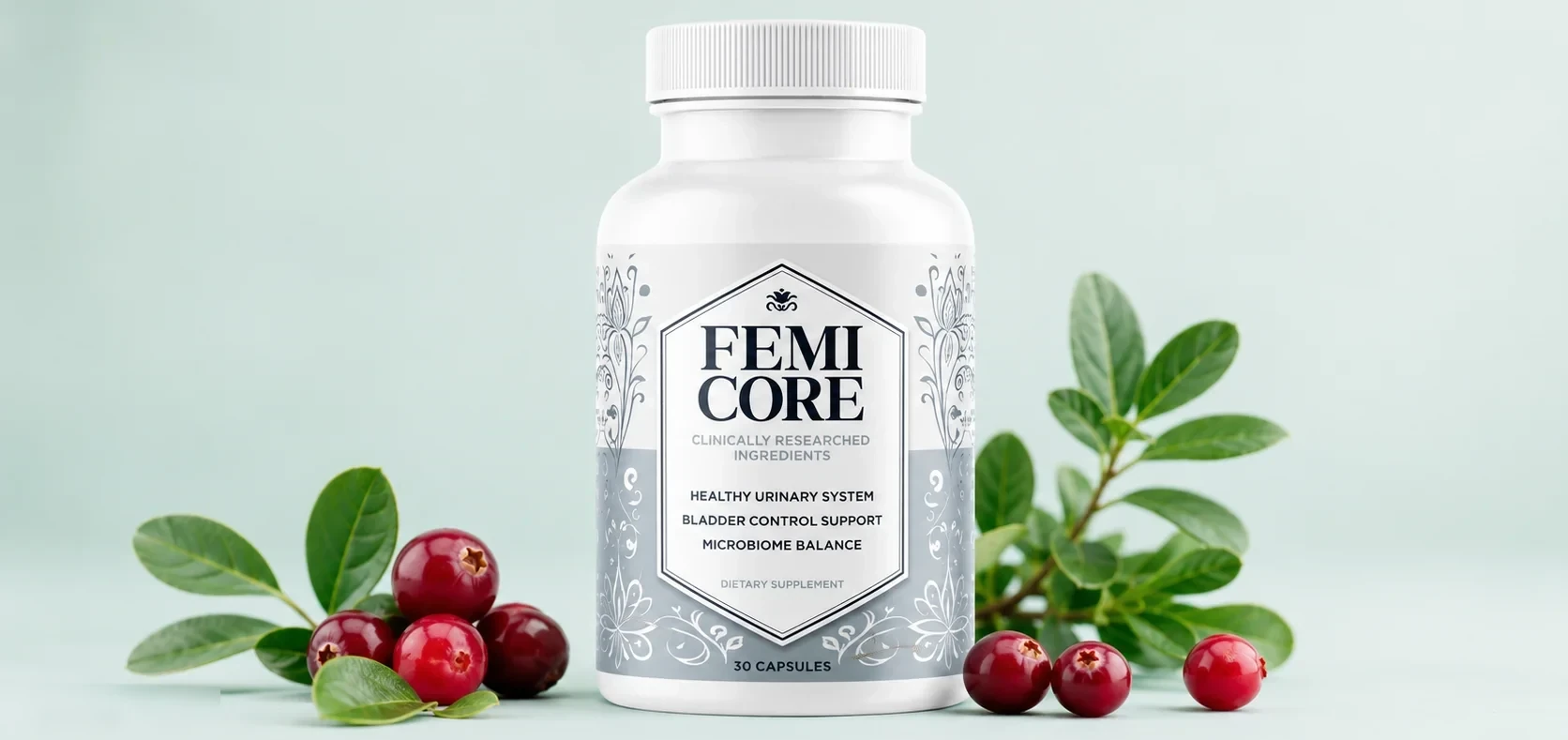
Fake FemiCore websites are easier to run into than the real one. Search for FemiCore and you will land on a page announcing itself as the official website. Search again and you will land on a different page, on a different domain, announcing exactly the same thing. Then a third. I counted several separate domains presenting themselves as the official FemiCore site, and that is before the marketplace listings and the review pages. If you are about to spend money, the question of which site you are actually on matters more than anything in the ingredient list.
Quick Answer: Fake FemiCore websites are common: multiple separate domains present themselves as the “official” FemiCore website, and marketplace listings use near-identical names for different products. How do you tell which one is real? Do not judge by the word “official” or the ™ symbol, since anyone can type those. Judge by who processes the payment: FemiCore’s 60-day money-back guarantee is administered by ClickBank, so if ClickBank is not billing you, that guarantee is not yours to claim.
The Safe Way to Buy FemiCore
- Use a checked link. The link below goes through ClickBank’s own tracking system straight to the manufacturer’s checkout, not to a look-alike domain.
- Confirm ClickBank bills you. Your statement should read CLKBANK*COM; that is what makes the 60-day guarantee claimable.
- Skip marketplace listings. The Amazon “FemiCore” is a different product with a different formula.
- Best first order: the 3-bottle package, free shipping, 90 days of product. We re-check the official checkout and price in Is FemiCore Legit?
Go straight to the official, ClickBank-processed FemiCore checkout
How Many Fake FemiCore Websites Are There?
More than one, which is already one too many.
Running the search from a US connection, I found several distinct domains — different registrations, different checkouts — each describing itself as the official site or the official store. Some use the ™ symbol. Some use ®. Several are close variants of the product name, including one that simply drops a letter, which is a classic pattern because it catches typed URLs and hurried readers.
I want to be careful about what I am and am not claiming. I have no evidence about who operates any particular one of these domains, whether the bottles they ship are genuine, or whether any of them is authorized by the manufacturer. Some may be legitimate regional stores or affiliate storefronts. What I can tell you is verifiable and worth acting on: the word “official” on a page is written by whoever built the page. It is a design choice, not a credential. It carries exactly as much authority as a stranger telling you they are trustworthy.
Why Direct-Only Selling Creates This Problem
FemiCore is sold direct to consumers rather than through pharmacies or retail chains. So is its competitor pHemmePure, and so are most supplements in this category. That model has genuine advantages, including tighter control over the supply chain and fewer counterfeit bottles in circulation than an open marketplace would allow.
It also removes every landmark you normally use to know where you are. There is no pharmacy counter. There is no retailer whose reputation is on the line. There is no verified-purchase review pool. You arrive from a search result or a review page, and the only thing telling you this is the real store is the store itself.
Add an aggressive affiliate program on top, where many people earn a commission for sending you to a checkout, and you get a large number of pages competing to be the one you click. Most are ordinary affiliates doing ordinary marketing. Sorting them by eye is not realistic, which is why the test below is about payment rather than appearance.
The Tell That Actually Matters: Who Bills You
This is the part I would keep if you forget everything else on this page.
FemiCore’s 60-day money-back guarantee is processed by ClickBank, the payment platform the vendor uses. That detail is not marketing trivia. It is the thing that makes the guarantee enforceable, because ClickBank administers refunds under its own policy rather than leaving it to the seller’s goodwill.
Which produces a clean, checkable rule: if ClickBank is not the party billing your card, the 60-day guarantee is not something you can claim. You may still have a functioning product and a reasonable seller. You simply do not have the protection the guarantee describes, and you will find that out at the worst possible moment.
Two practical consequences. First, at checkout, look at what the payment page says and what confirmation email arrives. Second, after the purchase, check the descriptor on your card statement. Seeing “CLKBANK” or a similar processor name rather than the brand name is normal and expected here — it is the reason so many women think they have been charged by an unknown company. Our FemiCore complaints breakdown covers that specific confusion, because it generates more alarmed searches than anything else about the product.
The Amazon Problem: Look-Alike Listings
Marketplace listings are the second source of confusion, and they work differently from the domain problem.
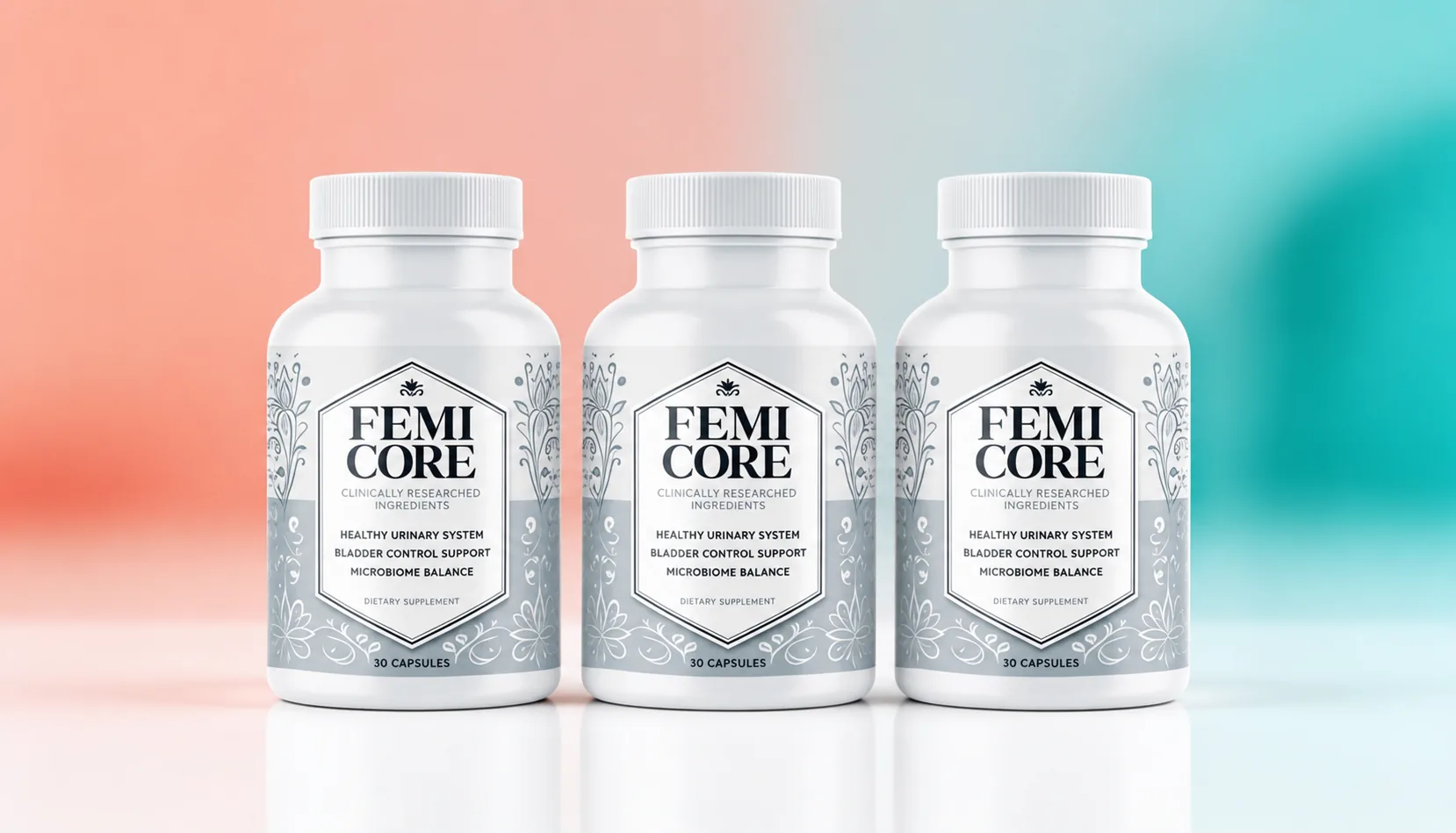
Listings appear on Amazon under names close enough to FemiCore that a reasonable shopper would assume they are the same thing, sometimes with a different brand name attached in front. They are products in their own right, sold by unrelated sellers, with their own formulas.
The consequence is quietly serious for anyone trying to research honestly. A woman buys the marketplace product, takes it for a month, feels nothing and writes a review of “FemiCore” describing a formula she never took. That review then gets quoted by affiliate pages as evidence about the actual product. This is one reason the review landscape for this category is close to useless, and I found the same distortion running through the coverage in where to buy FemiCore.
The rule here is simpler than the domain one: the manufacturer sells direct. A marketplace listing is not the manufacturer’s channel, and neither the formula nor the guarantee travels with it.
Who Is Actually Writing About FemiCore?
I looked at the pages ranking for this product, because it tells you how much weight to give the consensus you are reading. The pattern is worth describing plainly.
The front page is dominated by press releases distributed through newswire services, which are paid placements rather than journalism, even when they appear on the site of a recognizable financial or news brand. Alongside those sit review pages on domains that have nothing to do with women’s health: I found FemiCore reviews hosted on a dental practice’s website, on a charity’s fundraising subdomain, on a university page in another country, and on a file-upload directory belonging to a US university that had evidently been abused by someone else.
There is no independent consumer publication in that mix. No urology body, no health system, no medical school. The uniform enthusiasm you find across a dozen pages is not a dozen assessments agreeing. It is one commission structure reflected in a dozen mirrors, and the ratings follow: figures like 4.96 out of 5 across thousands of reviews, when products with real buyers land between 4.1 and 4.5.
How to Spot Fake FemiCore Websites Before You Buy
A short checklist you can run in under two minutes.
- Ignore the words “official,” “™” and “®” on the page. Anyone can type them. They are not verification.
- Read the domain slowly, letter by letter. Variants that drop or add a single character are the most common trap, because the eye autocorrects.
- Find the refund policy before you reach checkout, and see whether it names 60 days and names who administers it. A page that will not commit in writing is telling you something.
- Look for a physical address, a company name and a working contact route. Absence is not proof of anything, but presence is reassuring and cheap to check.
- At checkout, note who is billing you — and afterwards confirm it against your card statement descriptor.
- Be wary of urgency furniture: countdown timers, “only 3 bottles left,” stock warnings that reset when you reload. These are conversion mechanics, not information.
- Keep every email and the packaging until well past the refund window.
| Signal | Means nothing | Means something |
|---|---|---|
| The word “Official” on the page | ✓ Anyone can write it | |
| ™ or ® symbols | ✓ Unverified as typed | |
| A 4.9+ star rating | ✓ Not a credible average | |
| Countdown timers, low-stock warnings | ✓ Conversion mechanics | |
| Named refund administrator | ✓ Makes the guarantee claimable | |
| Card descriptor matching a traceable processor | ✓ Confirms who you paid | |
| Written refund terms before checkout | ✓ Enforceable commitment |
FemiCore — Our #1 Rated Bladder Health Supplement
Microbiome-targeted formula · Named strains and stated doses · 60-day money-back guarantee processed by ClickBank · GMP-certified facility
What to Do If You Already Bought From the Wrong Site
First, do not panic, and do not assume the bottle is dangerous. An unauthorized seller is most often an unauthorized seller, not a poisoner.
Check your card statement and identify who actually charged you. If it is a recognizable payment processor, you likely have a refund route through that processor’s policy, and it is worth contacting them directly rather than only emailing the store.
If you cannot identify the biller, or the store does not respond within a reasonable window, contact your bank or card issuer about a chargeback. Card networks have dispute procedures precisely for this, and time limits apply, so do not sit on it for months.
Do not keep taking a supplement you cannot source. If you do not know who made what is in the bottle, the sensible move is to stop, particularly if you take prescription medication. And if you have symptoms that need attention — burning, fever, back pain, blood in your urine — that is a doctor, not a refund question. The NIDDK guidance on bladder infections is clear that delay carries real risk.
Why the Regulator Started Caring About This in 2024
This is not only a consumer annoyance, it is now explicitly illegal in the United States. The Federal Trade Commission announced its final rule on consumer reviews and testimonials on 14 August 2024. It took effect on 21 October 2024 and carries civil penalties of up to $51,744 per violation.
One of the practices it bans deserves your full attention, because it describes this category with uncomfortable precision: creating a company-controlled review website that falsely presents itself as offering independent reviews. The rule also bans buying positive reviews, insiders writing reviews without disclosing the relationship, and testimonials attributed to people who do not exist.
Now read that against a market where two rival products both advertise ratings above 4.9 and the visible coverage is press releases and affiliate pages. I am not claiming any particular seller is breaking that rule, and I have no evidence that one is. What has changed is the burden of proof: since October 2024 a glowing rating with no verifiable source behind it is a red flag by regulatory standard, not merely by mine.
The Typo Domain Trick, and Why It Works on Careful People
Among the fake FemiCore websites the single most effective pattern is also the dullest: a domain that differs from the real one by one character. A dropped letter, an added letter, a hyphen, a country suffix bolted onto the end.
It works because of how reading actually functions. Your brain does not process a URL letter by letter — it recognizes the shape of the word and moves on. That is the same mechanism that lets you read a sentence with a typo in it without noticing. Being careful does not protect you, because the shortcut happens before care gets involved.
Two habits defeat it. Never type the address from memory when money is involved, since typing from memory is exactly where a one-letter variant catches you. And when you land on a checkout, read the domain out loud, character by character, once. It feels ridiculous and it takes four seconds.
The same applies to arriving from search. A paid or well-optimized result can sit above the manufacturer’s own page, so position on the results page is not evidence of anything either.
Why This Matters More in Supplements Than Elsewhere
Buying the wrong pair of headphones costs you money. Buying an unsourced capsule is a different category of problem, because dietary supplements are not reviewed or approved by the FDA the way prescription drugs are before they reach the market. Manufacturing standards like GMP certification apply to the facility, not to a promise that any given bottle contains what the label says.
That system depends heavily on knowing who made the product and who stands behind it. Strip out that knowledge and you have removed the only real accountability in the chain. It is also why the FDA’s guidance on health fraud puts so much weight on where you buy rather than on what the marketing claims.
None of this is an argument against supplements. It is an argument for knowing your seller, which costs you two minutes and protects the sixty-nine dollars and the sixty-day window both.
Key Takeaways
- Fake FemiCore websites are plural, not singular. Several domains claim official status. The word “official” is typed by whoever built the page and verifies nothing.
- Judge by who bills you, not by how the page looks. The 60-day guarantee is administered by ClickBank; if ClickBank is not charging you, that guarantee is not yours.
- Marketplace look-alikes are different products. Neither the formula nor the guarantee travels with them.
- Check your card statement descriptor after buying, and keep the packaging until the refund window closes.
- The review landscape is affiliate pages and press releases, including reviews hosted on a dental practice and a charity subdomain. Star ratings above 4.9 are not credible averages.
- If you already bought from an unknown seller, identify the biller, use the processor or your card issuer’s dispute route, and stop taking an unsourced capsule.
Frequently Asked Questions
How do I spot fake FemiCore websites?
Do not rely on the word “official” or on trademark symbols, which anyone can add. Check the refund terms before checkout, see who is named as processing payment, and confirm the descriptor on your card statement afterwards. The 60-day guarantee is administered by ClickBank.
Is the FemiCore sold on Amazon the same product?
No. Listings with near-identical names are separate products from unrelated sellers, with their own formulas. The manufacturer sells direct, and neither the formula nor the guarantee applies to a marketplace purchase.
Why does my card statement say CLKBANK instead of FemiCore?
That is expected. ClickBank is the payment platform processing the transaction, and its name appears on the statement rather than the product’s. Seeing it is a reassuring sign, not an alarming one.
Are the fake sites dangerous?
I have no evidence about what any particular unauthorized seller ships, and I would not claim otherwise. The concrete, documented risk is commercial: you lose the refund protection, and you cannot verify the source of what you are swallowing. That alone is reason enough to stop and check.
What if I already bought from one of them?
Identify who charged you from your statement, contact that processor about a refund, and if that fails, open a dispute with your card issuer within their time limit. Stop taking an unsourced supplement in the meantime, especially alongside prescription medication.
Does this problem affect other bladder supplements too?
Yes. It is a category norm rather than a FemiCore-specific issue, and it comes with the direct-to-consumer model. I found the same structure around a competing product in pHemmePure reviews and complaints.
The Bottom Line
What makes fake FemiCore websites work is not sophistication. The uncomfortable truth about buying any direct-to-consumer supplement is that the seller controls every signal you would normally use to judge them. They write the word “official.” They choose the star rating. They commission the reviews. In a category with no pharmacy counter and no retailer standing behind the shelf, appearance is worth nothing.
What cannot be faked as easily is the money trail. Who takes your payment, what name lands on your statement, and who administers the refund — those are checkable, they take about two minutes, and they decide whether your 60-day guarantee is a real protection or a sentence on a webpage. Run that check before you buy, not after the window closes, or skip the guesswork and use the checked link below: it goes to the manufacturer’s ClickBank checkout, where the guarantee applies. For whether FemiCore is right for you in the first place, start with my full FemiCore review.
— Ellen Bennett
 Ellen Bennett, Women’s Health Researcher. More about Ellen →
Buying through a route with a claimable guarantee
60-day money-back guarantee processed by ClickBank · GMP-certified facility · Named strains and stated blend amounts
Last Reviewed: September 2026 by Ellen Bennett, Women’s Health Researcher. Sources: FDA (health fraud guidance), NIDDK, NIH, Urology Care Foundation.