

Published on September 28, 2026 — by Ellen Bennett, Women’s Health Researcher
Medical & Affiliate Disclosure: This article is for educational purposes only and is not medical advice. Always talk to your doctor about urinary symptoms and before starting any supplement, especially if you take prescription medication or have a history of hormone-sensitive cancer. We are not affiliated with AZO and earn nothing if you buy it. Some links below are affiliate links for a different product; if you buy through them we may earn a commission at no extra cost to you. That does not change what we write.
Independent women’s health research · Written and fact-checked by Ellen Bennett, Women’s Health Researcher · Last verified: September 2026
You have probably walked past it a dozen times. The purple-and-white box sits in the urinary aisle at CVS, Walgreens, Target and Walmart, right next to the cranberry pills, and at around twenty dollars it costs less than a lunch out. If you are waking up three times a night or planning your errands around bathrooms, it is a very tempting experiment.
The problem is that almost every page you will find when you search for AZO Bladder Control reviews is a retailer’s star rating. Stars tell you how people felt. They do not tell you what is in the capsule, what the one clinical trial behind it actually measured, or whether the dose on the label matches the dose that was tested. I went through all three, and the last one turned out to be the most important thing on the box that nobody mentions.
Quick Answer: AZO Bladder Control reviews are mostly positive, around 4.3 out of 5 from more than 1,700 ratings at Target, and the product has more real evidence than most drugstore bladder supplements. Its Go-Less blend of pumpkin seed and soy germ extract was tested in a 2014 randomized, double-blind, placebo-controlled trial of 120 women aged 35 to 70, which found less urgency and fewer night-time trips over 12 weeks. The catches: the trial was funded by the ingredient supplier, the benefit was modest (about 8 daytime trips versus 9.5 on placebo), and the trial used 1 gram a day while the label’s maintenance dose is 600 mg. It targets urgency and frequency, not stress leaks when you cough or sneeze.
What Is AZO Bladder Control, Exactly?
AZO Bladder Control with Go-Less is a daily capsule sold over the counter under the AZO brand, the same brand best known for its urinary pain relief and cranberry products. According to the official product page, each capsule contains 300 mg of the Go-Less proprietary blend, made of two ingredients: a pumpkin seed extract and a soy germ extract. That is the whole active formula. Everything else in the capsule is filler and the capsule shell.
The company describes it as “designed to help reduce occasional leakage & urgency.” The directions are unusual for a supplement: one capsule three times a day for the first two weeks, then one capsule twice a day after that, with the company suggesting at least 30 days to judge it. The box carries a soy allergen warning and is not for pregnant or nursing women.
One point of confusion worth clearing up before you buy. AZO sells more than one bladder product, and the boxes look alike:
| Product | What is different | Is this the one the trial tested? |
|---|---|---|
| AZO Bladder Control with Go-Less | Pumpkin seed + soy germ extract only, 300 mg per capsule | Closest match. Same named blend, lower daily dose than the trial. |
| AZO Bladder Control with Go-Less + Weight Management | Adds a separate weight ingredient from the Cissus quadrangularis plant (CQR-300) | No. The bladder trial did not include the weight ingredient. |
| AZO Men Bladder Control | Marketed to men | No. The 2014 trial enrolled only women. |
This review is about the first one, the plain Go-Less capsule, because it is the one most women pick up and the one the evidence actually relates to.
AZO Bladder Control Ingredients: What Go-Less Actually Is
Go-Less is a branded ingredient, not an AZO invention. It was developed by an ingredient supplier and sold to supplement companies, and it combines two standardized extracts.
Pumpkin seed extract. This is a water-soluble extract of Cucurbita pepo seed, which is a different thing from the pumpkin seed oil sold in softgels. The oil is mostly fat. The water-soluble extract concentrates other compounds from the seed. I went through the full pumpkin seed evidence, including why the oil and the extract should not be confused, in our guide to pumpkin seed extract for bladder control.
Soy germ extract. The germ is the small embryo of the soybean, and extracts of it are concentrated in isoflavones, the plant compounds that act weakly on estrogen receptors. That matters for two reasons. It is a plausible part of why a supplement like this might help a woman in or after menopause, when falling estrogen affects the bladder and urethra. And it is the reason some women should check with a doctor before taking it, which I cover in the safety section below.
What you cannot know from the label is how much of each extract is in the 300 mg, because the blend is proprietary. That is legal and common, but it means you are trusting the brand that the ratio matches what was tested.
The One Trial Behind It, Read Carefully
Most bladder supplements in the drugstore have no human trial at all. This one has a real one, and it deserves credit for that before it gets scrutiny.
The study was published in the Journal of Functional Foods in 2014 by a team led from Ewha Womans University in Seoul. It enrolled 120 women aged 35 to 70 with overactive bladder symptoms and randomized them, double-blind, to the Go-Less blend or a matching placebo for 12 weeks. The dose was 1 gram a day, given as 500 mg twice daily. Women taking the blend reported significant reductions in urgency and night-time urination compared with placebo, and more than 90% said they wanted to keep taking it, compared with about half of the placebo group.
The size of the effect is where the marketing and the data part ways. ConsumerLab’s summary of the trial puts it plainly: women on the blend ended up urinating about 8 times during the day and 1.7 times at night, against 9.5 and 2 on placebo. That is one and a half fewer daytime trips and roughly one fewer night-time trip every three nights. ConsumerLab’s verdict was that the evidence suggests, at best, only a slight improvement in bladder control in women.
| What the trial had | Why it counts | What to hold against it |
|---|---|---|
| Randomized, double-blind, placebo-controlled | The strongest design there is. Most competitors have nothing like it. | It has never been independently repeated. |
| 120 women aged 35 to 70 | Exactly the age range this blog is written for | Women in Korea; no US or European replication |
| 12 weeks | Long enough to see a real trend | Nothing tells you what happens after three months |
| About 8 vs 9.5 daytime trips; 1.7 vs 2 night-time | A measurable, placebo-beating difference | Small in absolute terms. The placebo group improved too. |
| Funded by the ingredient supplier | Disclosed openly in coverage at the time | Industry-funded trials tend to report favorable results |
For context on how the urology profession sees supplements generally, the 2024 AUA/SUFU guideline on overactive bladder tells clinicians to counsel patients that there is currently insufficient evidence to support nutraceuticals, vitamins, supplements or herbal remedies for overactive bladder, because no adequately powered trials exist for any of them. That statement is labeled expert opinion, and it applies to this product as much as any other. One 120-woman trial is a good start. It is not the kind of evidence behind a prescription drug.
The Dose Nobody Checks
Here is the detail I have not seen mentioned in any AZO Bladder Control review, and it changes how you should read the trial.
The women in the 2014 study took 1,000 mg a day of the blend. Each AZO capsule contains 300 mg. Follow the label and you take three capsules a day for two weeks, which is 900 mg, and then two capsules a day for as long as you use it, which is 600 mg. So for almost the entire time you take it, you are getting about 60% of the daily amount the trial tested.
The math in one line: trial dose 1,000 mg a day · AZO first two weeks 900 mg (90%) · AZO after that 600 mg (60%). The trial never tested 600 mg, so nobody knows how much of the modest benefit survives at that dose.
There may be good reasons for the label. A lower maintenance dose makes a box last longer and keeps the price per month down, and a company may simply judge that 600 mg is enough. But “clinically studied ingredient” and “clinically studied dose” are not the same claim, and the difference matters when the effect in the trial was already small. If you are thinking of taking more than the label directs to match the trial, talk to your doctor or pharmacist first rather than deciding on your own.

This is the same kind of arithmetic I do for every supplement on this site, including the one I recommend. I laid out the dose-by-dose comparison for FemiCore’s formula in our FemiCore ingredients breakdown, and it has its own gaps.
Claimed Benefits vs. Realistic Expectations
| What the box implies | What the evidence supports |
|---|---|
| Helps reduce occasional urgency | Reasonable. Urgency fell more than on placebo in the trial. |
| Fewer bathroom trips | Modest. About one and a half fewer daytime trips on average. |
| Around-the-clock support, including nights | Small. Roughly 1.7 versus 2 night-time trips. |
| Helps reduce occasional leakage | Only urge leaks, and only indirectly through urgency. No evidence for stress leaks from coughing, sneezing or lifting. |
| Results in as little as two weeks | The trial measured 12 weeks. Judge it at 8 to 12 weeks, not 2. |
| Drug-free | True, and genuinely appealing to women who could not tolerate prescription overactive bladder drugs |
The leakage point deserves a sentence of its own. There are two main kinds of bladder leak. Urge leaks happen when a sudden need to go arrives faster than you can reach a toilet. Stress leaks happen when pressure from a cough, sneeze, laugh or lift pushes past a pelvic floor that is not holding. Go-Less was studied in overactive bladder, so if it helps leakage at all, it helps the first kind. If yours is the second kind, a capsule is the wrong tool, and our guide to stress vs urge incontinence will help you work out which you have in about two minutes.
AZO Bladder Control Reviews: What Buyers Actually Report
When I checked in September 2026, the product page at Target showed 4.27 out of 5 from 1,764 ratings. That is a solid score for a supplement, and reading through the reviews, the positive and negative themes are consistent with the trial rather than contradicting it.
What satisfied buyers mention most: fewer night-time trips, less of the sudden “I have to go now” feeling, and relief at finding something that is not a prescription. One reviewer described going from waking four to six times a night to twice. That is a bigger effect than the trial average, which is normal: people who get the biggest benefit are the most likely to write a review.
What unhappy buyers mention most: no noticeable change, an early improvement that faded after a few weeks, constipation, weight gain, and dizziness or light-headedness. One reviewer reported an emergency room visit for an irregular heartbeat after a few doses. A single review cannot establish that the product caused it, and the published trial reported the blend as well tolerated, but any new palpitations, fainting or dizziness after starting a supplement is a reason to stop it and call your doctor, not to push through.
The “worked, then stopped working” pattern is worth taking seriously. In a trial where the placebo group also improved, some of the early benefit anyone feels is the reassurance of doing something. That is not a criticism of the product. It is a reason to track your symptoms in writing rather than trusting how the first two weeks felt.
Side Effects and Who Should Be Careful
The 2014 trial reported the blend as safe and well tolerated over 12 weeks. The risks that do exist come mostly from the soy component, and they are specific.
- Soy allergy. The box carries a soy allergen warning. If you are allergic to soy, this product is out.
- Hormone-sensitive breast cancer, or current tamoxifen or aromatase inhibitor treatment. Soy germ extract is concentrated in isoflavones. The NIH National Center for Complementary and Integrative Health notes that soy in supplement form has not been shown to reduce breast cancer risk, and our pumpkin seed guide covers a systematic review concluding that better safety evidence is needed before recommending high-dose isoflavone supplements to women with a breast cancer history. If that is you, do not start this without your oncologist.
- Digestive effects. NCCIH lists bloating, constipation, diarrhea and nausea as possible soy side effects, which lines up with the constipation some buyers report. Constipation also worsens urgency on its own, as our guide to constipation and bladder leaks explains, so if the capsule constipates you, it may be working against itself.
- Long-term use. NCCIH says concentrated soy isoflavone extracts have been used safely for up to six months. There is little data beyond that.
- Pregnancy and nursing. Not recommended on the label.
- Prescription medication. The label advises talking to a healthcare provider first if you take any medication or have surgery planned. Take that seriously, particularly if you are also on a prescription for overactive bladder.
AZO Bladder Control Pros and Cons
| Pros | Cons |
|---|---|
| A randomized, placebo-controlled trial in women, which most competitors lack | Only one trial, funded by the ingredient supplier, never independently repeated |
| Trial population of women aged 35 to 70 matches the women who buy it | Label maintenance dose is 600 mg a day, 60% of the 1,000 mg tested |
| Inexpensive, around $19.99 a box, and sold in every major pharmacy | Proprietary blend hides the ratio of pumpkin to soy |
| Drug-free option for urgency and night-time trips | No evidence for stress leaks from coughing, sneezing or lifting |
| Simple two-ingredient formula, easy to evaluate | Soy isoflavones are a concern for some women with a breast cancer history |
| Strong average retail rating from a large number of buyers | Benefit in the trial was modest in absolute terms, and the placebo group improved too |
Price and Cost per Day
This is where AZO is at its strongest. The 54-capsule box was listed at $19.99 on both the AZO site and Target when I checked. At the maintenance dose of two capsules a day, that is 27 days, or about 74 cents a day. The first two weeks at three capsules a day cost about $1.11 a day. Prices vary by store and by sale, so treat these as a guide.
| AZO Bladder Control | FemiCore | |
|---|---|---|
| Main target | Urgency and night-time trips (overactive bladder) | Urinary microbiome and recurrent UTI pattern |
| Capsules per day | 3 for two weeks, then 2 | 1 |
| Approximate cost per day | About $0.74 at maintenance dose | About $1.60 to $2.60, depending on bundle size |
| Human trial of the named blend | Yes, one: 120 women, 12 weeks, placebo-controlled | No trial of the finished formula; evidence is ingredient by ingredient |
| Where to buy | Any major pharmacy or big-box store | Official site only |
| Refund | Store return policy | 60-day money-back guarantee |
On price alone, AZO wins clearly, and I am not going to pretend otherwise. What you are comparing is not two versions of the same thing, though. They are aimed at different problems, which is the next section.
AZO Bladder Control vs FemiCore: Two Different Problems
I recommend FemiCore on this site, so you should read this section knowing that, and knowing that I am about to tell you when not to buy it.
If your main complaint is urgency and night-time trips, and you have no history of repeated urinary infections, AZO’s Go-Less blend is the more logical first experiment. It has a placebo-controlled trial aimed at exactly that symptom, it costs less than half as much per day, and you can buy it this afternoon. I said the same thing in our pumpkin seed guide, and in our menopause bladder support ranking I rated AZO 4.1 out of 5 as the best drugstore option.
FemiCore is built around a different idea. Its formula combines standardized cranberry, bearberry, berberine and Mimosa pudica with five Lactobacillus probiotic strains, aimed at the balance of bacteria in the urinary and vaginal tract. That makes it a better fit for the woman whose pattern is recurrent infections, burning or a sense that things are “off” down there, which after menopause is common because the protective lactobacilli decline with estrogen. The honest limitation is that FemiCore’s finished formula has not been tested in its own trial; its case rests on its ingredients, which I go through in our full FemiCore review.
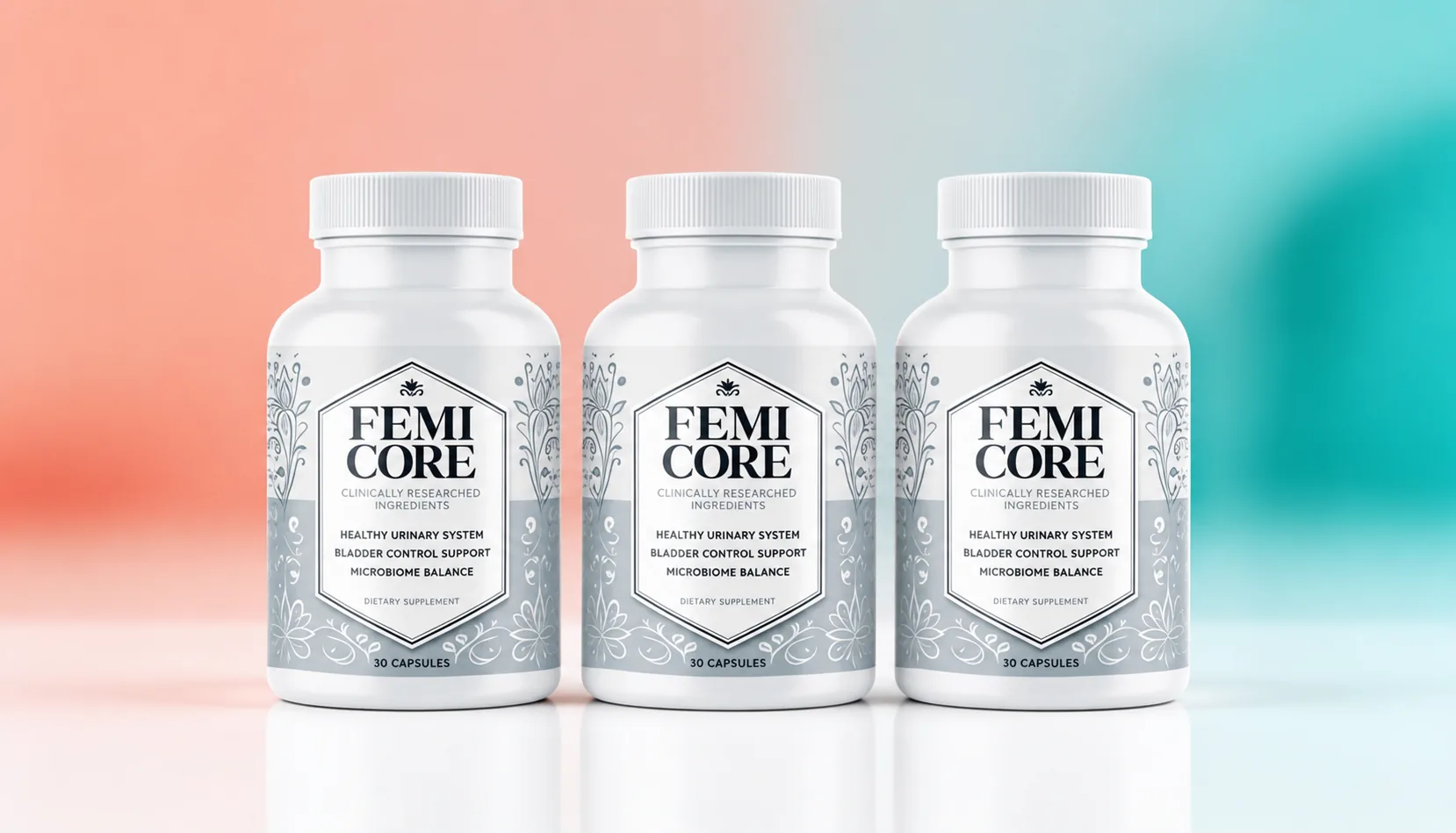
FemiCore — Our #1 Rated Bladder Health Supplement
Microbiome-targeted formula · 60-day money-back guarantee · GMP-certified facility
Some women have both patterns, urgency and repeat infections, and they sometimes ask whether to take both. That is a question for your doctor or pharmacist, not for me, partly because stacking supplements adds up interaction questions quickly. If you are weighing several options, our ranking of bladder control supplements puts them side by side, and our reviews of Urox, which has its own urgency trial, and Confitrol24 cover the other evidence-backed urgency products.
Who AZO Bladder Control Is For, and Who Should Skip It
It might be worth a trial if you:
- Mainly struggle with urgency, frequency or waking at night to urinate
- Have no history of repeated urinary tract infections
- Want a low-cost, drug-free experiment you can buy locally
- Stopped a prescription overactive bladder drug because of side effects and want to discuss alternatives with your doctor
- Are willing to track your symptoms for 8 to 12 weeks rather than judging it by feel
You should probably skip it if you:
- Leak mainly when you cough, sneeze, laugh or lift, which is a pelvic floor problem that pelvic floor training addresses, as in our guide to pelvic floor exercises for women over 40
- Are allergic to soy
- Have a history of hormone-sensitive breast cancer or take tamoxifen or an aromatase inhibitor, unless your oncologist agrees
- Have blood in your urine, pain, fever or a new sudden change in bladder habits, which needs a doctor before any supplement
- Are pregnant or nursing
How to Trial It the Smart Way
- Get a baseline first. Before the first capsule, keep a three-day bladder diary: every trip, every urgent moment, every leak, and how many times you woke at night. Our nocturia guide shows a simple way to count night-time trips.
- Follow the label, not the internet. Take it as directed. If you want to discuss matching the trial dose, do that with a pharmacist.
- Change one thing at a time. If you also cut caffeine or start bladder training in the same month, you will never know which one helped.
- Repeat the diary at week 6 and week 12. The trial ran 12 weeks. A two-week verdict is too early.
- Decide on numbers. If your daytime trips and night-time trips have not moved by week 12, the product has had a fair chance.
- Stop and call your doctor if you notice dizziness, palpitations, fainting, significant constipation or any new symptom.
My Honest Verdict
AZO Bladder Control is one of the more honest products in the drugstore urinary aisle. It uses a named blend that was actually tested against placebo in women like you, and it is cheap. What the reviews do not tell you is that the effect in that trial was modest, the study was paid for by the ingredient supplier, and the label’s everyday dose is 600 mg while the trial used 1,000 mg. If urgency and night-time trips are your problem and infections are not, it is a reasonable, inexpensive experiment to run for twelve weeks with a diary. If your pattern is recurrent infections, or your leaks come with coughs and sneezes, it is aimed at the wrong target.
Key Takeaways
- Real evidence, modest effect. One randomized, double-blind trial of 120 women aged 35 to 70 found less urgency and fewer night-time trips over 12 weeks, about 8 daytime trips versus 9.5 on placebo.
- Check the dose. The trial used 1,000 mg a day. The label’s maintenance dose is 600 mg, about 60% of what was tested.
- Urgency, not stress leaks. It was studied in overactive bladder. It does nothing for leaks from coughing, sneezing or lifting.
- The soy matters. Skip it with a soy allergy, and talk to your oncologist first with a hormone-sensitive breast cancer history.
- It is the cheaper option. About 74 cents a day at the maintenance dose, sold everywhere.
- Different from FemiCore. AZO targets urgency; FemiCore targets the urinary microbiome and the recurrent infection pattern.
Is your pattern repeat infections rather than urgency?
FemiCore is the microbiome-focused option we rate #1 for that pattern, with a 60-day money-back guarantee.
Frequently Asked Questions
Does AZO Bladder Control really work?
It has some real evidence, which is unusual for a drugstore supplement. A 2014 randomized, double-blind, placebo-controlled trial of 120 women aged 35 to 70 found that its Go-Less blend of pumpkin seed and soy germ extract reduced urgency and night-time urination over 12 weeks. The effect was modest, about 8 daytime trips versus 9.5 on placebo, the trial was funded by the ingredient supplier, and it has not been independently repeated.
How long does it take AZO Bladder Control to work?
The company says results may appear in as little as two weeks and suggests at least 30 days. The clinical trial measured results at 12 weeks, so a fair test is 8 to 12 weeks of consistent use, tracked with a bladder diary rather than judged by feel.
What are the side effects of AZO Bladder Control?
The 2014 trial reported the blend as well tolerated. Some buyers report constipation, bloating, weight gain or dizziness, and soy itself can cause bloating, constipation, diarrhea and nausea according to NIH’s complementary health center. It is not for anyone with a soy allergy or who is pregnant or nursing. Stop it and call your doctor if you notice dizziness, palpitations or fainting.
Is the AZO dose the same as the dose in the study?
No. The trial used 1,000 mg a day of the blend. Each AZO capsule has 300 mg, so the label’s first two weeks give 900 mg a day and the ongoing dose of two capsules gives 600 mg a day, about 60% of the tested amount. Talk to your doctor or pharmacist before taking more than the label directs.
Does AZO Bladder Control help with leaks when I cough or sneeze?
There is no evidence that it does. It was studied in overactive bladder, which means urgency and frequency. Leaks from coughing, sneezing, laughing or lifting are stress incontinence, which comes from pelvic floor support, and pelvic floor muscle training is the treatment with the strongest evidence for it.
Is AZO Bladder Control safe after breast cancer?
Ask your oncologist first. The soy germ extract in Go-Less is concentrated in isoflavones, which act weakly on estrogen receptors, and safety evidence for high-dose isoflavone supplements in women with a history of hormone-sensitive breast cancer is limited. This matters especially if you take tamoxifen or an aromatase inhibitor.
The Bottom Line
AZO Bladder Control earns its good reviews more honestly than most of the aisle: there is a real placebo-controlled trial, in women of the right age, behind the blend. But the benefit in that trial was small, the study was industry-funded, and the dose on the label is well below the dose that was tested, which is something you now know that most buyers do not. Buy it for urgency and night-time trips, give it twelve weeks with a written diary, and judge it on numbers. If your real problem is repeat infections or leaks when you cough, save your twenty dollars for the tool that fits.
— Ellen Bennett

Ellen Bennett
Women’s Health Researcher. Compiles peer-reviewed evidence on bladder, urinary, and pelvic health, naming each study and source. About the author →
Research methodology. This review is based on the official AZO product page and supplement facts, the 2014 Journal of Functional Foods randomized trial of the Go-Less blend in 120 women, ConsumerLab’s summary of that trial’s results, the 2024 AUA/SUFU overactive bladder guideline, NIH NCCIH guidance on soy, and a reading of retail reviews at Target in September 2026. We did not receive the product free and have no relationship with AZO. The dose comparison is our own arithmetic from the label and the published trial dose. Retail prices and ratings change; they are reported as seen on the verification date.
Medical disclaimer. This article is for information only and is not medical advice, diagnosis, or treatment. Dietary supplements are not intended to diagnose, treat, cure, or prevent any disease. Do not stop or change prescription medication based on anything you read here. Blood in the urine, pain, fever, or a sudden change in bladder habits needs a doctor.
Last Reviewed: September 2026 — Last Updated: September 2026 — by Ellen Bennett, Women’s Health Researcher. Sources: Journal of Functional Foods, 2014 (Shim et al.); AUA/SUFU Overactive Bladder Guideline, 2024; NIH National Center for Complementary and Integrative Health (soy); ConsumerLab; AZO official product page; Target product listing.