
Published on September 2, 2026 — by Ellen Bennett, Women’s Health Researcher
Medical & Affiliate Disclosure: This article is for educational purposes only and is not medical advice. Always consult your doctor. Some links are affiliate links; if you buy through them we may earn a commission at no extra cost to you.
Search Bladder Relief 911 reviews and complaints and you get a wall of pages that mostly are not pages. Several of the top results are loose files sitting on cloud storage, with headlines engineered around your exact search and titles promising a “life-changing transformation.” None of them will tell you the one thing that actually decides whether this product is worth $69.95.
So here it is. I am Ellen Bennett, I research women’s bladder health, and the central ingredient in this formula was tested properly in 2024. The result was not what the marketing suggests.
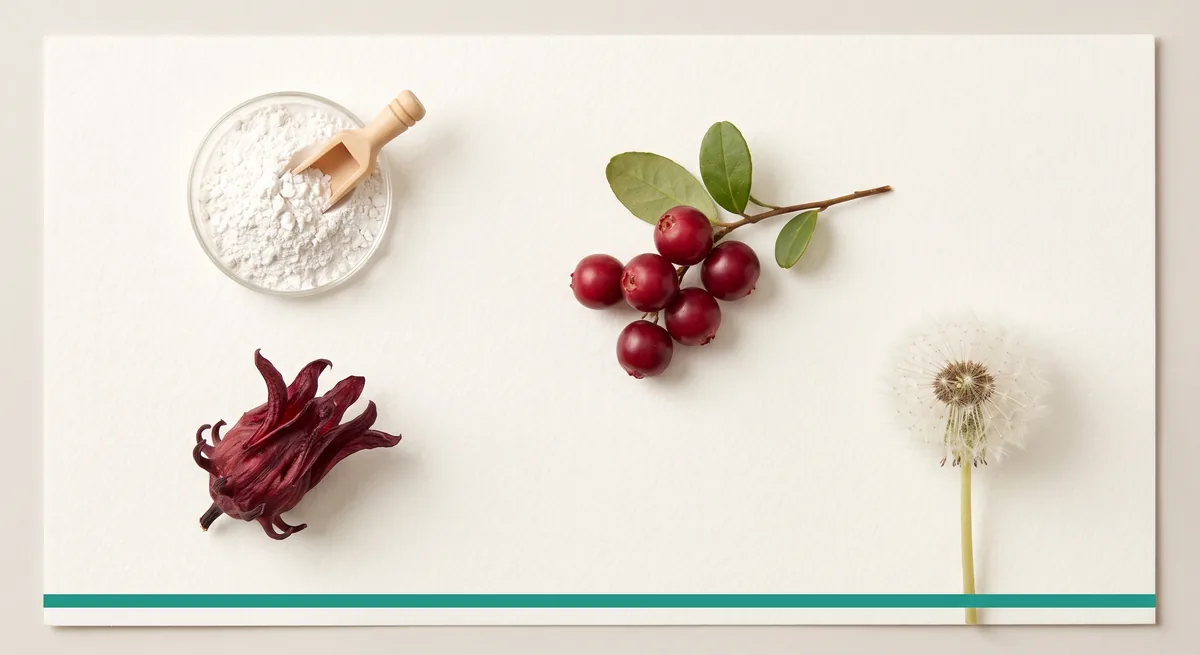
Quick Answer: Bladder Relief 911 is a PhytAge Labs supplement built on d-mannose, cranberry, hibiscus and dandelion root, priced from about $49.95 to $69.95 a bottle with a 90-day guarantee. Does Bladder Relief 911 work? Its lead ingredient had its reckoning in 2024: the MERIT trial in JAMA Internal Medicine followed 598 women for 6 months and found 51.0% on d-mannose had a UTI versus 55.7% on placebo, a difference that was not statistically significant (p = 0.26). And dandelion is a diuretic, which increases urine output rather than reducing it.
What Is Bladder Relief 911?
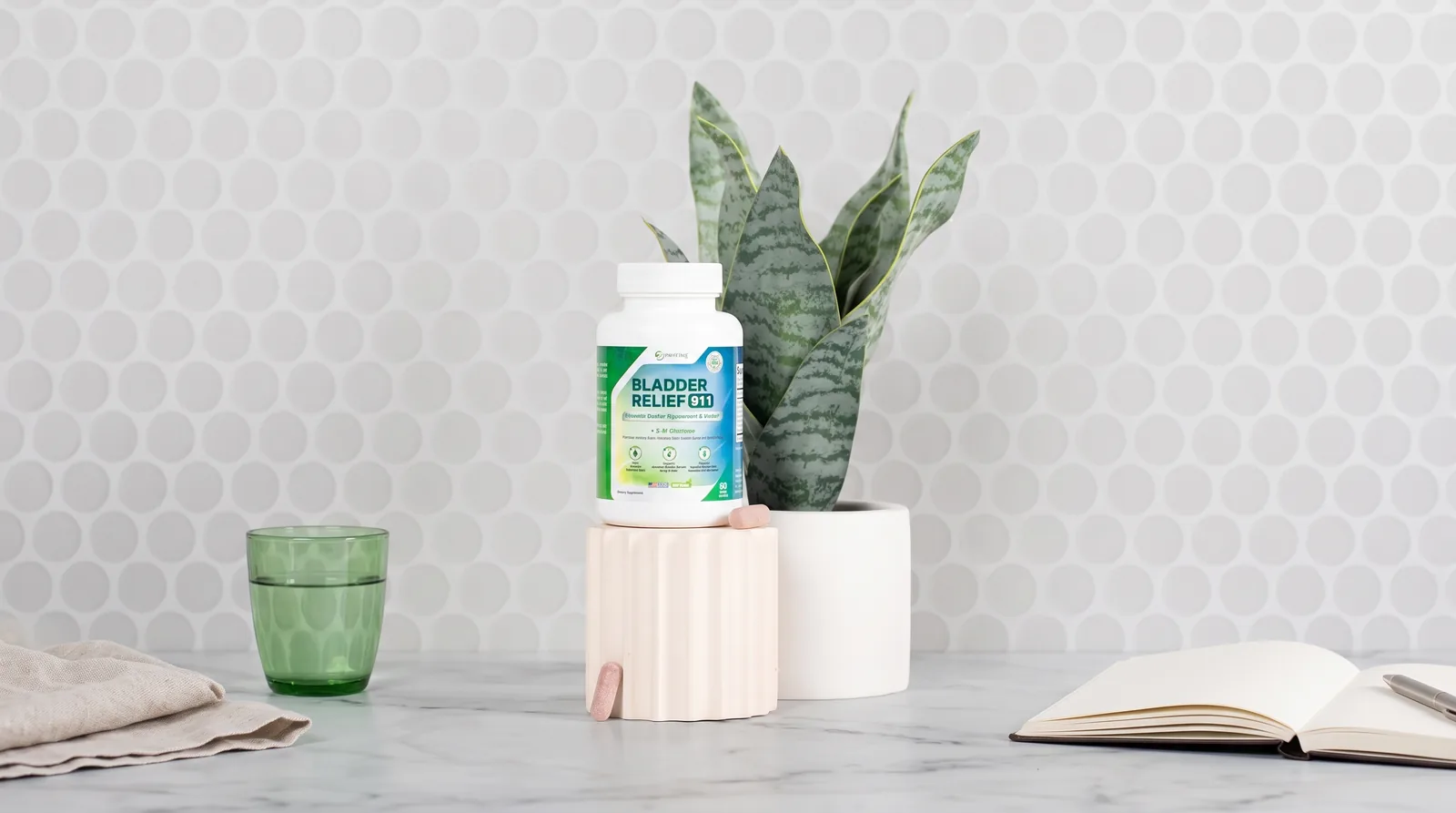
Bladder Relief 911 is a daily capsule from PhytAge Labs, a direct-to-consumer supplement company with a large catalogue of similarly named products. It is marketed for frequent urination, nighttime urgency and mild leakage, aimed broadly at aging adults rather than specifically at women.
It sells through the company’s own site and through PhytAge’s storefront, is made in FDA-registered, GMP-certified facilities, and carries a 90-day money-back guarantee, which is longer than the 60 days that is standard in this category.
Before going further, one observation that will save you time. The ingredient list here, d-mannose, cranberry, hibiscus and dandelion, is nearly identical to another product I reviewed recently. If you have been comparing bladder supplements for a while and feel like you keep meeting the same formula in different bottles, you are not imagining it. I covered the twin in my pHemmePure reviews and complaints roundup, and almost everything about the evidence applies to both.
Bladder Relief 911 Ingredients, and What the Research Actually Says
D-mannose: the ingredient that had a bad year
D-mannose is a simple sugar, related to glucose, found naturally in cranberries and apples. The theory behind it is elegant: the E. coli that cause most urinary tract infections have finger-like projections that latch onto sugar receptors on the bladder wall, and d-mannose is thought to occupy those receptors so the bacteria get flushed out instead of taking hold.
For years the small studies looked encouraging, and a lot of us recommended it on that basis. Then the good trial arrived, and almost no review page will tell you about it.
The MERIT trial was published in JAMA Internal Medicine in 2024. It was double-blind and placebo-controlled, run across 99 primary care centres in the United Kingdom, enrolling 598 women with a mean age of 58 who had a genuine history of recurrent UTIs. Three hundred and three took 2 grams of d-mannose daily for six months; 295 took placebo.
The result: 51.0% of the d-mannose group had a medically attended UTI, versus 55.7% on placebo. The risk difference was about 5 percentage points, with a 95% confidence interval running from a 13% benefit to a 3% harm, and a p-value of 0.26. In plain English, the difference was small enough that it could easily be chance, and the trial was large enough that if a meaningful effect existed it should have shown up.
That does not make d-mannose dangerous or fraudulent. It is a safe, well-tolerated sugar. It means the best available evidence says it does not prevent recurrent UTIs, and it was never studied for leakage at all. I went deeper on this in whether d-mannose helps bladder leaks.
There is also a dosing problem specific to this format. The MERIT trial used 2 grams a day, taken as powder dissolved in water. Capsules typically hold 500 mg to 1 gram, and in this product those capsules also have to carry cranberry, hibiscus and dandelion. The label does not break out individual amounts, so you cannot verify how close to the studied dose you are getting. Given that the studied dose did not work, that may be academic, but it tells you something about the label.
Cranberry: the ingredient that does have evidence, if the dose is right
Cranberry is the genuinely well-supported ingredient here, and it deserves credit. A 2023 Cochrane review of 50 randomized trials with 8,857 participants concluded that cranberry products reduce recurrent UTI risk by roughly 26% in women prone to them.
The catch is dose and standardization. The active compounds are proanthocyanidins, and a 2024 meta-analysis in Frontiers in Nutrition found the benefit appeared when daily PAC intake reached at least 36 mg, cutting risk by 18%. Cranberry that is not standardized to a stated PAC level is a gamble, and this label does not state one. That is the single biggest gap in the formula: the one ingredient with real evidence is included in an unverifiable amount. My full breakdown is in does cranberry actually work for UTIs.
Dandelion: the ingredient working against the goal
This is the part that bothers me most, and it is not a small point.
Dandelion is a well-known diuretic. Diuretics increase urine production. This product is marketed to people who want to urinate less often and get up less at night. Including a diuretic in a formula sold for frequent urination is a genuine internal contradiction, and nothing in the marketing acknowledges it.
There is a charitable reading. A diuretic flushes the urinary tract, which fits a UTI-prevention rationale, and if the product were sold purely for infection prevention the logic would hold. But it is sold for frequency and nighttime urgency, and for that goal dandelion pulls the wrong way. If you take this and find yourself going more rather than less, particularly at night, you now know why. It is the same question I answered about other supplements in can probiotics make you pee more and does vitamin D make you pee more.
Hibiscus
Hibiscus has some laboratory work suggesting antibacterial activity relevant to the urinary tract, and a modest amount of human research mostly focused on blood pressure. It is a reasonable supporting inclusion and not the reason anyone buys this. It is also, like dandelion, mildly diuretic.
Claimed Benefits vs. Realistic Expectations
| Marketing claim | Realistic take |
|---|---|
| “Regain control over your bladder” | No ingredient here addresses bladder muscle control or pelvic floor support. The formula is aimed at bacteria. |
| “Reduces frequent bathroom trips” | Two of the four ingredients are diuretics. This claim runs against its own formula. |
| “4.7 to 4.95 out of 5” | These figures come from pages with no verifiable review pool. There is no independent retailer rating to check them against. |
| “D-mannose prevents UTIs” | The 2024 MERIT trial of 598 women found 51.0% vs 55.7% on placebo, p = 0.26. Not supported by the best evidence. |
| “Results within a couple of weeks” | The trials in this space run months. Weeks is a marketing timeline, not a research one. |
Bladder Relief 911 Pros and Cons
| Pros | Cons |
|---|---|
| 90-day guarantee, longer than the category standard of 60 | Lead ingredient failed its best trial in 2024 |
| Short, disclosed ingredient list | Individual ingredient amounts are not disclosed |
| Cranberry is a genuinely evidence-backed inclusion | Cranberry is not standardized to a stated PAC level |
| Made in FDA-registered, GMP-certified facilities | Two diuretic ingredients in a product sold to reduce urination |
| Free US shipping on all tiers | Nothing in the formula addresses leakage or pelvic floor |
| Well tolerated; d-mannose is a safe sugar | Search results for the brand are dominated by template pages |
Bladder Relief 911 Complaints: Which Ones Hold Up
There is no independent retailer review pool for this product, so I am not going to invent an aggregate score. What follows is the recurring criticism and whether it survives scrutiny.
“It didn’t do anything”
The most common complaint, and the most defensible. Given that the lead ingredient did not beat placebo in a 598-woman trial, and the one ingredient that does have evidence is present in an unstated amount, “nothing happened” is the outcome the research would predict for many people.
“It made me pee more”
Entirely believable and mechanistically expected. Dandelion and hibiscus are both diuretics. This is not a defect in your body.
“It’s expensive”
Fair. At $69.95 for a single bottle it sits at the top of this category’s range, and the four-bottle tier at $49.95 each requires committing to four months up front.
“The reviews are fake”
The most defensible complaint of all, and it is about the ecosystem rather than the product. A large share of what ranks for this brand consists of template pages, many hosted as files on cloud storage rather than on real websites, quoting precise ratings with no verifiable source. The FTC’s rule on consumer reviews and testimonials took effect in October 2024 and prohibits, among other things, company-controlled review sites presenting themselves as independent, with penalties reaching tens of thousands of dollars per violation. I have no evidence about who operates any particular one of these pages and I am not accusing anyone. I am saying the pattern is the one the rule describes, and it should change how much weight you give a 4.95 rating you cannot trace.
Pricing and the 90-Day Guarantee
| Package | Approx. price | Per bottle | Best for |
|---|---|---|---|
| 1 bottle | ~$69.95 | ~$69.95 | Testing inside the refund window |
| 2 bottles | ~$119.90 | ~$59.95 | A realistic two-month trial |
| 4 bottles | ~$199.80 | ~$49.95 | Only if you already know it helps you |
All tiers include free US shipping. The 90-day guarantee is genuinely the strongest thing on this offer and I will give it full credit: it is a third longer than the 60 days most competitors offer, and it gives you room to run a fair trial without racing a deadline.
Two practical notes. Refund policies on direct-to-consumer supplements typically require you to contact support inside the window and often to return bottles, so read the terms before you order rather than after. And a long guarantee is a reason to feel safe trying something, not evidence that it works. Those are different things, and the marketing tends to blur them.
Who It Is For, and Who Should Skip It
It might be worth a trial if you: get recurrent UTIs, want a cranberry-containing option, value the 90-day window over a shorter one, and go in understanding that the d-mannose component is unlikely to be doing much.
You should probably skip it if you: leak when you cough, laugh, sneeze or lift, which is stress incontinence and a pelvic floor problem no capsule here touches; want to reduce how often you urinate, given two diuretic ingredients; are on diuretics or blood pressure medication without checking with your pharmacist; are pregnant or breastfeeding; or are diabetic, since d-mannose is a sugar and worth raising with your doctor.
If you are not certain which type of bladder problem you have, sort that out first. The difference between stress and urge incontinence takes a few minutes and will save you more money than any coupon.
FemiCore — Our #1 Rated Bladder Health Supplement
Microbiome-targeted formula · 60-day money-back guarantee · GMP-certified facility
How It Compares
Against the field, Bladder Relief 911’s weakness is that it bets its headline on the one ingredient whose best trial came back negative, and does not standardize the one ingredient that works. Formulas that pair standardized cranberry with named probiotic strains are pointed at the same problem with better-matched evidence, and formulas built on Urox are pointed at urgency with an actual placebo-controlled trial.
I put this one head to head in FemiCore vs Bladder Relief 911, and the whole field is ranked in the best bladder control supplements.
Key Takeaways
- The lead ingredient failed its best test. MERIT, 2024, JAMA Internal Medicine: 598 women, 51.0% on d-mannose versus 55.7% on placebo, p = 0.26.
- Two of four ingredients are diuretics. Dandelion and hibiscus increase urine output, which contradicts the frequency claim.
- The good ingredient is unquantified. Cranberry works at 36 mg of PACs a day; this label states no PAC level.
- The 90-day guarantee is the best part of the offer and is a reason to feel safe trying, not evidence it works.
- The formula is nearly identical to pHemmePure. If you have already tried one, you have effectively tried the other.
Frequently Asked Questions
Is Bladder Relief 911 a scam?
No, not in the meaningful sense. There is a real company, a real product, a disclosed ingredient list and a functioning 90-day refund policy. The fair criticism is that the marketing claims run well ahead of the evidence, and that the search results around it are full of pages designed to look like reviews.
Does Bladder Relief 911 actually work?
The evidence is not encouraging. Its lead ingredient did not beat placebo in a 598-woman randomized trial published in 2024, and its best-supported ingredient, cranberry, is included in an undisclosed amount. Some people will feel better; some of that will be the natural ebb and flow of these symptoms.
Can Bladder Relief 911 make you pee more?
Yes, plausibly. Dandelion root and hibiscus both act as diuretics, and diuretics increase urine volume. If your goal is fewer bathroom trips, that is a real consideration rather than a rare side effect.
Does it help with bladder leaks?
There is no evidence that it does. None of its four ingredients have been studied for incontinence. Leaks respond to pelvic floor training and bladder training, which cost nothing.
What is the guarantee?
Ninety days from purchase through the official site, which is longer than most of this category. Expect to contact support inside the window and possibly to return bottles, so read the terms first.
How does it compare to pHemmePure?
The formulas are close to identical: d-mannose, cranberry, hibiscus and dandelion in both. The differences are price and refund terms rather than mechanism, so the evidence discussion applies equally to both.
The Bottom Line
Bladder Relief 911 is a real product from a real company with an unusually generous refund policy, and I would rather be fair about that than dismiss it. But a supplement is a bet on its ingredients, and this one bets its headline on d-mannose in the year after a 598-woman trial found it no better than placebo, while including two diuretics in a formula sold to reduce bathroom trips.
If recurrent infections are your problem and the 90-day window makes you feel safe experimenting, trying it is a decision you can make with open eyes. If your problem is going too often, or leaking when you laugh, this formula is aimed somewhere else entirely, and the free interventions have better evidence than anything in the bottle.
— Ellen Bennett
 Ellen Bennett, Women’s Health Researcher. More about Ellen →
Further reading: does d-mannose help bladder leaks and the pHemmePure review.
Last Reviewed: August 2026 by Ellen Bennett, Women’s Health Researcher. Sources: JAMA Internal Medicine (MERIT, 2024), Cochrane (2023), Frontiers in Nutrition (2024), NIH, NIDDK, FTC, Urology Care Foundation.