

Published on August 27, 2026 — by Ellen Bennett, Women’s Health Researcher
Medical & Affiliate Disclosure: This article is for educational purposes only and is not medical advice. Always consult your doctor. Some links are affiliate links; if you buy through them we may earn a commission at no extra cost to you.
You started a probiotic for your bladder, and now you seem to be in the bathroom more than before. That is a genuinely annoying place to end up, and the pages you find searching it mostly hedge. So here is the direct answer: can probiotics make you pee more? There is no clinical evidence that the bacteria themselves increase urination — and there is a much more ordinary explanation that almost nobody mentions.
Quick Answer: There is no published trial showing that probiotics increase urinary frequency, and frequent urination is not a recognized side effect of probiotic supplements. So why are you going more? The most likely reason is the instruction printed on the bottle: probiotics are meant to be taken with a full glass of water, and adding 8 to 12 ounces a day to your intake produces more urine. Other candidates are a changed routine, a coincidental cause, or an ingredient in the formula that is not the probiotic at all.
Do Probiotics Actually Make You Pee More?
Not by any mechanism anyone has demonstrated.
Probiotics are live bacteria intended to shift the balance of microbial communities, mostly in the gut and, in women’s formulas, in the vaginal and urinary tract. They are not diuretics. They do not act on the kidneys, they do not change how much fluid your body decides to excrete, and they do not relax the bladder muscle. There is no route by which a Lactobacillus strain would increase your urine output. If you want a closer look at one of the women’s bladder formulas, here is what the research actually shows.
The honest caveat is that absence of evidence here is partly absence of looking. Probiotic trials tend to record gastrointestinal side effects carefully — bloating, gas, loose stools — because that is where the expected problems are. Urinary frequency is not a standard thing to measure, so it would not necessarily show up even if it happened. What I can say is that in the trials that exist, it is not reported, and no regulatory body lists it as a known effect.
So if you are going more often, something real is happening. It is just probably not the bacteria.
The Most Likely Explanation: The Glass of Water
This is the answer that sits in plain sight, and I have not seen a single page state it plainly.
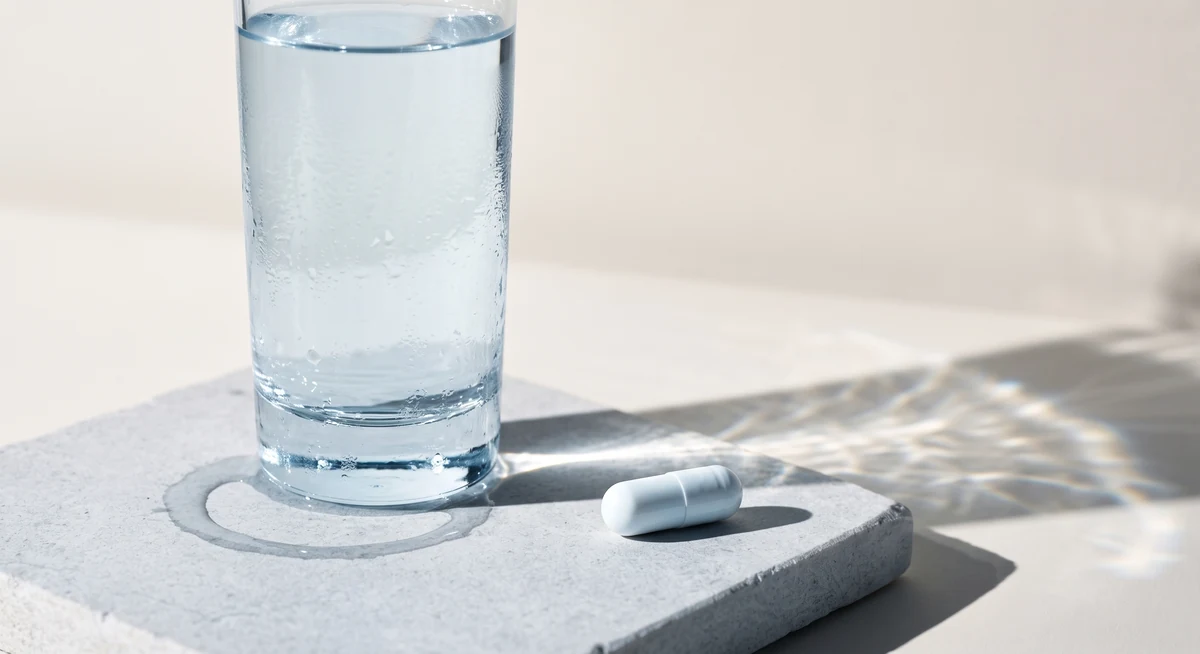
Almost every probiotic label tells you to take the capsule with a full glass of water. There is a reason for it: live organisms have to survive the acidic environment of the stomach, and water helps move them through. Manufacturers say it, pharmacists repeat it, and most people follow it without a second thought.
A full glass is 8 to 12 ounces. If you were not previously drinking that glass, you have just added roughly 250 to 350 ml to your daily intake, every day, permanently. Your kidneys process it and your bladder holds the result. More fluid in, more urine out. That is not a side effect of the supplement. It is arithmetic.
The reason this is so easy to miss is timing. The extra water and the new capsule started on the same morning, so they get attributed to the same cause. But one of them has a well-understood effect on urine volume, and it is not the bacteria.
How much this matters depends on where you were starting from. If you were chronically under-drinking, that extra glass may actually be doing you a favor, and I go through why in how much water to drink with an overactive bladder — because under-drinking concentrates urine, and concentrated urine irritates the bladder, which makes urgency worse rather than better.
Four Other Reasons You Might Be Going More
1. Something else in the formula
Read the full label, not just the word “probiotic” on the front. Combination bladder formulas frequently include botanicals, and some of those are diuretics. Dandelion is the clearest example and it appears in several women’s urinary supplements — its best-documented traditional use is increasing urine output. Uva ursi, parsley and juniper show up too.
If your product is a blend rather than a plain probiotic, the frequency may be coming from an ingredient doing exactly what that ingredient does. This is worth checking before you blame the bacteria or stop something that might be helping.
2. A changed routine around the capsule
New supplements tend to arrive with new habits. People start taking them with morning coffee, or with a large evening drink, or they set a reminder that lands right before bed. Fluid timing matters as much as fluid volume for night-time trips, and a capsule taken at 10pm with a glass of water is a predictable 2am wake-up.
3. A coincidence you would have noticed anyway
Urinary frequency has a long list of causes that have nothing to do with what you swallowed: a developing infection, blood sugar changes, a new medication, menopause-related tissue changes, seasonal shifts in how much you drink. Starting a supplement makes you pay attention to your bladder in a way you were not before, and attention finds things that were already there.
4. Mild thirst from the formulation
Some formulations, particularly those with added fiber or prebiotics like inulin, draw water into the gut and can leave you slightly thirstier. You drink more without deciding to, and the loop closes the same way.
| Possible cause | How to tell | What to do |
|---|---|---|
| The glass of water | Started the same day; intake genuinely rose | Take it with a smaller amount, earlier in the day |
| A diuretic in the blend | Label lists dandelion, uva ursi, parsley, juniper | Switch to a plain probiotic and compare |
| Timing | Extra trips are mostly at night | Move the dose to morning |
| Coincidence | Burning, urgency, fever, or a new medication | See a doctor rather than adjusting the supplement |
When Peeing More Is Actually the Point

There is a version of this where the extra trips are not the problem you think they are.
If you are prone to urinary infections, adequate hydration is one of the few genuinely well-supported preventive measures, and it works precisely by flushing the bladder more often. A landmark 2018 randomized trial published in JAMA Internal Medicine followed women with recurrent cystitis who drank less than 1.5 litres a day; those assigned to add 1.5 litres of water daily had significantly fewer infections over 12 months than those who did not change their intake.
That is a real, meaningful effect, achieved through the mechanism you are currently experiencing as an inconvenience. If your goal was fewer infections rather than fewer trips, going more often is the treatment working, not the treatment failing. I cover the rest of the preventive picture in how to prevent recurrent UTIs naturally.
What Probiotics Do Have Evidence For
Since the frequency question usually arrives attached to a bigger one — is this thing doing anything at all — it is worth being straight about where the research actually lands.
The healthy vaginal and urinary environment is dominated by protective Lactobacillus species, and that dominance falls away with age and after menopause. Replenishing them is the idea behind women’s probiotic formulas. L. crispatus in particular has randomized-trial support for reducing recurrent urinary infections, which is the strongest single claim in this area.
What probiotics do not have is evidence for stopping leaks. Incontinence responds to pelvic floor training, weight and fluid management, and addressing menopause-related tissue changes, and no capsule replaces that work. Our complete guide to bladder leaks sets out what actually has support, and probiotics for bladder control goes deeper on the strain question — because probiotic research is strain-specific, and a product that will not name its strains cannot point to any of it.
Working Out Whether Probiotics Make You Pee More, or Something Else Does
You can settle this yourself in about two weeks, and it costs nothing.
Start by writing down what is actually happening for three days: how many daytime trips, how many night-time trips, and roughly what you drink and when. Almost nobody does this, which is why so many women cannot say whether something helped or hurt. Guessing from memory is unreliable, and bladders are a topic where memory is especially bad.
Then change one variable. Take the capsule with a few sips instead of a full glass, and keep everything else identical for a week. If the trips settle, you have your answer and you can stop worrying about the probiotic. If nothing changes, move the dose to the morning and give it another week.
If both of those change nothing, look at the label for a diuretic botanical. And if the label is clean and the frequency persists, the supplement is probably not the cause, which is the point at which it is worth a conversation with your doctor rather than more experimenting.
When to Stop and Call a Doctor
Frequency on its own is usually benign, and the Urology Care Foundation notes that how often is "normal" varies widely between women. Frequency with company is different, and these are the signs that mean a phone call rather than a bladder diary:
- Burning or pain when you urinate, or blood in your urine
- Fever, chills, or pain in your back or side
- Sudden onset rather than gradual, or a dramatic increase in volume
- Unusual thirst, unexplained weight loss, or fatigue alongside it, which can point to blood sugar problems
- Difficulty emptying, or a feeling that the bladder is never quite empty
The NIDDK guidance on bladder infections is clear that an active infection needs medical care rather than a supplement, and that delay carries real risk. If you are immunosuppressed or have a serious underlying illness, check with your doctor before starting any probiotic at all.
Editor’s Recommendation
If you want a formula that names all five of its probiotic strains and states its blend amounts, FemiCore is the one we researched most closely. It supports a healthy urinary microbiome and is not a treatment for any condition.
Key Takeaways
- No evidence probiotics increase urination. They are not diuretics and do not act on the kidneys or bladder muscle.
- The glass of water is the likely culprit. Adding 8 to 12 ounces daily produces more urine, and it started the same day the capsule did.
- Check the full label. Blend formulas often contain botanical diuretics such as dandelion or uva ursi.
- Timing matters for night trips. An evening dose with a full glass is a predictable 2am wake-up.
- More trips can be the goal. A 2018 JAMA Internal Medicine trial found adding 1.5 litres of water daily significantly reduced recurrent infections.
- Frequency with burning, fever or blood is a doctor, not a supplement question.
Frequently Asked Questions
Can probiotics make you pee more often?
There is no clinical evidence that they do, and it is not a recognized side effect. The usual explanation is the extra water people start drinking to take the capsule, or another ingredient in a combination formula.
How long does the increase last?
If it is coming from added fluid, it lasts as long as the added fluid does — it is not an adjustment period that passes. If it came from a formulation change in your gut, mild effects often settle within one to two weeks.
Should I stop taking my probiotic?
Not as a first step. Try taking it with fewer sips of water and earlier in the day for a week and see whether the pattern changes. That tells you far more than stopping does, and it does not throw away a supplement that may be helping.
Can probiotics help with bladder leaks?
There is no good evidence for that. The support they have is for reducing recurrent urinary infections, particularly strain-specific formulas. Leaks respond to pelvic floor training and lifestyle changes.
Is peeing more a sign the probiotic is working?
Not directly. But if you are prone to infections and the extra fluid is what increased your trips, better hydration does have trial evidence behind it for prevention. The trips are the mechanism, not a symptom of failure.
Which ingredients in a bladder supplement are diuretics?
Dandelion is the most common and best documented. Uva ursi, parsley and juniper also appear in urinary formulas. If your product is a blend and you want fewer trips rather than more, those are worth spotting on the label.
The Bottom Line
Can probiotics make you pee more? Not on their own, as far as anyone has been able to show. What can is the glass of water the label told you to take them with, an evening dose that lands at the wrong hour, or a botanical diuretic sitting quietly in a blend beside the bacteria.
The useful move is not to stop and hope. It is to write down three days of what actually happens, change one thing, and watch. Two weeks of that will tell you more about your own bladder than any article can, including this one — and if the answer turns out to be that you are simply better hydrated than you were last month, that is not a problem you need to fix.
— Ellen Bennett
 Ellen Bennett, Women’s Health Researcher. More about Ellen →
Last Reviewed: August 2026 by Ellen Bennett, Women’s Health Researcher. Sources: JAMA Internal Medicine (2018), NIDDK, NIH/PMC, Urology Care Foundation.