

Published on July 16, 2026 — by Ellen Bennett, Women’s Health Researcher
Medical & Affiliate Disclosure: This article is for educational purposes only and is not medical advice. Always consult your doctor. Some links are affiliate links; if you buy through them we may earn a commission at no extra cost to you.
If you have an overactive bladder, you’ve probably gotten two opposite pieces of advice. One camp says drink less so there’s less to hold. The other says drink more or your urine gets concentrated and irritates the bladder. Both can’t be simply true — so which is it?
When my bladder first turned urgent in my late forties, I did the obvious thing: I cut back on water. It backfired. My urine got darker and more concentrated, and I actually ended up going more often, not less. Here’s how to find the balance that genuinely helps — the amount, the timing, and the surprising part about water itself.
Quick Answer: Most women with an overactive bladder do best on about 6 to 8 cups (48–64 oz) of fluid a day, sipped steadily rather than gulped, with your last big drink 2–3 hours before bed. Should you drink more or less water with OAB? Neither extreme: drinking too little concentrates urine and irritates the bladder, while drinking too much overloads it. Aim for pale-yellow urine as your guide. The American Urogynecologic Society advises drinking to thirst rather than forcing or restricting fluids.
Hydration sorted, urgency still there?
FemiCore supports the urinary microbiome with standardized cranberry and five named Lactobacillus strains, one capsule a day. 60-day money-back guarantee.
Should you drink more or less water with an overactive bladder?
The answer is neither — the goal is the right amount, spread evenly. The reason the advice sounds contradictory is that both extremes cause problems, just different ones. Cut fluids too far and your urine becomes concentrated, which irritates the bladder lining and can actually increase urgency. Drink far too much and you simply overload the bladder and run to the bathroom more. The sweet spot in the middle is where symptoms settle for most women.
A 2018 systematic review looking at fluid intake in overactive bladder found that modestly reducing an excessive intake can ease symptoms, but cutting back too aggressively backfires. So both camps are half right: the woman drinking three liters “to flush her system” may improve by trimming down, while the woman barely sipping all day may improve by drinking a bit more. It depends where you’re starting.
How much water should you actually drink?
A practical target for most women is about 6 to 8 cups (48–64 oz) of total fluid a day, adjusted for your size, activity, heat, and any conditions your doctor is managing. Rather than counting ounces obsessively, use a simpler gauge: your urine should be pale yellow. Dark yellow means you need more; nearly clear and constant means you’re likely overdoing it. Cold weather also changes how much you pee, which I explain in why winter makes bladder leaks worse.
| Sign you’re drinking too little | Sign you’re drinking too much |
|---|---|
| Dark yellow, strong-smelling urine | Nearly clear urine all day |
| Sudden urgency and irritation | Frequent trips with normal-colored urine |
| Constipation, headaches | Waking multiple times at night to go |
| Concentrated urine that stings | Feeling you can never get ahead of it |
Why cutting back on water backfires
This is the trap I fell into, and I hear it from women constantly. It feels logical: less in, less out. But concentrated urine is more acidic and more irritating to the sensitive bladder lining, which can trigger the very urgency you’re trying to avoid. There’s a safety issue too — chronically under-drinking raises the risk of urinary infections and, over time, kidney stones. Restricting fluids is not a free strategy. Cutting back is also a common trigger for urgency with almost nothing coming out.
Sip, don’t gulp: the technique that changed things for me
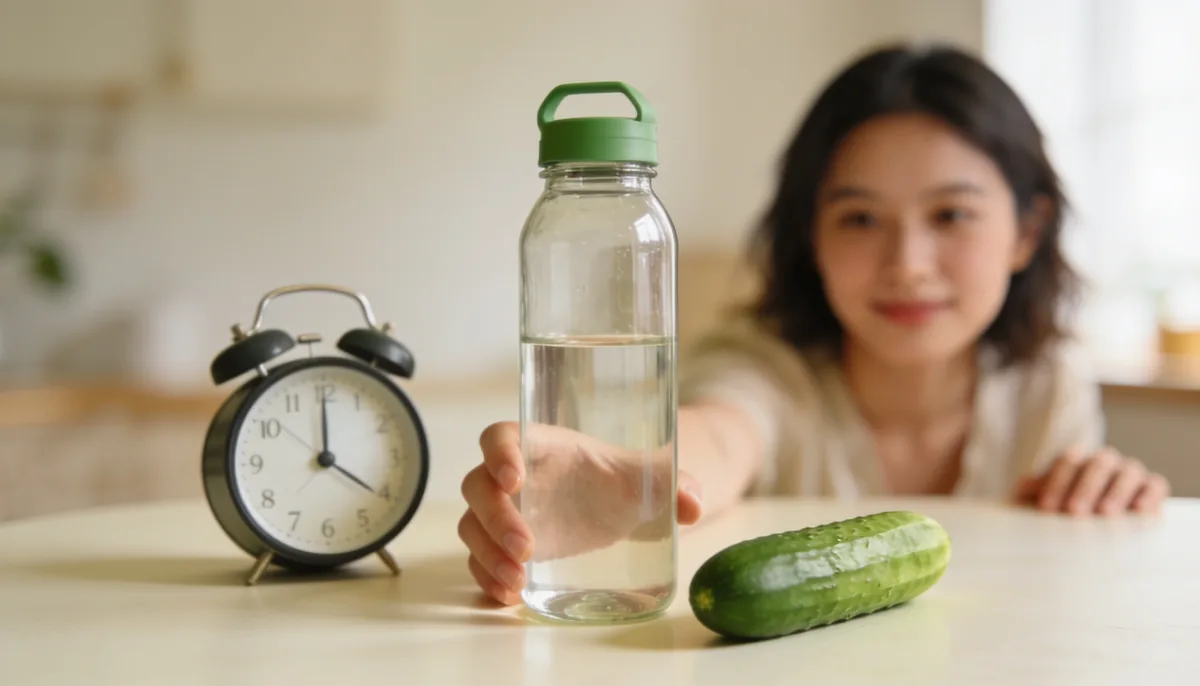
How you drink matters as much as how much. The single most useful thing I learned — and the tip pelvic floor therapists repeat — is to sip small amounts steadily instead of downing a big glass at once. The one morning I chugged a full glass before a walk, I could feel it reach my bladder within minutes. A good rhythm is roughly 4–6 oz every hour or so, tapering in the evening. Spreading fluids out keeps you hydrated without flooding the bladder in one hit. Steady sipping matters even more when a dry mouth keeps you reaching for water all day, as it does for many women with Sjögren’s syndrome.
Timing: fluids and night-time trips
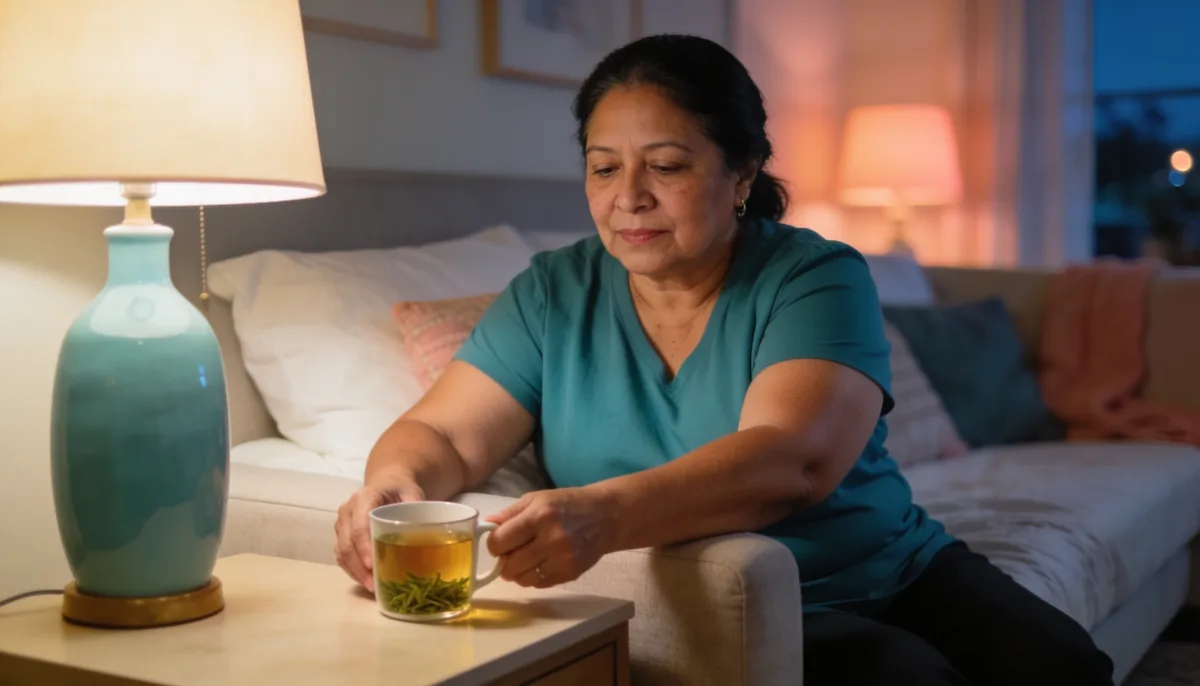
If you’re up at night to pee, when you drink matters more than the total. Front-load your fluids earlier in the day and ease off 2–3 hours before bed, so your bladder isn’t filling as you sleep. Keep daytime hydration steady, though — don’t crash your intake, or you’ll just concentrate your urine overnight. If night-time trips are your main problem, our guide to nocturia in women goes deeper, including when it points to something like sleep apnea. If you follow intermittent fasting, your eating window shifts this timing too, as I explain in intermittent fasting and bladder control.
The colour check: are you actually drinking enough?
Counting cups is fiddly and nobody keeps it up. There is a simpler check you already have several times a day, and for a bladder that is easily irritated it tells you more than any target number: the colour of your urine, looked at in daylight rather than in a dim bathroom.
| Colour | What it usually means | What to do |
|---|---|---|
| Almost clear | You are drinking more than you need, and probably in large gulps | Ease off a little and spread it out; frequency often drops on its own |
| Pale straw | This is the target. Diluted enough not to irritate, concentrated enough that you are not flooding the bladder | Nothing. Keep doing what you are doing |
| Darker yellow | Getting concentrated. This is the point where urine starts irritating the bladder lining and urgency rises | Add a glass, sipped slowly, and check again in a couple of hours |
| Amber or honey | Meaningfully dehydrated | Rehydrate steadily through the day, not all at once |
| Pink, red, or brown | Possible blood, and not something to interpret at home | See a doctor. Beetroot and some medicines can do this harmlessly, but blood in urine always needs checking |
Two honest caveats before you start reading your own results. B vitamins, and multivitamins that contain them, turn urine a vivid highlighter yellow that has nothing to do with hydration. And first thing in the morning it is normally darker than it will be all day, because you have gone eight hours without drinking. Judge by the middle of your day, not by the first trip.
A day of fluids that does not wreck your night
Most of the benefit here comes from moving fluid earlier rather than drinking less of it. This is the shape of a day that works for a lot of women, and it is a starting point to adjust rather than a rule.
| Time | Roughly | Why |
|---|---|---|
| Waking to mid-morning | 2 to 3 cups | You are rehydrating after the longest dry stretch of your day |
| Midday | 2 cups | The easiest window; sip alongside food rather than between |
| Afternoon | 2 cups | Last comfortable stretch before the evening taper |
| Early evening | 1 cup, small sips | Enough not to arrive at bed thirsty |
| Three hours before bed | Taper off | The single change most likely to cut night-time trips |
If your legs swell during the day, one extra step is worth trying: putting your feet up for twenty or thirty minutes in the late afternoon. Fluid that pools in the legs while you are upright returns to circulation when you lie down at night, and your kidneys process it at two in the morning. Moving that release into the early evening, while you are still awake, is a change that costs nothing and surprises people. If your workday makes this impossible, I wrote a shift plan for women who can’t just go.
What to drink and what to avoid
Plain water is the friendliest fluid for most bladders. The common irritants are caffeine (coffee, tea, cola), alcohol, carbonated drinks, artificial sweeteners, and acidic juices like citrus and cranberry juice cocktail. You don’t have to give everything up forever — test one at a time to find your personal triggers. Our list of foods and drinks that irritate the bladder walks through the usual suspects. Alcohol earns its own deep dive: what a drink actually does to your bladder.
What if water itself seems to trigger you?
Here’s the honest, less-talked-about part. A number of women find that even plain water sends them running — sometimes it feels worse than coffee. If that’s you, you’re not imagining it, and you’re not alone. A few things can help: sip slowly rather than gulping, drink at room temperature rather than ice-cold (cold can provoke urgency), and look at whether the urge is partly a habit your bladder has learned. That’s where bladder retraining for urge incontinence comes in — gradually stretching the time between trips to rebuild your bladder’s tolerance. Just being near running water can trigger the urge for some women; that’s a learned reflex, and it can be unlearned. If coffee is your trigger, see what caffeine does to an overactive bladder. Supplements can play into that sensitivity too, which is why I looked at whether probiotics increase how often you pee.
FemiCore — Our #1 Rated Bladder Health Supplement
Microbiome-targeted formula · 60-day money-back guarantee · GMP-certified facility
Fluids are one lever. If you’re building a full plan, our complete guide to bladder leaks pulls together the pelvic floor, diet, and lifestyle pieces that work alongside smart hydration.
When to see a doctor
Adjusting fluids is for ordinary overactive-bladder symptoms. See a doctor if you have blood in your urine, pain or burning when you pee, fever or back pain, a sudden change in how often you go, or intense thirst driving you to drink constantly — which can signal diabetes. A new or rapidly worsening pattern deserves a check-up before you assume it’s just hydration.
Key Takeaways
- Neither extreme wins — aim for about 6–8 cups a day, adjusted to you, with pale-yellow urine as your guide.
- Cutting back backfires: concentrated urine irritates the bladder and raises infection and stone risk.
- Sip, don’t gulp — small amounts steadily beat big glasses at once.
- Timing helps nights: ease off fluids 2–3 hours before bed without crashing daytime intake.
- Plain, room-temperature water is friendliest; test irritants one at a time.
- If water itself triggers you, slow sipping plus bladder retraining can help.
Frequently Asked Questions
How much water should I drink with an overactive bladder?
Most women do well on about 6 to 8 cups (48–64 oz) of total fluid a day, adjusted for size and activity, sipped steadily through the day. Use pale-yellow urine as your gauge rather than a strict number, and taper fluids in the evening.
Does drinking less water help overactive bladder?
Only if you were drinking too much to begin with. Cutting back too far concentrates your urine, which irritates the bladder and can make urgency worse — plus it raises the risk of infections and kidney stones. Aim for balance, not restriction.
Why do I pee so much even when I drink water slowly?
Some women have a sensitive bladder that reacts even to plain water, and frequent urination can also be a learned urgency habit. Sipping slowly, drinking room-temperature water, and bladder retraining to gradually lengthen the time between trips can all help.
Should I stop drinking water before bed?
Ease off large drinks 2–3 hours before bed rather than stopping entirely. Keep your daytime hydration steady so your urine doesn’t become concentrated overnight. If night trips persist, other causes like sleep apnea may be involved.
What is the best drink for an overactive bladder?
Plain, room-temperature water is the friendliest choice for most bladders. Caffeine, alcohol, fizzy drinks, artificial sweeteners, and acidic juices are common irritants. Test them one at a time to learn your personal triggers.
Can dehydration cause an overactive bladder?
Not exactly cause it, but under-drinking concentrates your urine, which irritates the bladder and can worsen urgency and frequency. It also raises infection risk. That’s why very low fluid intake often makes overactive-bladder symptoms worse, not better.
The Bottom Line
The “drink more versus drink less” debate misses the point: your bladder wants a steady, moderate supply, not a flood and not a drought. Land on about 6–8 cups a day, sip instead of gulp, ease off before bed, and favor plain water. Get those right and you take pressure off your bladder without the rebound irritation of cutting fluids too hard. It’s one of the few changes that costs nothing and helps almost everyone. If urgency persists once your fluids are steady, add daily microbiome support like FemiCore to the plan.
— Ellen Bennett

Ellen Bennett, Women’s Health Researcher · About the author
Last Reviewed: July 2026 by Ellen Bennett, Women’s Health Researcher. Sources: NIH/NIDDK, PubMed, ACOG, Urology Care Foundation, Mayo Clinic.