

Published on October 8, 2026 — by Ellen Bennett, Women’s Health Researcher
Medical & Affiliate Disclosure: This article is for educational purposes only and is not medical advice. Do not stop, start or change the dose of vaginal estrogen or any prescription without your doctor. A UTI with fever, back pain or blood in the urine needs prompt medical care. Some links are affiliate links; if you buy through them we may earn a commission at no extra cost to you.
Independent women’s health research · Written and fact-checked by Ellen Bennett, Women’s Health Researcher · Last verified: October 2026
You did what every guide, including this one, told you to do. You asked your doctor about vaginal estrogen, you got the prescription, you used the cream or the tablet or the ring. And then, a few months later, the familiar burning came back, followed by another urine test and another round of antibiotics.
If you are still getting UTIs on vaginal estrogen, you are not doing it wrong and you are not unusual. Vaginal estrogen is the single most effective step for recurrent UTIs after menopause, but it is not a guarantee, and the research is fairly clear about who it helps less and why. This article is about what to check, what to ask your doctor, and what to add, without giving up on the estrogen that is probably still doing part of the work.
Quick Answer: Still getting UTIs on vaginal estrogen is common: a 2026 review found about 60 to 70% of women get a meaningful reduction, while 30 to 40% still need another prevention strategy. Why? It may be too early (it takes weeks to restore the tissue), doses may slip, protective lactobacilli do not return in everyone (only 61% regained them at one month in the landmark 1993 trial), bacteria may persist in the gut, or some episodes may not be infections at all. Next steps include methenamine, cranberry at 36 mg PACs, and probiotics, alongside the estrogen.
The layer estrogen cannot supply
FemiCore pairs cranberry standardized to 30% PACs with five named Lactobacillus strains, including L. crispatus, to use alongside your estrogen. 60-day money-back guarantee.
How Well Vaginal Estrogen Works for UTIs
First, the good news, because it explains why your doctor reached for it. After menopause, falling estrogen thins the vaginal and urethral lining and lets the vagina’s pH rise. The Lactobacillus bacteria that normally keep the area acidic and crowd out E. coli fade away, and the bacteria that cause most UTIs move in.
Vaginal estrogen reverses much of that. In the landmark 1993 trial in the New England Journal of Medicine, 93 postmenopausal women with recurrent UTIs used vaginal estriol cream or a placebo. UTIs dropped from 5.9 episodes per patient-year on placebo to 0.5 on estriol. Vaginal pH fell from 5.5 to 3.8, and lactobacilli, absent in every woman before treatment, reappeared in 61% of the estriol group within a month.
Later trials and reviews have broadly confirmed the benefit. A 2026 narrative review in Gynecologic and Obstetric Investigation summarizes reductions of up to 50 to 75% in some trials and a number needed to treat of about 3 to 4. The AUA/CUA/SUFU guideline on recurrent UTIs recommends vaginal estrogen for peri- and postmenopausal women with recurrent infections, and in November 2025 the FDA recommended removing the old boxed warnings from estrogen products, after an expert panel highlighted how different low-dose vaginal estrogen is from systemic hormone therapy.
So the treatment is real. The question is why it is not working for you.
How Common Is It to Keep Getting UTIs on Estrogen?
More common than most women are told. The same 2026 review pulls together observational data in which about 60 to 70% of women had a clinically meaningful reduction in recurrence, meaning at least half as many culture-confirmed infections, while roughly 30 to 40% still needed additional preventive strategies. In another cohort it cites, infections fell from roughly 2 to 3 per woman-year to about 1 per woman-year: a big improvement, but not zero.
Picture a typical case. A woman of 61 has had four UTIs in a year. Her doctor starts vaginal estradiol cream. Over the next twelve months she has two infections instead of four. On paper the estrogen worked; it halved her infections. To her, it feels like it failed, because she is still on antibiotics twice a year. Both views are true, and the gap between them is where the rest of this article lives.
Why You Are Still Getting UTIs on Vaginal Estrogen: 7 Reasons
1. It has not been long enough
Vaginal estrogen needs several weeks to rebuild the lining and shift the bacteria, according to the 2026 review, and the trials that showed a benefit ran for 6 to 12 months. An infection in the first month or two does not tell you much. Most specialists judge it over a period of months, not weeks.
2. The dose slipped
Most regimens start with nightly use for about two weeks, then drop to twice a week. Twice a week is easy to forget, and many women quietly stop once the dryness improves. In the studies summarized in the 2026 review, only about 70 to 80% of women were still using it at follow-up. Do not adjust the dose on your own, but if you have been missing applications, tell your doctor; it changes what the next step should be.
3. Your protective bacteria did not come back
This is the reason almost nobody mentions. In that 1993 trial, lactobacilli returned in 61% of women at one month, which means they had not yet returned in the other 39%. The species matters too. A 2026 study in Frontiers in Microbiology compared 31 postmenopausal women with recurrent UTIs to 31 without, and found the women with infections had markedly less Lactobacillus crispatus, the species most associated with a protective vaginal environment. Estrogen creates conditions for lactobacilli to grow. It cannot supply them if they are not there.
4. The bacteria are living somewhere else
Most UTIs start with E. coli that lives in the gut. In the same 2026 study, 78.6% of the women whose past infections were caused by E. coli carried E. coli in the rectum, and 38.7% of the recurrent-UTI group carried an antibiotic-resistant organism there, against only 6.5% of the women without infections. Vaginal estrogen improves the defenses at the entrance. It does nothing about the reservoir. That is one reason a combination approach often works better than estrogen alone.
5. Your bladder is not emptying fully
Urine left behind after you pee gives bacteria somewhere to multiply. Pelvic organ prolapse, a weak bladder muscle or nerve problems can all raise the amount left over (the post-void residual). A 2026 review in the Journal of Clinical Medicine lists prolapse with incomplete emptying among the factors that drive recurrence after menopause. A quick bladder scan in the office answers this.
6. Sex or another trigger is driving it
Recurrent UTI is not one disease. A 2026 editorial argues that women with post-coital recurrence, low fluid intake, voiding problems, resistant organisms or non-infectious symptoms all get the same label but need different prevention. If your infections cluster after sex, that is a different pattern from infections that arrive at random, and it may call for a different plan.
7. Some episodes are not infections at all
After menopause, burning, urgency and frequency can come from the tissue changes of genitourinary syndrome of menopause, an overactive bladder or irritation, with no bacteria involved. If you have been treated for UTIs based on symptoms or a dipstick alone, some of those episodes may not have been infections. I cover this in detail in UTI symptoms but a negative test. Ask for a urine culture every time.

What to Ask Your Doctor
| Possible reason | Clue | What to ask |
|---|---|---|
| Too early | Started less than 3 months ago | “How long should we give it before judging?” |
| Dose slipped | Missed applications, stopped when dryness improved | “Would a ring or a different form be easier to stick with?” |
| Lactobacilli not restored | Ongoing dryness, odor or discharge | “Is my vaginal environment responding to treatment?” |
| Gut reservoir or resistant bacteria | Same organism each time, or resistant cultures | “Should we add methenamine or another preventive?” |
| Incomplete emptying | Feeling you never fully empty, bulge or pressure | “Can we check my post-void residual?” |
| Post-coital pattern | Infections within a day or two of sex | “Does a sex-related prevention plan make sense for me?” |
| Not true infections | Negative cultures, symptoms without fever | “Can we culture every episode before treating?” |
| Diabetes or other conditions | High blood sugar, kidney issues | “Could something else be raising my risk?” |
Diabetes deserves its own mention. The 2026 Journal of Clinical Medicine review links it to a less protective urogenital microbiome and weaker bladder-lining defenses, and some diabetes medications increase sugar in the urine. If that applies to you, our guide to diabetes and bladder leaks covers what to raise with your doctor.
What to Add Next: The Evidence Ladder
None of these replace vaginal estrogen. They are layers that sit on top of it, ranked by the quality of the evidence behind them for recurrent UTI prevention.
| Option | What the evidence shows | Strength |
|---|---|---|
| Methenamine hippurate (prescription) | 2022 BMJ ALTAR trial: 1.38 vs 0.89 UTIs per person-year against daily antibiotics, meeting its non-inferiority goal without being an antibiotic | Good |
| Preventive antibiotics (prescription) | Effective while taken, but drive resistance | Good, with trade-offs |
| Cranberry with at least 36 mg PACs | 2023 Cochrane review: about 26% fewer repeat UTIs in susceptible women; 2024 meta-analysis: benefit when PACs reach 36 mg a day | Moderate |
| Lactobacillus crispatus probiotic | 2011 trial: 15% vs 27% recurrence, not statistically significant overall; strong benefit in women with high colonization | Promising |
| More water, if you drink little | 2018 trial in premenopausal women: 1.7 vs 3.2 infections a year with an extra 1.5 liters daily | Good, in a younger group |
| D-mannose | 2024 trial of 598 women: no reduction versus placebo | Not supported |
Methenamine. The ALTAR trial randomized 240 women to methenamine hippurate or daily antibiotics for 12 months. Methenamine turns into a urinary antiseptic in acidic urine, so it does not breed antibiotic resistance. It needs a prescription, and it works best without urine alkalizers, which is why I flagged potassium citrate drinks in FemiCore vs Uqora.
Cranberry. The 2023 Cochrane review of 50 trials found cranberry products reduce repeat UTIs in women prone to them, and a 2024 meta-analysis found the benefit appeared at 36 mg or more of PACs a day. Juice rarely gets you there without a lot of sugar. I compare the formats in cranberry pills vs juice.
Probiotics. The most-cited trial, a 2011 placebo-controlled study, used an L. crispatus probiotic placed vaginally after a UTI. Infections came back in 15% of the probiotic group against 27% on placebo. That difference was not statistically significant in a trial of about 100 women, but women who ended up heavily colonized with the strain had far fewer infections. It fits neatly with reason 3 above: estrogen makes the environment hospitable, and lactobacilli need to be present to take advantage of it. More detail in probiotics for bladder control.
Water. A 2018 trial in JAMA Internal Medicine gave premenopausal women who drank little an extra 1.5 liters of water a day and roughly halved their infections. The women averaged 35, so it does not prove the same effect after menopause, but if you drink very little, it is a cheap change worth discussing.
D-mannose. The 2024 MERIT trial randomized 598 women, average age 58, and found daily d-mannose did not reduce recurrent UTIs. It is the most popular supplement in this space and the one with the weakest case. More in does d-mannose help.
Where FemiCore Fits
Look at the ladder again and two rows stand out for a woman already on vaginal estrogen: cranberry at a meaningful PAC dose, and Lactobacillus crispatus. They target two of the reasons estrogen falls short, bacteria gripping the bladder wall and protective lactobacilli that did not come back.
That combination is what FemiCore is built around: cranberry standardized to 30% PACs and five named Lactobacillus strains, including L. crispatus, in one daily capsule, alongside berberine, bearberry and Mimosa pudica. One honest note: the finished formula has not been tested in its own trial, so its case rests on its ingredients, and its probiotic is taken by mouth, the practical form for daily use. What it gives a woman already on estrogen is the two missing layers in one capsule a day, with a 60-day money-back guarantee to judge it over a few months. It is a support to add next to your estrogen, not a replacement for it or for anything your doctor prescribes. I lay out the full case in my FemiCore review and the side effects, including berberine’s medication interactions, in FemiCore side effects.
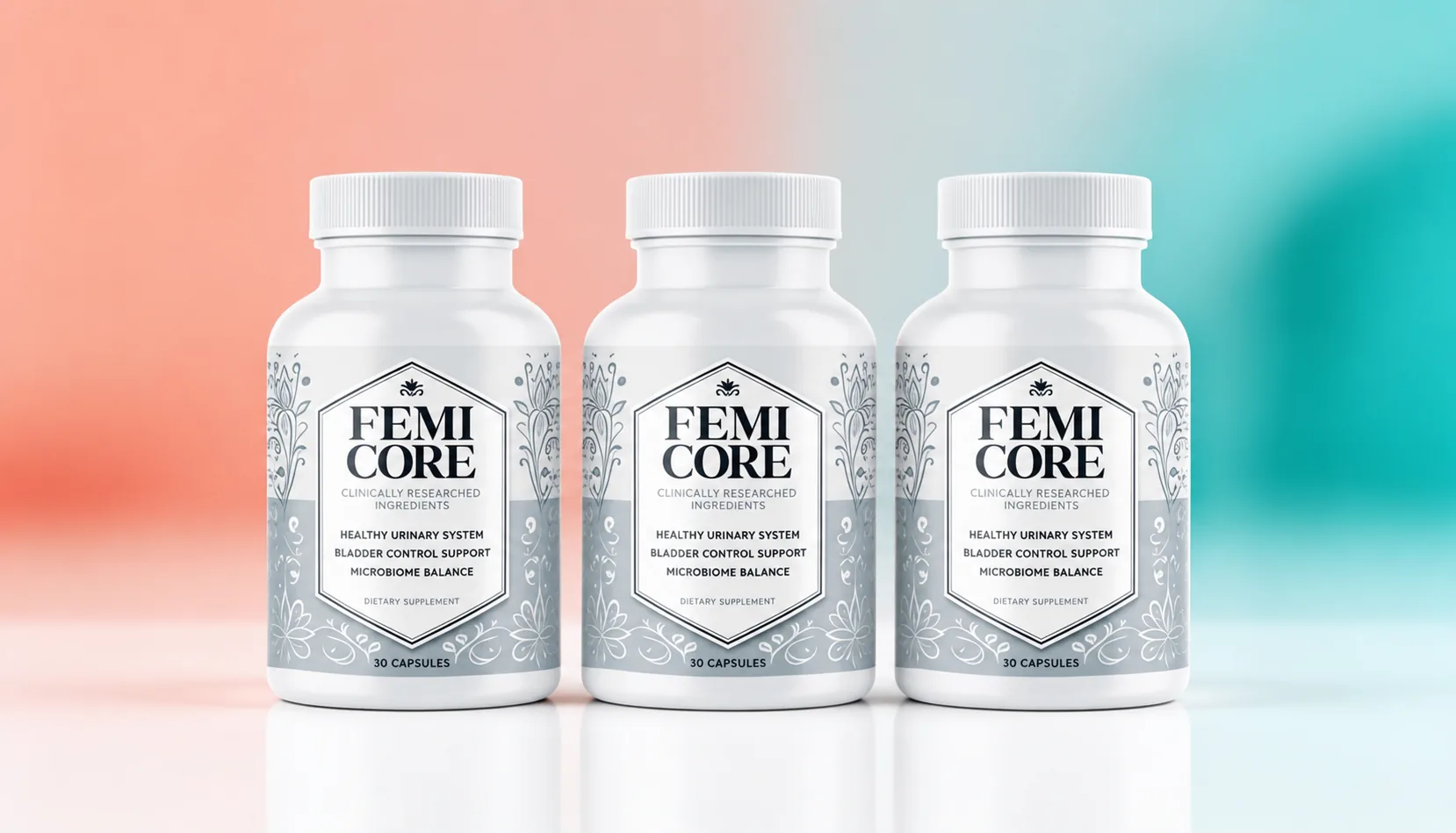
Still getting UTIs despite vaginal estrogen?
FemiCore puts cranberry standardized to 30% PACs and L. crispatus in one daily capsule, with a 60-day money-back guarantee.
Before You Give Up on Vaginal Estrogen
The worst outcome is stopping estrogen because it did not deliver zero infections, then finding your infections climb back to where they were. Before deciding it failed, run through this with your doctor:
- Count, do not guess. Compare the number of culture-confirmed UTIs in the year before estrogen with the year since. Halving them is a real effect.
- Check you have given it time. At least three months of consistent use, and ideally longer.
- Check the routine. Twice-weekly doses missed? A ring that stays in place for three months is an option some women find easier.
- Culture every episode. Make sure each one is a true infection, and find out whether it is the same organism each time.
- Look at emptying and triggers. Post-void residual, prolapse, sex-related timing, fluid intake.
- Add a layer, do not swap. Methenamine, cranberry at a meaningful PAC dose, or a Lactobacillus probiotic on top of estrogen.
If you are going through this alongside menopause changes in general, menopause and bladder health explains how estrogen affects the whole urinary system, and how to prevent recurrent UTIs naturally ranks every prevention option by evidence.
When You Need a Specialist
Ask for a referral to a urologist or urogynecologist if:
- You keep getting infections despite estrogen plus at least one added prevention strategy
- Your cultures show resistant bacteria, or the same unusual organism repeatedly
- You have blood in your urine between infections, kidney stones, or any infection with fever or back pain
- You feel a bulge, pressure or the sense you never fully empty
A specialist can look for structural causes, such as stones, prolapse or incomplete emptying, that no supplement or cream will fix. The Urology Care Foundation has a good overview of what that workup involves.
Key Takeaways
- It is common. About 30 to 40% of women still need another prevention strategy despite vaginal estrogen, according to a 2026 review.
- Estrogen still helps. The 1993 NEJM trial cut UTIs from 5.9 to 0.5 per patient-year. Fewer infections is a success, even if it is not zero.
- Lactobacilli do not always return. Only 61% regained them at one month in that trial, and women with recurrent UTIs have less L. crispatus.
- The gut is a reservoir. 78.6% of women with past E. coli UTIs carried it in the rectum in a 2026 study.
- Add, do not swap. Methenamine, cranberry at 36 mg PACs or more, and L. crispatus probiotics are layers on top of estrogen. D-mannose is not supported.
- Culture every episode. Some “UTIs” after menopause are not infections at all.
FemiCore — Our #1 Rated Bladder Health Supplement
Microbiome-targeted formula · 60-day money-back guarantee · GMP-certified facility
Frequently Asked Questions
Why do I still get UTIs on vaginal estrogen?
Common reasons include not having used it long enough, missed doses, protective lactobacilli that have not returned, E. coli living in the gut, incomplete bladder emptying, sex-related triggers, or symptoms that are not true infections. A 2026 review found about 30 to 40% of women still need another prevention strategy alongside vaginal estrogen.
How long does vaginal estrogen take to prevent UTIs?
It takes several weeks to restore the vaginal lining and bacteria, and the trials that showed a benefit ran for 6 to 12 months. Most specialists judge it after at least three months of consistent use rather than after the first infection.
Should I stop vaginal estrogen if I still get UTIs?
Not without talking to your doctor. If your infections are less frequent than before, the estrogen is working even if they have not stopped completely. Most specialists add another prevention strategy on top of estrogen rather than replacing it.
What can I add to vaginal estrogen to prevent UTIs?
Options with evidence include methenamine hippurate, which held up against daily antibiotics in the 2022 ALTAR trial, cranberry products providing at least 36 mg of PACs a day, and Lactobacillus crispatus probiotics, which are promising but not proven. Preventive antibiotics are another option your doctor may discuss. Daily d-mannose did not help in a 2024 trial of 598 women.
Can probiotics help if vaginal estrogen is not enough?
Possibly. Estrogen makes the vaginal environment hospitable to lactobacilli, but it cannot supply them. A 2011 trial of an L. crispatus probiotic saw 15% recurrence versus 27% on placebo, though the difference was not statistically significant overall in that small trial.
Can a supplement replace vaginal estrogen?
No. For postmenopausal women with recurrent UTIs, low-dose vaginal estrogen has the strongest evidence and is recommended by urology guidelines. Supplements such as cranberry and probiotics may support it but should be used alongside it, not instead of it.
The Bottom Line
Getting UTIs while you are using vaginal estrogen does not mean the treatment failed, and it definitely does not mean you failed. It usually means estrogen is doing one part of the job, rebuilding the tissue and the acidic environment, while something else is still letting bacteria through: lactobacilli that did not come back, E. coli waiting in the gut, a bladder that does not fully empty, or a pattern that needs a different plan. Keep the estrogen, culture every episode, count your infections honestly, and work with your doctor to add the next layer. For the cranberry-and-Lactobacillus layer, FemiCore is the formula I would start with. That is how women get from “fewer infections” to “rarely think about it.”
— Ellen Bennett

Ellen Bennett
Women’s Health Researcher. Compiles peer-reviewed evidence on bladder, urinary, and pelvic health, naming each study and source. About the author →
Further reading: bladder urgency after antibiotics and yeast infection and bladder leaks.
Research methodology. This article draws on the 1993 New England Journal of Medicine trial of vaginal estriol; a 2026 narrative review of vaginal estrogen for UTI prevention in Gynecologic and Obstetric Investigation; a 2026 Frontiers in Microbiology study of vaginal and rectal bacteria in postmenopausal women with recurrent UTIs; a 2026 Journal of Clinical Medicine review; a 2026 editorial on recurrent UTI phenotypes; the 2022 BMJ ALTAR trial; the 2023 Cochrane review of cranberry; a 2024 meta-analysis of cranberry PAC dose; the 2011 Clinical Infectious Diseases Lactin-V trial; the 2018 JAMA Internal Medicine water trial; the 2024 MERIT trial; and AUA/CUA/SUFU and Urology Care Foundation guidance. Each figure was checked against the published abstract or full text.
Medical disclaimer. This article is for information only and is not medical advice, diagnosis, or treatment. Dietary supplements are not intended to diagnose, treat, cure, or prevent any disease. Do not stop or change prescription medication, including vaginal estrogen, based on anything you read here. Fever, back pain, or blood in the urine need prompt medical care.
Last Reviewed: October 2026 by Ellen Bennett, Women’s Health Researcher. Sources: NEJM (1993); Gynecologic and Obstetric Investigation (2026); Frontiers in Microbiology (2026); Journal of Clinical Medicine (2026); BMJ (2022); Cochrane (2023); Clinical Infectious Diseases (2011); JAMA Internal Medicine (2018, 2024); AUA/CUA/SUFU; Urology Care Foundation.