
Published on November 12, 2026 — by Ellen Bennett, Women’s Health Researcher
Medical & Affiliate Disclosure: This article is for educational purposes only and is not medical advice. If you feel a bulge or heaviness in the vagina, or your leaks started suddenly or come with pain, see a doctor before starting a new exercise program. Some links are affiliate links; if you buy through them we may earn a commission at no extra cost to you.
Independent women’s health research · Written and fact-checked by Ellen Bennett, Women’s Health Researcher · Last verified: November 2026
Pilates has a reputation as the “core” workout, and the pelvic floor is part of the core. So it is natural to wonder whether a Pilates class could do the job that Kegels were supposed to do, especially if solo squeezing in the car has never quite stuck. Some women swear it helped. Others say it made their leaking worse.
Both can be true. Here is what the research says about Pilates for bladder leaks after menopause, the one condition that decides whether it works, and the moves to change if you leak during class.
Quick Answer: Pilates for bladder leaks can work as well as standard pelvic floor training for stress leaks after menopause. In a 2024 randomized trial of 40 postmenopausal women, 12 weeks of Pilates three times a week reduced urine loss as much as pelvic floor muscle training. The condition? It worked when women actively contracted their pelvic floor during the exercises. Pilates without that cue, or with lots of crunch-style moves, may not help.
Editor’s Recommendation
Strengthening the pelvic floor is the foundation for stress leaks. If urgency or repeat UTIs are part of your picture too, support your urinary microbiome from the inside: FemiCore pairs standardized cranberry with five named Lactobacillus strains in one daily capsule, with a 60-day money-back guarantee.
Does Pilates Help Bladder Leaks After Menopause?
The clearest answer comes from a randomized trial published in the International Urogynecology Journal in 2024. Forty postmenopausal women with stress urinary incontinence were split into two groups for 12 weeks, three sessions a week:
| Pilates group | Pelvic floor muscle training group | |
|---|---|---|
| Urine loss on the pad test | Improved | Improved |
| Daily urine loss (bladder diary) | Improved | Improved |
| Quality of life (ICIQ-SF) | Improved | Improved |
| Pelvic floor endurance | Improved | Improved |
| Peak squeeze pressure | Improved | Not significantly |
| Strength by examination | Not significantly | Improved |
The authors concluded that there was no difference between Pilates and pelvic floor muscle training for postmenopausal women with stress incontinence, provided that voluntary contraction of the pelvic floor muscles is performed. That last clause is the whole story. Pilates helped because the women were taught to engage their pelvic floor during the movements, not because Pilates is magic.
It is a small trial, and the authors want larger ones. But it fits a pattern: in the UCSF yoga trials too, structured exercise that pays attention to the pelvic floor cut leaks substantially. I cover those in yoga for bladder leaks over 50.
Why Pilates Can Help, and Why It Sometimes Backfires
Every time you cough, laugh or lift, pressure inside your abdomen pushes down on your bladder. Your pelvic floor has to push back at the same moment. Pilates can train that teamwork between breath, deep abdominal muscles and the pelvic floor.
But some classic mat moves create a big spike in abdominal pressure. If your pelvic floor is not strong or quick enough yet, that pressure goes straight down, and you leak. Signs a class is working against you:
- You leak during crunch-like moves such as the Hundred, roll-ups or double leg stretches
- You hold your breath and bear down to get through an exercise
- You feel heaviness or a bulge in the vagina afterward
None of that means you should quit. It means you need modifications and a pelvic floor cue. Many women also have a pelvic floor that is too tight rather than too weak, which I explain in why Kegels aren’t working.
Editor’s Recommendation
Habits and exercises do most of the work. For daily urinary-microbiome support on top of them, FemiCore combines standardized cranberry with five named Lactobacillus strains in one capsule, with a 60-day money-back guarantee.
Pelvic-Floor-Friendly Pilates Moves
| Move | What it trains | Pelvic floor cue |
|---|---|---|
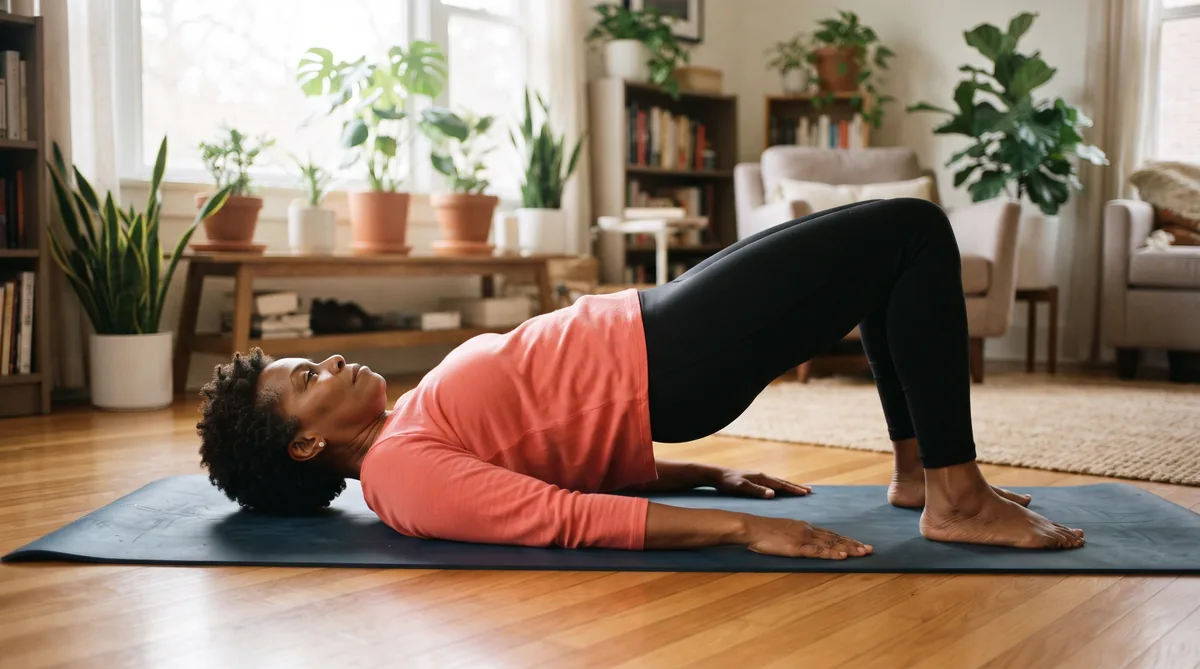
| Pelvic curl (bridge) | Glutes, back of the pelvis | Exhale, gently lift the pelvic floor, then peel your hips up |
| Dead bug (arms only, then legs) | Deep abdominals with control | Lift on the exhale as the limb moves away |
| Side-lying leg series | Hip stabilizers | Keep a light lift without holding your breath |
| Clam | Outer hips, pelvic stability | Lift as the knee opens, release as it closes |
| Quadruped arm and leg reach | Back and core coordination | Exhale and lift as you reach |
| Seated or standing breathing | Coordination and relaxation | Let the pelvic floor fully release on the inhale |
Moves to modify early on: the Hundred, roll-ups, teasers and anything with both legs lifted straight. Bend the knees, keep your head down, or skip them until you can do them without leaking or bearing down.
How to Start Pilates for Bladder Leaks
- Tell your instructor you are working on bladder leaks. A good instructor will add pelvic floor cues and swap high-pressure moves.
- Learn the contraction first. If you are unsure you are squeezing the right muscles, one or two sessions with a pelvic floor therapist is worth it. Here is what to expect from pelvic floor therapy.
- Follow the trial’s dose: about three sessions a week for 12 weeks.
- Exhale on effort, lifting the pelvic floor as you breathe out, and release fully on the inhale.
- Keep a simple leak diary so you can see change over the weeks.
- Add targeted exercises on non-class days; see pelvic floor exercises for women over 40.
Strength outside, support inside
FemiCore combines cranberry standardized to 30% PACs with L. crispatus and four more Lactobacillus strains to support a healthy urinary microbiome while you rebuild pelvic strength. One-time purchase, no autoship.
Pilates, Yoga or Pelvic Floor Training?
| Option | Evidence | Best for |
|---|---|---|
| Supervised pelvic floor muscle training | Strongest; first-line in guidelines | Anyone with stress or mixed leaks |
| Pilates with pelvic floor cues | Matched pelvic floor training in a 2024 trial of 40 postmenopausal women | Women who enjoy classes and want whole-body strength |
| Pelvic yoga | Two UCSF trials; about as good as general exercise | Women who want flexibility, balance and relaxation |
| Weight training | Helpful with good technique | See leaking when lifting weights |
The NIDDK lists pelvic floor exercises as a first step for bladder control problems. Pilates is one enjoyable way to make them part of your week. If your leaks are mainly urgency rather than pressure, add a bladder training schedule, because muscle work alone does less for urge leaks. Not sure which you have? See stress vs urge incontinence. For calming the urge itself, see mindfulness for urge incontinence.
Where Supplements Fit, Honestly
Pilates trains muscles and timing. It does nothing for the other half of bladder health after menopause: the protective Lactobacillus bacteria that thin when estrogen falls, which is one reason urgency, frequency and UTIs rise together in your fifties. I explain the hormone side in menopause and bladder health.
That is where FemiCore fits. It pairs cranberry standardized to 30% PACs, which helps keep E. coli from clinging to the bladder wall, with five named Lactobacillus strains, including L. crispatus, the species most linked to a healthy vaginal environment. To be clear about roles: no capsule replaces pelvic floor work for stress leaks, and FemiCore is not an incontinence treatment. It supports the urinary microbiome while the exercise does its job, which is why I recommend the two together if urgency or repeat UTIs are part of your story. Details are in my full FemiCore review and the strain evidence in probiotics for bladder control.
Who Should Be Careful
- Prolapse: a bulge or dragging feeling means getting assessed before high-pressure moves.
- Osteoporosis: avoid loaded spinal flexion such as roll-ups and teasers; ask for modifications. More in osteoporosis and bladder leaks.
- Hypermobility: focus on control rather than end-range stretching; see hypermobility and bladder leaks.
- Red flags: blood in the urine, pain, burning or fever need a doctor first.
Key Takeaways
- Pilates for bladder leaks works as well as pelvic floor training for stress leaks after menopause, in a 2024 trial of 40 women.
- The key condition: actively contract your pelvic floor during the exercises.
- Modify high-pressure moves like the Hundred and roll-ups if you leak or bear down.
- Dose: about three sessions a week for 12 weeks.
- Exhale on effort and fully release on the inhale.
- Pair muscle work with urinary microbiome support if urgency or UTIs are part of your picture.
FemiCore: daily urinary microbiome support
Standardized cranberry + five Lactobacillus strains · 60-day money-back guarantee · one-time purchase, no autoship
Frequently Asked Questions
Is Pilates good for bladder leaks?
It can be. In a 2024 randomized trial of 40 postmenopausal women with stress incontinence, 12 weeks of Pilates reduced urine loss as much as standard pelvic floor muscle training, as long as women actively contracted their pelvic floor during the exercises.
Can Pilates make bladder leaks worse?
It can if a class relies on moves that spike abdominal pressure, such as the Hundred or roll-ups, before your pelvic floor is ready, or if you hold your breath and bear down. Modify those moves and use a pelvic floor cue.
How often should I do Pilates for incontinence?
The 2024 trial used three sessions a week for 12 weeks. Plan on about three months and keep a leak diary so you can judge the change.
Is Pilates better than Kegels?
Not better, but comparable for stress leaks when done with pelvic floor engagement. Supervised pelvic floor muscle training remains first-line, and Pilates is a good way to make those contractions part of a whole-body routine.
Which Pilates exercises are best for the pelvic floor?
Pelvic curls, dead bugs, side-lying leg work, clams and quadruped reaches, each done with an exhale and a gentle pelvic floor lift. Breathing practice that lets the pelvic floor fully relax is just as important.
Does Pilates help urge incontinence?
The 2024 trial studied stress incontinence, so the evidence is for leaks with coughing, sneezing or lifting. For urgency, combine exercise with bladder training and limiting bladder irritants such as caffeine.
The Bottom Line
Pilates for bladder leaks after menopause is a genuinely good option, with a randomized trial showing it can match standard pelvic floor training for stress leaks. The difference between Pilates that helps and Pilates that makes things worse is simple: actively engaging your pelvic floor, breathing out on effort, and modifying the high-pressure moves until you are ready for them. Give it three sessions a week for three months, track your leaks, and if urgency or repeat UTIs come along with them, support your urinary microbiome alongside the exercise.
— Ellen Bennett

Ellen Bennett
Women’s Health Researcher. Compiles peer-reviewed evidence on bladder, urinary, and pelvic health, naming each study and source. About the author →
Further reading: bladder leaks during exercise, peeing when you laugh and the complete guide to bladder leaks.
Research methodology. This article is based on a 2024 randomized trial comparing Pilates with pelvic floor muscle training in 40 postmenopausal women (International Urogynecology Journal), the UCSF yoga trials, and NIDDK guidance on bladder control. Each figure was checked against the original abstract. We did not purchase or test FemiCore.
Medical disclaimer. This article is for information only and is not medical advice, diagnosis, or treatment. Dietary supplements are not intended to diagnose, treat, cure, or prevent any disease. Blood in the urine, fever, pain, a vaginal bulge or sudden changes in bladder control need a doctor.
Last Reviewed: November 2026 by Ellen Bennett, Women’s Health Researcher. Sources: International Urogynecology Journal (2024); Annals of Internal Medicine (2024); NIDDK; Urology Care Foundation.