

Published on October 29, 2026 — by Ellen Bennett, Women’s Health Researcher
Medical & Affiliate Disclosure: This article is for educational purposes only and is not medical advice. Hypermobility syndromes need diagnosis by a qualified clinician, and bladder symptoms need their own evaluation. Never stop or change a prescription based on what you read here. Some links are affiliate links; if you buy through them we may earn a commission at no extra cost to you.
Independent women's health research · Written and fact-checked by Ellen Bennett, Women's Health Researcher · Last verified: October 2026
Maybe you were the flexible kid who could do the splits without warming up. Maybe your joints click, your shoulders slip, and you bruise if someone looks at you. And maybe, somewhere along the way, you started leaking when you cough, rushing to the bathroom, or feeling like your bladder never quite empties. Most doctors treat those as separate problems. If you have wondered whether hypermobility and bladder leaks are connected, the research says you are right to ask.
Connective tissue does not stop at your joints. The same collagen that lets your thumb bend back to your wrist also holds up your bladder, your urethra and your pelvic floor. This guide explains what the studies show, why the usual “just do Kegels” advice can backfire for some hypermobile women, and what a smarter plan looks like.
Quick Answer: Hypermobility and bladder leaks are linked. In a 2013 case-control study, 73.3% of women with benign joint hypermobility syndrome had urinary incontinence, compared with 48.3% of matched controls, and a 2024 literature review put leaking at 50 to 60% in Ehlers-Danlos syndrome. What helps? A pelvic floor physical therapist first, because a 2026 urodynamic study pointed to pelvic floor and nerve problems rather than the bladder itself.
Hypermobility and Bladder Leaks: What the Research Shows
Joint hypermobility means your joints move beyond the normal range. For some people it is harmless. For others it is part of a wider connective tissue condition: hypermobility spectrum disorder or hypermobile Ehlers-Danlos syndrome (hEDS), which MedlinePlus Genetics lists among the most common forms of Ehlers-Danlos syndrome. In the bladder studies below, the patients are overwhelmingly women.
| Study | Who | What it found |
|---|---|---|
| International Urogynecology Journal, 2013 | 60 women with benign joint hypermobility syndrome vs 60 matched healthy women | Urinary incontinence in 73.3% vs 48.3%; more voiding difficulty; front-wall vaginal prolapse more severe |
| French Journal of Urology review, 2024 | 73 published studies | Incontinence in an estimated 50 to 60% of people with EDS and 40 to 73% with joint hypermobility syndrome; prolapse odds 2.37 times higher in generalized hypermobility |
| European Journal of Obstetrics, Gynecology and Reproductive Biology review, 2026 | Recent evidence for urogynecologists | More than double the prolapse risk; high rates of stress and urge incontinence, bladder pain, recurrent urinary infections and incomplete emptying |
| Neurourology and Urodynamics, 2026 | 27 adults with hEDS tested with video urodynamics (92.6% women) | Frequency in 74.1%, weak stream 51.8%, nocturia 48.1%, frequent UTIs 25.9%; no bladder muscle overactivity found; pelvic floor dysfunction in 18.5% |
The honest picture: the numbers are high and consistent, but most studies are small, many come from specialist clinics where the sickest patients end up, and the 2026 urodynamic team said plainly that a definitive link between hEDS and bladder disease has not been established. What is established is that bladder symptoms are common in hypermobile women and deserve a proper look, not a shrug.
Why Hypermobility Affects the Bladder
1. Softer support tissue
Your bladder and urethra sit on a hammock of muscle and connective tissue. When that tissue is more stretchy than normal, the urethra can drop and move when pressure rises, which is the classic setup for stress incontinence: leaks when you cough, sneeze, jump or lift. It also explains the higher prolapse rates. I explain the difference between leak types in stress vs urge incontinence.
2. A pelvic floor that holds on instead of letting go
This is the counterintuitive part. When joints are unstable, muscles often tighten to compensate. The 2026 urodynamic study found pelvic floor muscles actively contracting during emptying in 18.5% of patients, and weak stream in more than half. A pelvic floor that cannot relax can cause hesitancy, incomplete emptying, frequency and pain, not just leaks.
3. Nerves and the autonomic system
Many people with hEDS also have dysautonomia, such as postural orthostatic tachycardia syndrome (POTS), where the automatic nervous system misfires. The 2026 study's authors concluded that pelvic floor and neurologic dysfunction, rather than problems inside the bladder, were the main drivers of symptoms.
4. A bladder that stretches and does not empty
The 2026 review linked hypermobility to increased bladder capacity and higher leftover urine after voiding. One patient in the urodynamic study had 500 mL left behind. Urine that sits in the bladder is one reason recurrent UTIs show up in these studies.
Why “Just Do Kegels” Can Backfire
The standard advice for leaking is pelvic floor strengthening, and for many women it works. For hypermobile women, it depends on which problem you actually have.
- If your pelvic floor is weak and stretchy, strengthening helps, though it may take longer, because muscle has to do work that loose connective tissue is not doing.
- If your pelvic floor is already clenched, more squeezing can make frequency, hesitancy and pain worse. The muscles need to learn to release first.
- Many hypermobile women have both: a muscle that is tight and weak at the same time, which is why self-guided Kegels so often disappoint.
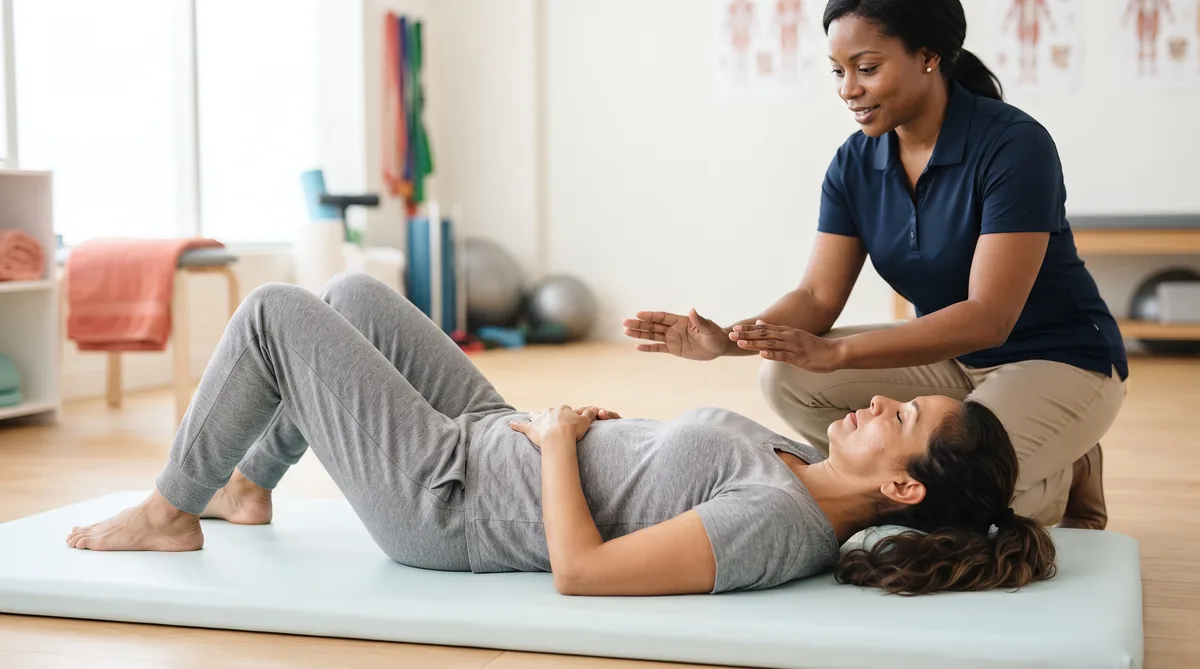
That is why a pelvic floor physical therapist is the first step here, not an app. The 2026 urodynamic study found physical therapy was the most commonly recommended treatment. I explain the tight-but-weak pattern in why Kegels aren't working, and what a session looks like in pelvic floor therapy: what to expect.
The Water Trap If You Also Have POTS
People with POTS are commonly told to drink a lot of fluid, often 2 to 3 liters a day, plus extra salt, to support blood volume. That advice is important and you should follow your cardiologist on it. But it collides head-on with an urgent, leaky bladder.
A few ways to make the two coexist:
- Front-load: take most of your fluid in the morning and early afternoon, when POTS symptoms are often worst anyway.
- Use electrolyte drinks your doctor approves so each glass does more work, rather than adding more plain water.
- Avoid the irritants that come along for the ride, such as caffeinated or fizzy electrolyte drinks; see caffeine and bladder leaks.
- Taper in the evening to protect sleep.
- Bring both specialists into the conversation so your fluid target is set with your bladder in mind.
My guide to how much water to drink with an overactive bladder covers fluid timing in more detail.
Hypermobility After 40: Why It Can Get Worse
Many hypermobile women say their bladder symptoms started or worsened in their 40s and 50s. That fits what we know about midlife biology. Estrogen supports collagen in the pelvic tissues, and as it falls through perimenopause and menopause, tissue that was already less firm loses more support. Pregnancies and births add their own strain. For the hormonal side, see menopause and bladder health.
Constipation is another midlife amplifier, and gut dysmotility is common in hEDS. Straining pushes down on the same weak support. If that applies to you, read constipation and bladder leaks.
What Actually Helps With Hypermobility and Bladder Leaks
1. A specialist pelvic floor assessment
Ask for a pelvic floor physical therapist who has worked with hypermobility. The first sessions usually focus on breathing, relaxation and coordination before strength. Expect slower progress than standard plans, and that is normal, not failure.
2. Bladder training for urgency and frequency
Gradually lengthening the time between trips is safe and does not stress joints or tissue. My bladder training schedule walks you through it.
3. Empty completely
Sit fully on the seat rather than hovering, lean forward slightly with your feet supported, and try double voiding: when you think you are done, wait 20 to 30 seconds and try again. If your stream is weak or you often feel unfinished, ask for a post-void residual scan.
4. Joint-friendly exercise
High-impact exercise and heavy lifting are common leak triggers. Low-impact strength work with good form protects both joints and pelvic floor. See leaking when lifting weights and bladder leaks during exercise.
5. Medication, if needed
In the 2026 study, beta-3 agonists such as mirabegron were the next most common recommendation after physical therapy. For hypermobile women who often already deal with dry mouth, constipation or brain fog, avoiding older anticholinergic drugs can be sensible. I compare them in mirabegron vs oxybutynin.
6. A careful conversation before surgery
The 2026 review notes tissue fragility, slower wound healing and higher surgical complication rates in some hypermobile patients. That does not rule surgery out, but it means asking your surgeon how often they operate on women with connective tissue disorders and whether conservative options have been fully tried.
When to See a Doctor Promptly
- Being unable to pass urine, or a stream that is getting steadily weaker
- Fever, chills or pain in your back or side
- Blood in your urine
- A bulge you can see or feel at the vaginal opening
- New numbness in the saddle area or legs, or new bowel control problems
The NIDDK has a good overview of bladder control problems and how they are evaluated.
Where Supplements Fit, Honestly
No supplement fixes connective tissue or tightens a pelvic floor. Anyone selling collagen powder as a bladder cure is ahead of the evidence. Where a supplement can play a supporting role is narrower: in the 2026 hEDS study, about one in four patients had frequent urinary infections, and incomplete emptying is a known contributor. If you have repeat, culture-confirmed UTIs, especially after menopause, the urinary microbiome becomes part of the conversation, alongside better emptying.
That is the gap FemiCore is built for. It combines cranberry standardized to 30% proanthocyanidins with five named Lactobacillus strains, including L. crispatus, the species most linked to a protective vaginal environment. I explain the evidence and its limits in my FemiCore review and in how to prevent recurrent UTIs naturally.
Editor's Recommendation: repeat confirmed UTIs after menopause
FemiCore pairs standardized cranberry with L. crispatus and four other Lactobacillus strains in one daily capsule, with a 60-day money-back guarantee. It does not treat hypermobility or leaks; it is for supporting urinary tract health.
Questions to Bring to Your Next Appointment
- Could my bladder symptoms be connected to my hypermobility?
- Is my pelvic floor weak, overactive, or both?
- Can you refer me to a pelvic floor physical therapist with hypermobility experience?
- Should I have a post-void residual scan or urodynamic testing?
- How should I balance POTS fluid advice with my bladder?
- If surgery comes up, what are the extra risks with my connective tissue?
Key Takeaways
- Hypermobility and bladder leaks are linked: 73.3% of women with joint hypermobility syndrome leaked vs 48.3% of controls in a 2013 study.
- Prolapse is more common too, with more than double the risk in recent reviews.
- The pelvic floor, not the bladder, may be the main problem: a 2026 urodynamic study found no bladder muscle overactivity.
- Kegels are not always the answer; some hypermobile women need to learn to relax the pelvic floor first.
- POTS fluid advice and an urgent bladder can be balanced with timing, electrolytes and fewer irritants.
- Supplements do not fix connective tissue; a urinary microbiome formula only fits if you have repeat confirmed UTIs.
Frequently Asked Questions
Can hypermobility cause bladder leaks?
Research links them. A 2013 case-control study found urinary incontinence in 73.3% of women with benign joint hypermobility syndrome vs 48.3% of matched controls, and a 2024 review estimated incontinence at 50 to 60% in Ehlers-Danlos syndrome. Looser connective tissue supporting the urethra and pelvic floor is the leading explanation, though a definitive causal link is not proven.
Does Ehlers-Danlos syndrome affect the bladder?
It often does. In a 2026 study of 27 adults with hypermobile EDS, 74.1% had urinary frequency, 51.8% a weak stream, 48.1% nocturia and 25.9% frequent UTIs. Urodynamic testing found no overactive bladder muscle, and the authors pointed to pelvic floor and nerve dysfunction as the main causes.
Are Kegels good for hypermobility?
Sometimes, but not always. If the pelvic floor is weak, strengthening helps. If it is already tight, which is common when muscles compensate for unstable joints, more squeezing can worsen frequency and pain. A pelvic floor physical therapist can test which pattern you have before you start.
Is prolapse more common with hypermobility?
Yes. A 2024 review found odds of pelvic organ prolapse 2.37 times higher in generalized joint hypermobility, and a 2026 review reported more than double the risk. Prolapse in hypermobile women also tends to be more severe. See a doctor if you notice a bulge at the vaginal opening.
How much water should I drink with POTS and a weak bladder?
Follow your cardiologist's fluid target, which is often 2 to 3 liters a day for POTS, but change the timing: drink most of it in the morning and early afternoon, use approved electrolyte drinks, avoid caffeinated or fizzy versions, and taper in the evening to protect sleep.
Why do I feel like I can't empty my bladder with EDS?
Possible reasons include a pelvic floor that tightens during urination, reduced bladder sensation, or a bladder that holds more and empties less. A 2026 review linked hypermobility to higher leftover urine after voiding. Try double voiding and sitting fully on the seat, and ask for a post-void residual scan.
The Bottom Line
Hypermobility and bladder leaks are connected far more often than most doctors mention. The same stretchy collagen that makes your joints unstable can weaken the support under your bladder, and the muscles that try to compensate can end up clenched, weak, or both. That is why the generic advice to do more Kegels so often fails hypermobile women. Start with a pelvic floor physical therapist who understands hypermobility, learn to empty fully, time your fluids around POTS advice if it applies, and think carefully before surgery. Supplements only enter the picture for confirmed repeat infections.
— Ellen Bennett

Ellen Bennett
Women's Health Researcher. Compiles peer-reviewed evidence on bladder, urinary, and pelvic health, naming each study and source. About the author →
Further reading: the complete guide to bladder leaks, pelvic floor exercises for women over 40 and peeing when you laugh.
Research methodology. This guide draws on a 2013 case-control study in the International Urogynecology Journal; a 2024 literature review in the French Journal of Urology; a 2026 narrative review in the European Journal of Obstetrics, Gynecology and Reproductive Biology; a 2026 urodynamic study in Neurourology and Urodynamics; MedlinePlus Genetics; and NIDDK guidance. Study figures were checked against the original abstracts in October 2026. Most studies are small and clinic-based.
Medical disclaimer. This article is for information only and is not medical advice, diagnosis, or treatment. Dietary supplements are not intended to diagnose, treat, cure, or prevent any disease. Do not stop or change prescription medication based on anything you read here. Blood in the urine, fever, pain, or being unable to empty your bladder need a doctor.
Last Reviewed: October 2026 by Ellen Bennett, Women's Health Researcher. Sources: International Urogynecology Journal (2013); French Journal of Urology (2024); European Journal of Obstetrics, Gynecology and Reproductive Biology (2026); Neurourology and Urodynamics (2026); MedlinePlus Genetics (NIH); NIDDK.