
Published on September 23, 2026 — by Ellen Bennett, Women’s Health Researcher
Medical & Affiliate Disclosure: This article is for educational purposes only and is not medical advice. Always talk to your doctor about urinary symptoms and before starting any new exercise if you have osteoporosis or a history of fracture. Some links below are affiliate links; if you buy through them we may earn a commission at no extra cost to you. That does not change what we write.
Independent women’s health research · Written and fact-checked by Ellen Bennett, Women’s Health Researcher · Last verified: September 2026
You had the bone density scan. Someone explained the T-score, said the word osteopenia or osteoporosis, and talked about calcium, vitamin D, and maybe a medication. Nobody asked whether you leak. Yet when researchers mailed a symptom questionnaire to women who had been through exactly that scan, three out of four said yes.
Osteoporosis and bladder leaks are treated in different clinics by different specialists, and the connection between them is rarely explained, partly because the research is genuinely messy. Some studies find a strong link. One large study found the opposite. This article walks through what the evidence actually shows, why the popular explanation about your spine is probably not the main story, and what one small but encouraging trial found when women with osteoporosis were finally treated for the leaking too.
Quick Answer: Osteoporosis and bladder leaks overlap heavily after 50, and the best explanation is a shared root rather than one causing the other. Both are driven by the same estrogen loss at menopause and the same age-related loss of muscle, and the pelvic floor is muscle. In a Taiwanese cohort of 18,375 women over 40, a new osteoporosis diagnosis carried 1.79 times the risk of developing stress incontinence, and fractures did not add to that risk, which argues against the idea that a curved spine pressing on the bladder is the main mechanism. A 2016 randomized trial in Menopause found that 12 weekly pelvic floor physical therapy sessions cut leakage episodes by 75% in postmenopausal women with osteoporosis, with the benefit still present a year later. Treating the leak matters for your bones too, because leaking is one of the main reasons women stop doing the weight-bearing exercise their skeleton needs.
How Common Is Bladder Leakage With Osteoporosis?
Start with how many women are in this group at all. According to the CDC’s analysis of 2017 to 2018 national survey data, 19.6% of US women aged 50 and over have osteoporosis, and a further 51.5% have low bone mass. Put together, that is roughly seven in ten women over 50 with bones below the normal range, and the osteoporosis share climbs from 13.1% at ages 50 to 64 to 27.1% at 65 and over.
Now add the bladder. A 2013 study in the International Urogynecology Journal mailed pelvic floor questionnaires to women who had undergone osteoporosis evaluation and analyzed 1,655 responses. Some form of urinary incontinence was reported by 75%, and 58% of those leaked at least two to three times a week. Those are not small numbers, and they came from women who had just been through a bone appointment where the subject almost certainly never came up.
| Study | Who | What it found |
|---|---|---|
| CDC, NCHS Data Brief 405, 2021 | US adults 50+, 2017 to 2018 survey | 19.6% of women have osteoporosis; 51.5% have low bone mass |
| Int Urogynecol J, 2013 | 1,655 postmenopausal women after osteoporosis evaluation | 75% reported urinary incontinence; 58% leaked 2 to 3 times a week or more |
| Taiwan National Health Insurance cohort, 2020 | 6,125 women 40+ newly diagnosed with osteoporosis vs 12,250 without | 1.79 times the risk of a new stress incontinence diagnosis (95% CI 1.28 to 2.51) |
| World Journal of Urology, 2026 | 100 postmenopausal women aged 60 to 75, half with osteoporosis | Stress incontinence in 50% of the osteoporosis group vs 24% of controls |
Why the Evidence Disagrees, and What That Tells You
I want to be straight about this, because most articles on the subject are not. The link is real in several good studies and absent, or even reversed, in others. Reading them side by side is what actually explains what is going on.
The Taiwanese insurance database study, published in 2020, is the largest and cleanest for cause and effect, because it followed women forward in time from a new osteoporosis diagnosis. The 1.79-fold risk of subsequent stress incontinence held regardless of age. The 2026 World Journal of Urology study found osteoporosis carried 3.5 times the odds of stress incontinence in women aged 60 to 75, and a 2014 study in Minerva Ginecologica found osteoporosis more common in women with stress incontinence, with lower estradiol in both.
Then there is the other side. The Norwegian HUNT study, a 2022 analysis of 6,809 women with bone density measured by DXA, found that women with a hospital diagnosis of stress incontinence were actually less likely to have osteopenia, with an odds ratio of 0.66. And the 2013 urogynecology study above found no increase in leak frequency with osteoporosis once age and body mass index were accounted for, although within the osteoporosis group, women with the lowest bone density did have higher odds of losing moderate to large volumes.
How can both be true? The most likely answer is body weight. Heavier women tend to have denser bones, because bone responds to load, and heavier women also have more stress incontinence, because abdominal weight presses on the bladder. So in a population study, weight can make it look as if leaking protects your bones. Our guide to whether losing weight helps bladder leaks covers that pressure mechanism. Strip weight out, follow women forward in time as the Taiwanese cohort did, and the link reappears.
Two honest limits. The 2026 study is small at 100 women, and the 2014 study had 185. And every study here shows association. None proves that thinning bone causes leaking. What they do support, taken together, is that the two conditions share causes, which turns out to be the more useful idea anyway.
The Real Link: One Root, Two Symptoms
The reframe that matters: your bones did not cause your bladder problem. The same three things that weakened your bones weakened your pelvic floor at the same time, and the pelvic floor is a muscle that holds your bladder up.
1. Estrogen. The National Institute of Arthritis and Musculoskeletal and Skin Diseases lists low estrogen after menopause as a risk factor for osteoporosis and notes that for many women the disease begins to develop a year or two before menopause. That same estrogen loss thins the lining of the urethra and bladder base and reduces blood flow to the pelvic floor. The 2014 Minerva Ginecologica study measured it directly: estradiol was lower in the women with stress incontinence, and the women with the lowest estradiol were the ones with osteoporosis. Our guide to menopause and bladder health explains the bladder side of that hormone shift in full.
2. Muscle loss. This is the mechanism almost nobody mentions, and the 2026 study makes it hard to ignore. Sarcopenia, the age-related loss of muscle mass and strength, was present in 30% of the osteoporosis group versus 12% of controls. And in the statistical model, sarcopenia carried its own 3.3-fold odds of stress incontinence, independent of the bones. Bone and muscle are built and lost together, because both respond to the same loading and the same hormones. When the muscle in your thighs and grip gets weaker, the muscle in your pelvic floor is getting weaker too, and that is the muscle that stops a leak when you cough.
3. Inactivity, and the fear that drives it. A 2026 study in BMC Women’s Health looked at 83 women with postmenopausal osteoporosis and measured kinesiophobia, meaning fear of movement. The women who leaked were significantly more afraid to move, and the more severe the leaking, the stronger the fear, with a correlation of 0.59. That is a trap, because weight-bearing exercise is the single lifestyle intervention that protects bone. A woman who stops walking because she leaks is losing bone and muscle to protect herself from a problem that the walking would have helped.
What about the spine? The explanation you will find on most websites is that vertebral fractures curve the spine, which pushes the abdominal contents down onto the bladder. That is plausible in advanced cases with significant height loss. But the Taiwanese cohort tested it directly and found that women with osteoporotic fractures had no higher risk of stress incontinence than women with osteoporosis alone. So if you have low bone density and no fractures, do not assume your posture is the cause. The evidence points to hormones and muscle first.

Why It Arrives After 50
The timing is not a coincidence. The CDC figures show osteoporosis in women roughly doubling between the 50 to 64 bracket and the 65 and over bracket, and low bone mass already affecting half of women by their early fifties. That is the same window in which estrogen falls, muscle mass begins its steeper decline, and urinary symptoms in women rise sharply for the reasons covered in our menopause guide.
A woman at 58 is therefore often dealing with three things at once that share a cause: bones that have started to thin, a pelvic floor that has started to weaken, and a bladder lining that has become less forgiving. Each one is managed by a different clinician, and the patient is the only person in the room for all three conversations. That is the gap this article is meant to close, and it sits alongside our guides to thyroid and bladder leaks and arthritis and bladder leaks, which cover two other conditions that arrive in the same decade and get treated in the same silos.
The 75% Trial: What Happens When Someone Finally Treats the Leak
Here is the study that should change how you think about this. A 2016 randomized controlled trial in the journal Menopause enrolled 48 women aged 55 and over who had osteoporosis or low bone density and urinary incontinence. Half were given 12 weekly sessions of physical therapy for the incontinence. The other half were given osteoporosis education, which is what most women in this situation get anyway.
The physical therapy group had a 75% reduction in their weekly number of leakage episodes, measured with a seven-day bladder diary. The education group did not improve. The difference was statistically significant at three months and still significant at one year, and no harms were reported.
Two honest notes. The trial was small, 24 women per group, and the effect size at one year was 0.34, which researchers would call small to moderate. This is one trial, not a body of evidence. But it was randomized, it was done in exactly your population, and it asked exactly the right question: if you treat the bladder in a woman being treated for her bones, does she get better? The answer was yes, and the benefit lasted.
What the therapy involved is worth knowing, because it is available to you. Pelvic floor physical therapy typically combines assessment of whether your floor is weak or over-tight, guided muscle training with feedback, bladder training to extend the time between urges, and practical education. Our guide to what to expect from pelvic floor therapy walks through a first appointment.
Bone-Safe Bladder Work: What Changes When Your Bones Are Fragile
Standard bladder advice is mostly fine with osteoporosis, but a few things need adapting, and a few things do double duty. This is the practical part.
| Intervention | With osteoporosis | Why it matters for both |
|---|---|---|
| Pelvic floor muscle training | Safe. No spinal loading. Can be done seated or lying down. | The most evidence-backed treatment for stress leaks, and the only one that directly rebuilds the muscle that was lost. |
| The Knack (tightening the floor just before a cough, sneeze, or lift) | Safe and doubly useful. | Protects against the leak and braces the trunk, which is what osteoporosis guidance recommends before lifting anyway. |
| Walking | Strongly recommended. NIAMS names it as the weight-bearing exercise of choice. | Builds bone, maintains leg and pelvic muscle, and empties the bladder more predictably than sitting all day. |
| Crunches, sit-ups, loaded forward bending | Avoid. Forward flexion under load is the movement osteoporosis guidance warns against. | These also push down on the pelvic floor. Skipping them costs your bladder nothing. |
| Balance and leg strength (chair stands, heel raises) | Strongly recommended for fall prevention. | Faster, steadier trips to the bathroom, especially at night. A rushed night-time trip is a fall risk. |
| Bladder training | Safe. | Lengthens the warning time before urgency, which buys you a calmer walk rather than a dangerous rush. |
| Avoiding straining on the toilet | Important. | Straining loads the spine and the pelvic floor at once. See our guide to constipation and bladder leaks. |
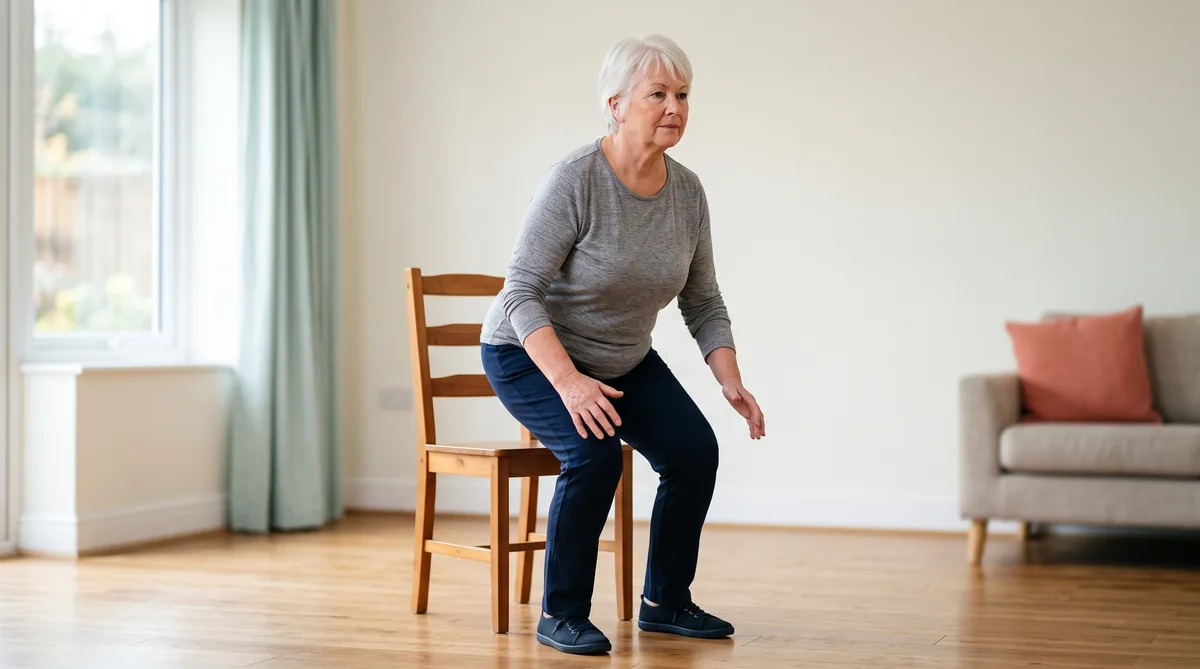
Get the pelvic floor assessed before you assume it is weak. Most women with osteoporosis and stress leaks do have a weak floor, and the muscle-loss data supports that. But some have a floor that is tight and guarding, and for them more Kegels can worsen urgency. A pelvic floor physical therapist can tell the difference in one visit, and our guide to why Kegels are not working explains what happens when you train the wrong problem. If your floor is weak, our pelvic floor exercise guide for women over 40 is the place to start.
Solve the night-time trip as a falls problem. For a woman with fragile bones, a hip fracture from a rushed trip to the bathroom at 3 a.m. is a far bigger threat than the leak itself. Clear the route, add a night light, and if you wake more than once a night to urinate, read our guide to nocturia in women, because nocturia is usually reducible and every avoided trip is an avoided fall risk.
Do not let the leak cancel the walk. If leaking during exercise is the reason you stopped, our guide to bladder leaks during exercise covers the practical fixes, from timing your fluids to the Knack to choosing lower-impact options that still load bone. The walking is not optional for your skeleton. The leak is treatable. Treat the leak.
Ask Each Doctor the Other Question
The authors of the 2014 Minerva Ginecologica study concluded that women with osteoporosis should be evaluated for urinary incontinence and women with urinary incontinence should be evaluated for osteoporosis. The authors of the Taiwanese cohort said the same: physicians and nurses should screen women with osteoporosis for incontinence. In practice, this rarely happens. So do it yourself.
At your bone appointment, say: “I also leak urine. Is there anything about my bone treatment or exercise plan that should change because of that, and can you refer me to pelvic floor physical therapy?” At your gynecology or urology appointment, say: “I have low bone density. Is vaginal estrogen appropriate for me, and are any of the bladder exercises you are recommending unsafe for my spine?” Both are reasonable questions, and both tend to get useful answers once asked.
Editor’s Recommendation
A daily formula for women managing repeat urinary trouble alongside everything else after 50.
A straight word on supplements, because this is a post where they fit less than usual. Calcium and vitamin D for bone are a conversation for you and your doctor, not for a bladder blog, though if you have wondered whether vitamin D affects your bladder, we have looked at that question separately. No supplement rebuilds pelvic floor muscle. That is done by training it, and the 75% trial used training, not capsules. Bladder supplements become relevant only if you also have the recurrent-infection component, which some postmenopausal women do, and our honest ranking of bladder control supplements shows which ones have evidence for that. For the stress leak that comes with thinning bone, the answer is the pelvic floor and the walk.
When to See Your Doctor
- Any new leaking after a fall, a fracture, or a noticeable loss of height, which needs assessment rather than assumption
- Sudden back pain with a change in bladder or bowel control, which can signal a vertebral fracture or nerve involvement and needs prompt care
- Burning, fever, or visible blood in your urine, which is not a bone problem and needs treating
- Leaking that has made you stop exercising, because that is now a bone problem too and is worth treating urgently for that reason alone
- Waking more than twice a night to urinate if you have fragile bones, because the fall risk on those trips deserves its own conversation
The NIDDK overview of bladder control problems is a plain-language starting point if you want to prepare for the conversation, and our guide to stress vs urge incontinence will help you describe which kind of leak you have.
Key Takeaways
- The overlap is large. 75% of women surveyed after an osteoporosis evaluation reported incontinence. A cohort of 18,375 women found 1.79 times the risk of new stress incontinence after an osteoporosis diagnosis.
- The evidence is mixed, and the reason is instructive. One large study found the reverse, most likely because body weight raises bone density and stress leaks at the same time.
- It is a shared root, not cause and effect. Estrogen loss and muscle loss weaken bone and pelvic floor together. Sarcopenia alone carried 3.3-fold odds of stress incontinence.
- It is probably not your spine. Fractures did not add risk beyond osteoporosis alone in the largest cohort.
- Treating the leak works in this group. A randomized trial found 12 weeks of pelvic floor physical therapy cut leakage episodes by 75%, with the benefit lasting a year.
- Fear of leaking costs you bone. Women who leak are measurably more afraid to move, and movement is what bone needs.
- Adapt, do not abandon. Pelvic floor training and walking are safe and do double duty. Skip loaded forward bending. Treat night-time trips as a falls risk.
Frequently Asked Questions
Can osteoporosis cause bladder leaks?
The two are strongly associated, but the best evidence points to shared causes rather than bone directly causing the leak. In a Taiwanese cohort of 18,375 women over 40, a new osteoporosis diagnosis carried 1.79 times the risk of subsequent stress incontinence. The same estrogen loss at menopause and the same age-related muscle loss weaken both bone and the pelvic floor, and the pelvic floor is the muscle that holds the bladder up.
Does a curved spine from osteoporosis press on the bladder?
It may in advanced cases with significant vertebral fractures and height loss, but it does not appear to be the main mechanism. In the Taiwanese cohort, women with osteoporotic fractures had no higher risk of stress incontinence than women with osteoporosis and no fractures. If you have low bone density without fractures, hormones and muscle loss are the more likely explanation.
Are Kegels safe if I have osteoporosis?
Yes. Pelvic floor muscle training does not load the spine and can be done seated or lying down. A 2016 randomized trial of pelvic floor physical therapy in postmenopausal women with osteoporosis or low bone density reported no harms and a 75% reduction in leakage episodes. The movements to avoid with osteoporosis are loaded forward bending, sit-ups, and crunches, and none of those are part of pelvic floor training.
Will pelvic floor therapy help if I have osteoporosis?
It did in the one randomized trial that tested it. In a 2016 study in the journal Menopause, 48 women aged 55 and over with osteoporosis or low bone density and incontinence were randomized to 12 weekly physical therapy sessions or osteoporosis education. The therapy group had a 75% reduction in weekly leakage episodes, still significant at one year, while the education group did not improve. The trial was small, so treat it as encouraging rather than settled.
Why do I leak more since I lost muscle strength?
Because the pelvic floor is muscle and it is lost along with the rest. A 2026 study of 100 postmenopausal women found sarcopenia, the age-related loss of muscle mass and strength, in 30% of those with osteoporosis versus 12% without, and sarcopenia carried its own 3.3-fold odds of stress incontinence independent of bone density. Bone and muscle are built and lost together, so weaker grip and slower chair stands often travel with a weaker floor.
Should I stop exercising if I leak and have osteoporosis?
No. Weight-bearing exercise such as walking is the main lifestyle protection for bone, and stopping it to avoid leaks trades a treatable problem for a worse one. Research in women with postmenopausal osteoporosis found that those who leaked were significantly more afraid of movement, and that fear tracked with leak severity. Treat the leak with pelvic floor training, use the Knack before lifting or coughing, time your fluids, and keep walking. Talk to your doctor before starting any new exercise if you have a fracture history.
The Bottom Line
If you have osteoporosis and bladder leaks, you are not dealing with a bone problem that happens to be causing a bladder problem. You are dealing with one process, the loss of estrogen and muscle after menopause, showing up in two places. That matters because it tells you the bladder side is treatable in the same way the bone side is: by loading the muscle, in this case the pelvic floor, and by staying on your feet. The one randomized trial in women exactly like you found a 75% drop in leaks from twelve weeks of pelvic floor therapy. The women who did not get it did not improve. Ask for it, and do not let the leak talk you out of the walk your skeleton depends on.
— Ellen Bennett

Ellen Bennett
Women’s Health Researcher. Compiles peer-reviewed evidence on bladder, urinary, and pelvic health, naming each study and source. About the author →
Research methodology. This article is a desk review of published research on osteoporosis, bone mineral density, and urinary incontinence, including a 2020 Taiwanese insurance cohort of 18,375 women, the 2022 Norwegian HUNT analysis of 6,809 women, a 2013 questionnaire study of 1,655 women, a 2016 randomized controlled trial of 48 women, two 2026 cross-sectional studies, and CDC national prevalence data. Every study named is linked and was opened and checked on the verification date below. The studies disagree in places, and that disagreement is presented rather than resolved by selection. Association does not prove cause, and the randomized trial is small; both limits are stated in the text.
Medical disclaimer. This article is for information only and is not medical advice, diagnosis, or treatment. Do not change osteoporosis medication or start a new exercise program based on anything you read here without talking to your doctor, particularly if you have a history of fracture. Dietary supplements are not intended to diagnose, treat, cure, or prevent any disease and do not rebuild pelvic floor muscle. Sudden back pain with a change in bladder or bowel control needs prompt medical care.
Last Reviewed: September 2026 — Last Updated: September 2026 — by Ellen Bennett, Women’s Health Researcher. Sources: CDC NCHS Data Brief 405, 2021; International Urogynecology Journal, 2013; International Journal of Environmental Research and Public Health, 2020 (Taiwan cohort); World Journal of Urology, 2026; European Journal of Obstetrics, Gynecology and Reproductive Biology, 2022 (HUNT); Minerva Ginecologica, 2014; Menopause, 2016 (RCT); BMC Women’s Health, 2026; NIAMS; NIDDK.