Published on September 17, 2026 — by Ellen Bennett, Women’s Health Researcher
Medical & Affiliate Disclosure: This article is for educational purposes only and is not medical advice. Always talk to your doctor about new or worsening bowel or urinary symptoms. Some links below are affiliate links; if you buy through them we may earn a commission at no extra cost to you. That does not change what we write.
Independent women’s health research · Written and fact-checked by Ellen Bennett, Women’s Health Researcher · Last verified: September 2026
You have been managing your gut for years. You know your trigger foods, you know which mornings are going to be difficult, you have made peace with planning around it. And then somewhere in your forties you notice that the bad gut days and the bad bladder days are the same days.
Your gastroenterologist treats the bowel. Whoever you have seen about the bladder treats the bladder. Nobody has told you the two are connected, so you assume you have simply collected a second unrelated problem. IBS and bladder problems overlap far more than coincidence explains, and the mechanism is not the one most women assume. It is not that a full bowel is pressing on your bladder. It is that the two organs share wiring, and the wiring is the reason they flare together.
Quick Answer: IBS and bladder problems overlap because the bladder and the bowel share sensory nerve pathways in the pelvis. Nerve signals from both organs converge on the same neurons, so irritation in one can lower the threshold for the other, a process called viscerovisceral cross-sensitization. In a controlled Norwegian cohort followed six years, overactive bladder was strongly associated with IBS in the comparison group (odds ratio 2.42, 95% CI 1.45 to 4.04). Notably, that association did not hold for IBS that began after a gut infection. This is an association, not proof that one causes the other.
Why Does IBS Affect Your Bladder?
The definition worth knowing: viscerovisceral cross-sensitization is what happens when two internal organs share sensory nerve pathways and irritation in one lowers the threshold for pain or urgency in the other. Your pelvis is the textbook location for it.
The bladder and the colon sit next to each other, and they are supplied by nerves that do not stay neatly in their own lanes. Sensory fibers from both organs feed into overlapping neurons in the spinal cord. When those shared neurons are being bombarded by signals from an irritated bowel, the volume gets turned up on everything arriving there, including signals coming from a bladder that is only half full.
A 2025 cross-sectional study in Investigative and Clinical Urology put numbers on the overlap. Researchers assessed 167 people undergoing colonoscopy with three validated questionnaires covering urinary symptoms, overactive bladder and gastrointestinal symptoms, and found a moderate correlation between urinary and gastrointestinal scores (rho = 0.304, p < 0.001). They describe the mechanism as neural crosstalk in the pelvis, where afferent inputs converge on shared neurons and produce reflexes that cross from one organ to the other.
Worth stating plainly: that particular sample was 55% male with a median age of 57, so it is evidence about the pelvic mechanism in general rather than about women in midlife specifically. I am citing it for the wiring, not for the demographics.
This matters because it reframes what you are dealing with. If the bladder symptom is being amplified by nerve traffic from your gut, then treating the bladder in isolation is working on the wrong end of the problem. It also explains something women with IBS report constantly and rarely get an answer for: the bladder urgency that arrives with no infection and no obvious cause, on precisely the days the gut is bad.
Not All IBS Carries the Same Bladder Risk
Here is the finding that changed how I read this whole area, and I have not seen it explained anywhere outside the original paper.
After a waterborne Giardia lamblia outbreak in Bergen, Norway in 2004, researchers followed 724 people with laboratory-confirmed infection and 847 matched controls for six years. They looked at whether overactive bladder tracked with IBS in both groups. It did, but only in one of them.
In the control group, where IBS had arisen on its own, the association with overactive bladder was strong: odds ratio 2.42, 95% CI 1.45 to 4.04. In the group whose IBS followed the gut infection, the same association was not significant (OR 1.29, 95% CI 0.88 to 1.88).
In other words, IBS that developed after a bout of gastroenteritis behaved differently from IBS that developed without one. That is a real and testable distinction, and it gives you a question to ask yourself that no symptom checker will: did your IBS start after a specific stomach infection, or did it build up on its own? If it followed an infection, the evidence linking it to bladder symptoms is weaker, and it is more reasonable to look for a separate explanation for the bladder side.
A caution on how much weight to put on this. It is one cohort in one country following one outbreak, and the confidence intervals overlap enough that the two groups are not definitively different from each other. It is a lead worth following, not a verdict.
| What you might assume | What the evidence actually shows |
|---|---|
| A full bowel presses on the bladder | Real, but a separate mechanism from IBS. Pressure explains constipation; shared nerves explain IBS |
| All IBS raises bladder risk equally | Association was strong for sporadic IBS (OR 2.42) and not significant for post-infectious IBS (OR 1.29) |
| IBS causes bladder problems | Association only. These studies cannot establish direction or cause |
| Fixing the gut fixes the bladder | Plausible for the shared-nerve component, unproven as a treatment claim |
| It is two unrelated conditions | The overlap is well documented and worth raising with both of your doctors |
This Is Not the Same as the Constipation Link
We have written about constipation and bladder leaks before, and it is worth being precise about how that differs from what is on this page, because the two get blurred together constantly.
Constipation affects the bladder mechanically. A loaded rectum takes up space in a bony pelvis that has no spare room, presses on the bladder directly, reduces the volume it can comfortably hold, and adds strain to a pelvic floor that is already doing more work than it should. That is a plumbing problem, and it resolves when the bowel empties.
What this article describes is a signalling problem. It does not require your bowel to be full. A woman with diarrhea-predominant IBS can have significant bladder urgency on days when there is nothing in her rectum at all, because the driver is nerve sensitivity rather than volume.
The practical difference: if the mechanism is pressure, treating the constipation usually improves the bladder within days. If the mechanism is cross-sensitization, you are working on a nervous system that turns down slowly, and progress is measured in weeks. Women who expect the first timeline and get the second conclude that nothing works, when the truth is that they were measuring against the wrong clock.
Where Menopause Enters the Picture
The NIDDK notes that women are up to two times more likely than men to develop IBS, and roughly 12% of Americans have it. If you are a woman in your forties or fifties with both gut and bladder symptoms, you are in the most crowded part of that overlap, and there is a reason the timing clusters there.
Falling estrogen thins and dries the tissue of the urethra and vaginal wall, which lowers the threshold for urgency on its own. That is the genitourinary syndrome of menopause, and we cover it in detail in menopause and bladder health. Now stack it on a bladder already being sensitized by nerve traffic from an irritable gut. Neither factor alone might have crossed the line into a daily problem. Together they do, which is why so many women date the onset of the bladder half of this to their mid-forties even though the IBS is much older than that.
There is a second overlap here worth knowing about. A 2024 cross-sectional study in Nutrients of 167 women found that in the group with both recurrent urinary tract infections and IBS, 98.6% had at least one UTI a year, and reported abdominal pain far more often than women with urinary infections and no IBS diagnosis (31% versus 15.6%). The authors point to gut dysbiosis as both a risk factor for and a consequence of recurrent infection. If you are getting repeat infections alongside the IBS, our guide to preventing recurrent UTIs is the more relevant starting point, and if your cultures keep coming back clear, read UTI symptoms with a negative test instead.
What Actually Helps
Ordered by how much difference each tends to make, and honest about which ones have evidence behind them and which are reasonable-but-unproven:
- Work out which bladder problem you actually have first. Urgency with little warning behaves differently from leaking when you cough, and they respond to different things. Stress versus urge incontinence is the single most useful half hour you can spend before changing anything else.
- Deal with constipation if it is present, because that mechanism is separate, additive, and much faster to fix than the nerve one.
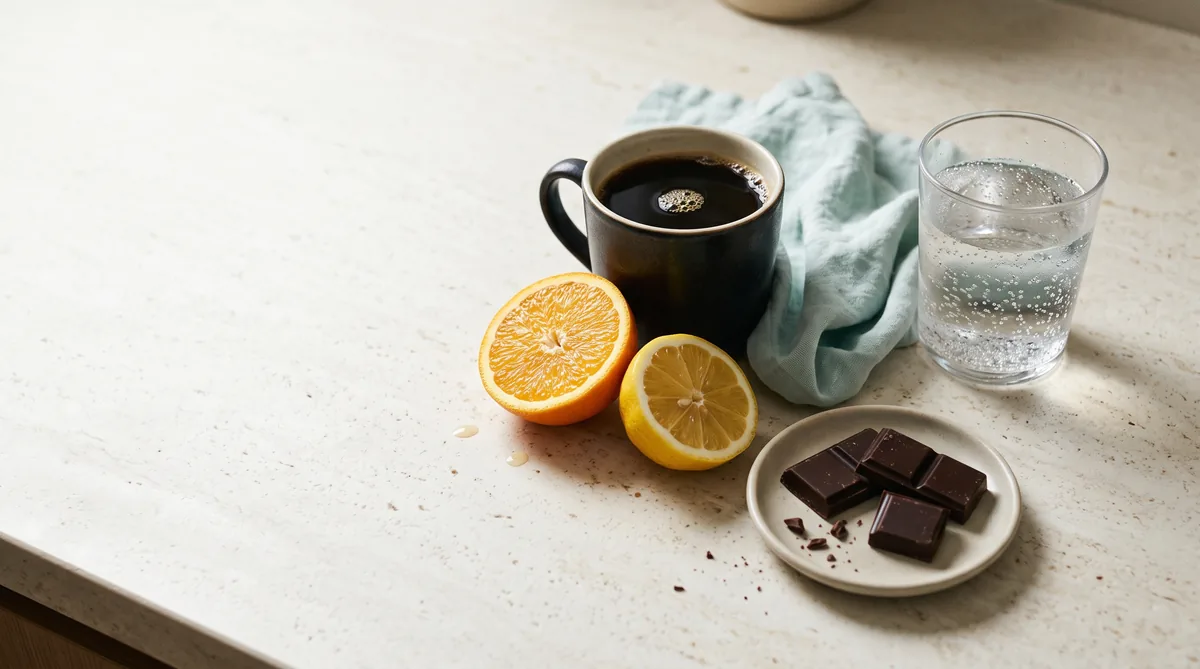
- Look at the overlap in your trigger foods. Coffee, alcohol, artificial sweeteners, citrus and carbonation appear on both the IBS list and the bladder irritant list, which means some of your existing gut rules are already doing bladder work. Our list of foods that irritate the bladder is worth reading next to your gut triggers to find the ones doing double duty.
- Give bladder training a longer runway than you would expect. A sensitized nervous system does not reset in a week. A structured bladder training schedule works, but judge it at eight to twelve weeks rather than at two.
- Do not neglect the pelvic floor, and do not assume it needs strengthening. Chronic pelvic pain and IBS both associate with a pelvic floor held too tight, and in that case Kegels make things worse. Why Kegels are not working covers how to tell.
- Raise the connection with both doctors explicitly. Ask your gastroenterologist whether your urinary symptoms could be related, and tell whoever manages your bladder that you have IBS. Neither will necessarily ask.
Editor’s Recommendation
A daily women’s formula built around the gut and urinary microbiome rather than around bladder muscle alone.
On supplements, the honest position. The gut-bladder axis is exactly the territory probiotic formulas aim at, and the reasoning is coherent: if gut dysbiosis contributes to both the bowel symptoms and the recurrent infections, a formula targeting that could plausibly help both ends. What does not exist is a trial showing that any specific probiotic improves bladder symptoms in women with IBS. That trial has not been done. Anyone who tells you otherwise is selling ahead of the evidence, including anyone selling the product we link to above. What we can say is covered honestly in probiotics for bladder control and in our ranking of bladder control supplements, and it is also worth knowing that some women find probiotics increase urinary frequency at first, which we address in can probiotics make you pee more. Nothing here should replace the conversation with your doctor about the IBS itself.
When to Stop Attributing It to IBS
The overlap is real, which creates its own risk: symptoms that need investigating get filed under a diagnosis you already have. Speak to your doctor promptly about any of the following rather than assuming the gut explains it.
- Blood in your urine or your stool, at any age and any amount
- Burning on urination, fever, or pain in your back or side
- Unintentional weight loss alongside either set of symptoms
- A change in bowel habit that is new after age 50
- Difficulty emptying your bladder, or a stream that starts and stops
- Symptoms that began after a new medication, since several affect both bowel and bladder
- Waking repeatedly at night to urinate, which has its own set of causes
Two of those deserve a specific pointer. Medication effects are more common than most women expect and are covered in medications that cause bladder leaks. Night waking is treated separately in nocturia in women, because the causes there are largely different from anything on this page. For the wider picture of how the types of bladder problem differ, our complete guide to bladder leaks is the place to orient yourself.
Key Takeaways
- The bladder and bowel share sensory nerve pathways. Signals converge on the same spinal neurons, so gut irritation can lower the threshold for bladder urgency without any pressure being involved.
- The association is well documented. A controlled six-year Norwegian cohort found an odds ratio of 2.42 (95% CI 1.45 to 4.04) between overactive bladder and IBS in the comparison group.
- Post-infectious IBS behaved differently. Where IBS followed a gut infection, the bladder association was not significant. How your IBS started may matter.
- This is not the constipation mechanism. Pressure from a loaded rectum is a separate, faster-resolving problem that can occur alongside this one.
- Menopause stacks on top of it. Falling estrogen lowers the urethral threshold independently, which is why the bladder half often starts in the forties even when the IBS is decades old.
- Expect a slower timeline. A sensitized nervous system responds over eight to twelve weeks, not days. Judging progress too early is why women conclude nothing works.
Frequently Asked Questions
Can IBS cause bladder problems?
IBS is consistently associated with bladder symptoms, though association is not the same as cause. The leading explanation is that the bladder and bowel share sensory nerve pathways in the pelvis, so irritation in one lowers the threshold in the other. A controlled Norwegian cohort followed six years found an odds ratio of 2.42 for overactive bladder in people with IBS in the comparison group. No study has established that IBS causes the bladder symptoms directly.
Why do I need to pee so much when my IBS flares?
During a flare, sensory nerves from your bowel are sending heavy traffic to spinal neurons that also receive signals from your bladder. That shared pathway amplifies bladder sensation, so a bladder holding a modest volume registers as urgent. It is a signalling effect rather than a pressure effect, which is why it can happen even when your bowel is empty.
Is the gut-bladder connection the same as constipation causing leaks?
No, they are two separate mechanisms that can occur together. Constipation affects the bladder mechanically, because a loaded rectum takes up space and presses on the bladder in a pelvis with no spare room. The IBS connection works through shared nerve pathways and does not require the bowel to be full. Constipation usually improves the bladder within days of resolving, while nerve sensitivity takes considerably longer.
Does it matter how my IBS started?
It may. In the Norwegian cohort, the association between overactive bladder and IBS was strong where IBS had arisen on its own but not significant where it followed a confirmed gut infection. That is one study and the confidence intervals overlap, so it is a lead rather than a settled finding, but it is worth mentioning to your doctor if your IBS began after a specific episode of gastroenteritis.
Will treating my IBS improve my bladder symptoms?
It is plausible and it is unproven. If shared nerve sensitivity drives part of your bladder symptom, reducing gut irritation should reduce the traffic feeding it, and many women report exactly that. No trial has tested whether treating IBS improves bladder outcomes as a measured endpoint. Treat the IBS because it deserves treating, and regard any bladder improvement as a welcome possibility rather than the plan.
Should I tell my gastroenterologist about my bladder symptoms?
Yes, and tell whoever manages your bladder about the IBS. The overlap is documented in the literature but the two conditions are usually managed by different specialists who will not necessarily ask about the other. Bringing a short record of which days are bad for each makes the pattern visible in a way that describing it from memory does not.
The Bottom Line
If your gut and your bladder have bad days together, that is not two coincidental problems and it is not something you invented. They share wiring, and there is a documented association strong enough to take seriously and honest limits on what it proves. The distinction that matters most is the one nobody draws for you: this is not the bowel pressing on the bladder, it is the bowel talking to it, and the two behave differently and improve on different timelines. Sort out which bladder pattern you have, handle constipation separately if it is there, look for the trigger foods doing double duty, and give a sensitized nervous system the eight to twelve weeks it needs. And tell both doctors about the other half. That is the single change that costs nothing and is skipped most often.
— Ellen Bennett

Ellen Bennett
Women’s Health Researcher. Compiles peer-reviewed evidence on bladder, urinary, and pelvic health, naming each study and source. About the author →
Research methodology. This article is a desk review of published research on the overlap between irritable bowel syndrome and lower urinary tract symptoms. Every source named is linked and was opened and checked on the verification date below. Two limitations are stated in the text rather than glossed over: the pelvic neural crosstalk study was conducted in a sample that was 55% male with a median age of 57, and the Norwegian cohort finding on post-infectious IBS comes from a single outbreak with overlapping confidence intervals. All findings reported here are associations. None establishes that IBS causes bladder symptoms.
Medical disclaimer. This article is for information only and is not medical advice, diagnosis, or treatment. Do not change any prescribed treatment for IBS or bladder symptoms based on anything you read here. Dietary supplements are not intended to diagnose, treat, cure, or prevent any disease. Blood in the urine or stool, fever, back or side pain, unintentional weight loss, or a new change in bowel habit after age 50 needs prompt medical care.
Last Reviewed: September 2026 — Last Updated: September 2026 — by Ellen Bennett, Women’s Health Researcher. Sources: Investigative and Clinical Urology, Neural crosstalk and symptom overlap, 2025; controlled historic cohort six years after the Bergen Giardia outbreak, PMC4460696; Nutrients, recurrent lower urinary tract infection and IBS in women, 2024; NIH/NIDDK, Irritable Bowel Syndrome, Definition and Facts.