

Published on July 7, 2026 — by Ellen Bennett, Women’s Health Researcher
Medical & Affiliate Disclosure: This article is for educational purposes only and is not medical advice. Always consult your doctor or pharmacist, especially if you take prescription medication or have kidney problems. Some links are affiliate links; if you buy through them we may earn a commission at no extra cost to you.
You bought a bottle of cranberry pills after your last urinary tract infection, and now it is sitting on the counter with a quiet question hanging over it: is it actually fine to take one of these every single day? Somewhere along the way you heard cranberry was good for your bladder, but nobody told you whether daily was the right dose, the safe dose, or a waste of money.
I have taken cranberry capsules on and off for years, and I have read the research that most product pages conveniently skip. So let me give you the honest, practical answer — including the two situations where daily cranberry is a mistake, and the one where it genuinely helps.
Quick Answer: For most healthy women, taking cranberry pills every day is safe, and daily use is actually how they are meant to work — as ongoing prevention for recurrent urinary tract infections, not a one-time fix. But is daily cranberry right for you? It depends on the dose (look for around 36 mg of proanthocyanidins), your kidney-stone history, and whether you take blood thinners. In 2020 the FDA allowed a qualified claim that cranberry may help reduce the risk of recurrent UTIs in healthy women, and a 2023 Cochrane review found roughly a 26% reduction. Cranberry does not treat an active infection.
Is It Safe to Take Cranberry Pills Every Day?
For most healthy women, yes — daily cranberry supplementation is considered safe, and it is the pattern the research is actually based on. The studies showing benefit did not test the occasional pill; they tested consistent daily intake over weeks and months. Cranberry is a food-derived supplement, not a drug, and serious side effects are uncommon at normal doses.
That said, “safe for most” is not “safe for everyone.” There are three groups who should pause before making cranberry a daily habit, and I will get to each one below. The short version: if you have a history of kidney stones, take warfarin, or are hoping cranberry will clear an infection you already have, read carefully first.
What Do Cranberry Pills Actually Do?
Cranberry pills work through compounds called proanthocyanidins, usually shortened to PACs. PACs appear to make it harder for E. coli — the bacteria behind most UTIs — to stick to the wall of your urinary tract. If the bacteria cannot latch on, they are more likely to get flushed out before they multiply into an infection. That is the entire mechanism, and it explains why cranberry is about prevention, not treatment.
Notice what cranberry does not do. It does not strengthen your bladder muscle, it does not stop leaks when you cough or sneeze, and it does not kill an infection already in progress. Those are different problems with different solutions. I sort them out in my complete guide to bladder leaks, and I cover the infection side in detail in does cranberry actually work for UTIs.
How Much Cranberry Should You Take Daily?
The number that matters is not the milligrams of “cranberry extract” on the front of the bottle — it is the PAC dose. Research on UTI prevention has centered on roughly 36 mg of proanthocyanidins per day. A bottle can advertise 500 mg of cranberry and still deliver almost no PACs if it is not standardized, which is why two products at the same “strength” can perform completely differently.
- Look for standardized PACs. The label should state the PAC content (ideally around 36 mg), not just total cranberry weight.
- More is not better. Megadosing cranberry does not buy extra protection and raises the oxalate concern below.
- Consistency beats intensity. A modest daily dose taken reliably matters more than an occasional big one.
Should You Take Cranberry With or Without Food?
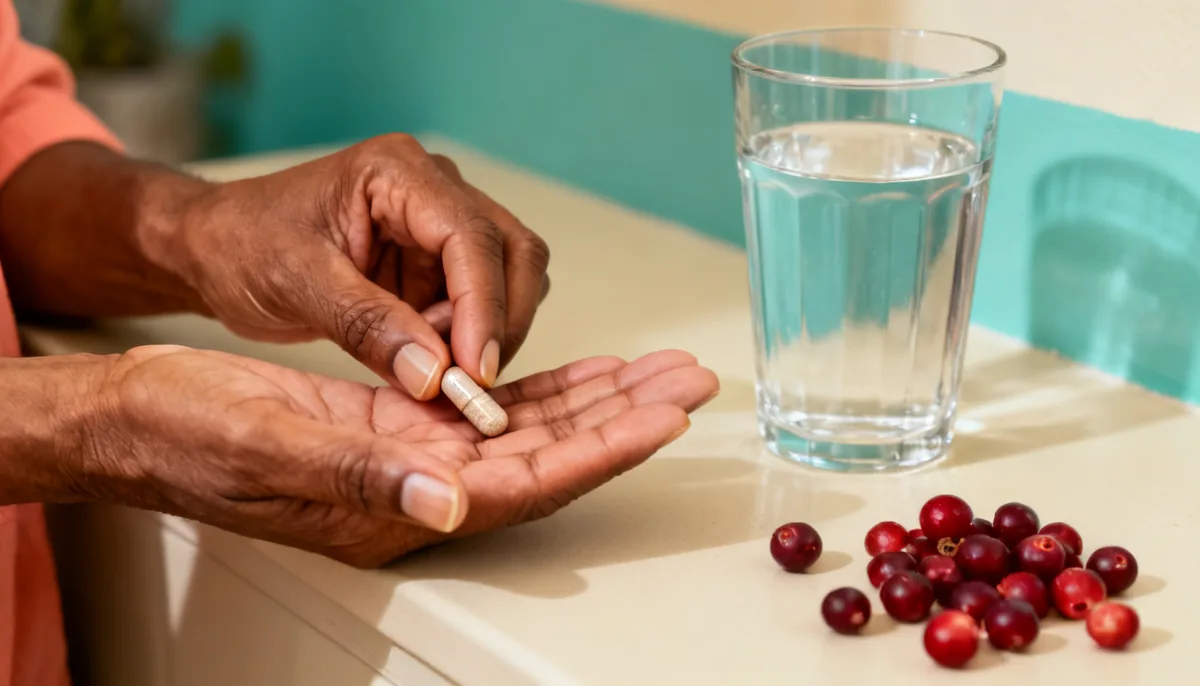
Cranberry pills are gentle enough to take either way, but taking them with a meal and a full glass of water is the practical choice. Food reduces the small chance of stomach upset, and the water supports the “flush” that the anti-adhesion effect depends on. Many women split the habit around a daily anchor — with breakfast, or with dinner — simply because a consistent time makes it easier not to forget.
If your goal is overnight urinary comfort, taking your dose earlier with plenty of daytime fluids, rather than late at night, can help you avoid adding to nighttime bathroom trips. I get into that timing logic in foods that irritate the bladder.
Daily for Prevention vs. Useless During an Active Infection
This is the point that saves women the most trouble, and almost no product page says it plainly: cranberry is a preventive, not a cure. If you already have a UTI — burning, urgency, cloudy or bloody urine, pelvic pain — reaching for more cranberry pills instead of calling your doctor can delay the antibiotics you actually need. An untreated UTI can climb to your kidneys and become serious.
So the daily-cranberry strategy makes sense in one specific scenario: you get recurrent UTIs and you are trying to reduce how often they come back. It does not make sense as a treatment for the infection you have right now. Think of it as a seatbelt, not an ambulance.
Who Should Not Take Cranberry Pills Every Day?
Daily cranberry is a poor fit — or needs a doctor’s sign-off — for a few specific groups. This is the part the “just take one a day” advice leaves out.
- A history of kidney stones. Cranberry contains oxalates, and high daily intake may raise the risk of calcium-oxalate stones in people already prone to them. If you have had stones, talk to your doctor before daily use.
- Warfarin or other blood thinners. Cranberry may interact with warfarin and affect how thin your blood is. Do not add daily cranberry without checking with the doctor managing your anticoagulation.
- Aspirin allergy. Cranberries contain salicylic acid, so very high intake is best avoided if you are sensitive to aspirin.
- Anyone with a current infection. As above — that is a doctor visit, not a supplement.
For everyone outside those groups, a standardized daily dose is generally well tolerated. When in doubt, a two-minute conversation with your pharmacist settles it.
Cranberry and Bladder Changes After 40
If you are noticing more urinary issues in your forties and fifties, you are not imagining it. As estrogen declines around menopause, the tissues of the urinary tract thin and the protective vaginal microbiome shifts, which is part of why recurrent UTIs become more common in this stage of life. Cranberry may play a supporting role in that picture, but it is not the whole answer.
For many women over 40, the bigger levers are vaginal estrogen (a prescription conversation with your doctor) and rebuilding the urinary microbiome. That is where a probiotic strain like L. crispatus enters the conversation. I cover the menopause connection in menopause and bladder health and the bacteria angle in probiotics for bladder control.

When to See a Doctor
Cranberry is for lowering the odds of a future infection, not for handling warning signs. See a doctor promptly if you have any of the following, rather than waiting for a supplement to work:
- Burning with urination, strong urgency, or cloudy, foul-smelling urine
- Blood in your urine
- Fever, chills, or pain in your back or side (possible kidney involvement)
- UTIs that keep returning despite prevention efforts
Where Cranberry Fits in a Real Prevention Plan
Daily cranberry is one tool, and it works best inside a fuller routine: staying well hydrated, not holding urine for hours, urinating after intimacy, and — for women over 40 — addressing the estrogen and microbiome side of things. On its own, a modest 26% reduction in recurrences is helpful but not dramatic. Stacked with the other habits, it earns its place. My full routine is in how to prevent recurrent UTIs naturally.
If you would rather not manage cranberry, a probiotic, and other pieces as separate bottles, some women prefer a combined formula that pairs standardized cranberry with targeted Lactobacillus strains in one daily capsule.
Editor’s Recommendation
If you want standardized cranberry (30% PACs) plus five named Lactobacillus strains in a single daily capsule, FemiCore is the combined formula I rate highest for urinary microbiome support. Backed by a 60-day money-back guarantee.
See how it ranks against other options →
Key Takeaways
- Daily is normal. Cranberry pills are meant for ongoing daily prevention of recurrent UTIs, and daily use is safe for most healthy women.
- PACs are the real dose. Look for standardized proanthocyanidins (around 36 mg), not just total cranberry milligrams.
- Prevention, not treatment. Cranberry cannot clear an active infection — see a doctor for that.
- Three groups should check first. Kidney-stone history, warfarin users, and aspirin-sensitive people should talk to a doctor before daily use.
- After 40, look wider. Estrogen and the urinary microbiome often matter more than cranberry alone.
Frequently Asked Questions
Can you take cranberry pills every day long term?
For most healthy women, yes. Cranberry supplements are intended for ongoing daily use as UTI prevention, and long-term use at a standardized dose is generally considered safe. If you have kidney stones or take blood thinners, check with your doctor before making it a permanent habit.
What happens if you take too much cranberry?
Very high cranberry intake can cause stomach upset or diarrhea and, because cranberries contain oxalates, may increase kidney-stone risk in susceptible people. More cranberry does not add more UTI protection, so a standardized daily dose is smarter than megadosing.
Do cranberry pills work for bladder leaks?
Not directly. Cranberry targets bacterial adhesion to prevent infections; it does not strengthen the bladder or pelvic floor, so it will not stop stress or urge leakage. For leaks, pelvic floor training and lifestyle changes are far more effective.
Should I take cranberry in the morning or at night?
Either works, but taking it with a meal and water — and earlier in the day if you struggle with nighttime bathroom trips — is the practical choice. Consistency at the same time each day matters more than the exact hour.
Is cranberry juice or cranberry pills better?
It depends on the PAC content and the sugar you are willing to drink. Standardized pills deliver a consistent PAC dose without the sugar of most juices, but the research is genuinely mixed. I compare them head to head in cranberry pills vs. juice.
Can cranberry pills interact with medications?
Yes. The main concern is warfarin, where cranberry may affect blood thinning. Cranberry also contains salicylic acid, relevant if you are aspirin-sensitive. Always tell your doctor or pharmacist about supplements you take daily.
The Bottom Line
Taking cranberry pills every day is not only safe for most healthy women — it is exactly how they are supposed to be used, as steady prevention against recurrent UTIs. Just buy for the PAC dose rather than the marketing number, remember it cannot treat an infection you already have, and check with your doctor first if you have kidney stones or take blood thinners. And if your bladder troubles are really about leaks or life after 40, cranberry is a small supporting player in a much bigger plan.
— Ellen Bennett

Last Reviewed: July 2026 by Ellen Bennett, Women’s Health Researcher. Sources: FDA Qualified Health Claim on cranberry (2020), Cochrane Database of Systematic Reviews (2023), NIH/NIDDK, Urology Care Foundation, Mayo Clinic.