

Published on July 23, 2026 — by Ellen Bennett, Women’s Health Researcher
Medical & Affiliate Disclosure: This article is for educational purposes only and is not medical advice. Always consult your doctor. Some links are affiliate links; if you buy through them we may earn a commission at no extra cost to you.
Somewhere along the way, d-mannose became the supplement everyone whispers about for “bladder problems” — as if it were one fix for every issue below the belt. I took it myself for a while during a stretch of back-to-back UTIs, so I went looking for what the research actually says. The short version surprised a lot of readers, so let me be straight with you.
Quick Answer: Does d-mannose help bladder leaks? No — there is essentially no evidence that d-mannose reduces urinary leakage (incontinence). D-mannose is a sugar studied only for urinary tract infections, where it may stop E. coli from sticking to the bladder wall. And even there the evidence is mixed: a 2024 UK trial found it did not prevent recurrent UTIs in the women studied. Bladder leaks and UTIs are different problems — and d-mannose targets neither leakage.
What Is D-Mannose, Exactly?
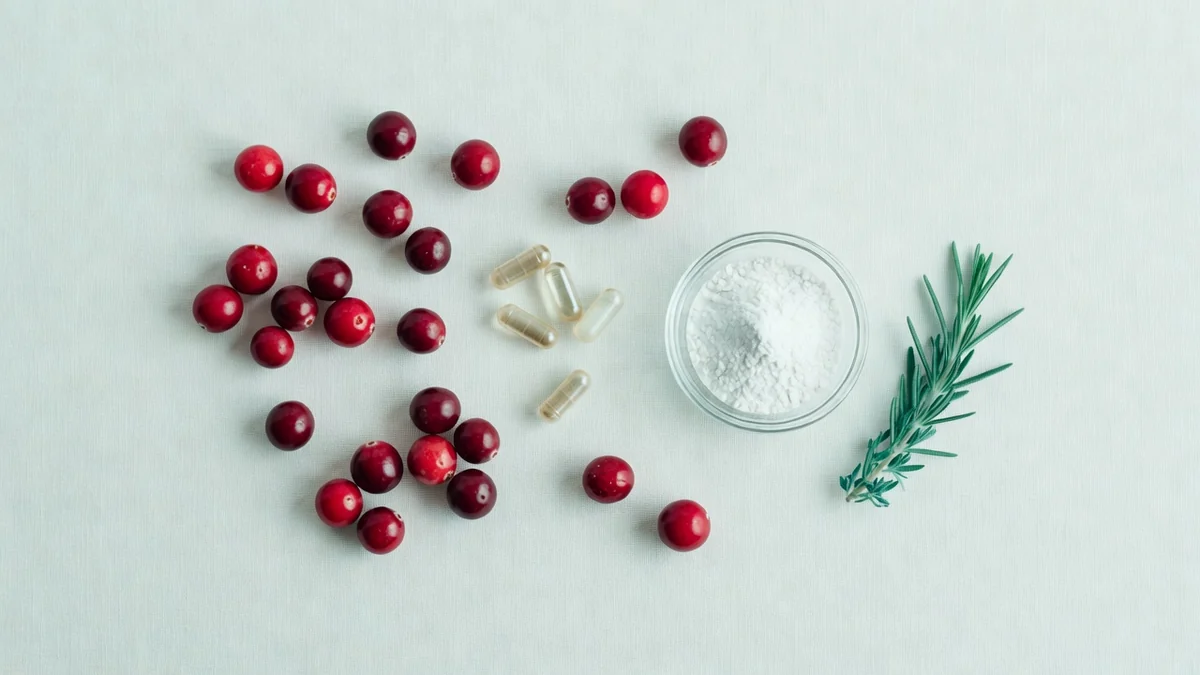
D-mannose is a simple sugar, chemically related to glucose, found naturally in fruits like cranberries and apples. The theory behind its use is neat: the bacteria that cause most UTIs (usually E. coli) have finger-like projections that latch onto sugar receptors on the bladder wall. D-mannose is thought to bind those projections instead, so the bacteria get flushed out with your urine rather than sticking around to cause an infection.
Notice what that mechanism is about: bacteria and infection. It has nothing to do with the muscle control, pelvic floor support, or bladder behavior that cause leaks. That single fact answers most of the question already.
UTIs vs. Bladder Leaks: Two Different Problems
This is the confusion d-mannose marketing quietly rides on. A urinary tract infection is bacteria multiplying where they should not — it causes burning, urgency, and sometimes pain or fever, and it needs medical care. Bladder leakage (incontinence) is a control issue: urine escaping when you cough, laugh, or feel a sudden urge, usually because of a weak or poorly timed pelvic floor, hormones, or bladder-muscle overactivity.
| UTI | Bladder leaks (incontinence) | |
|---|---|---|
| What it is | Bacterial infection | Loss of bladder control |
| Typical signs | Burning, urgency, cloudy urine, pain | Leaking with cough/laugh or sudden urges |
| Does d-mannose target it? | Studied for this (mixed results) | No evidence at all |
| First-line help | See a doctor; often antibiotics | Pelvic floor and bladder training |
If your real issue is leaking, d-mannose is aimed at the wrong target entirely. The tools with evidence are pelvic floor training and bladder training — my complete guide to bladder leaks lays them out, and stress vs. urge incontinence helps you find your type.
What the Research Actually Shows for UTIs
Even on its home turf — UTI prevention — d-mannose has had a reality check. Earlier small studies looked encouraging, and a 2020 review in the journal Antibiotics called it promising but limited by weak trial quality. Then came larger, better-designed research. A 2024 UK trial (the MERIT study), highlighted by the NIHR, found that d-mannose did not prevent recurrent UTIs in women in primary care who were prone to them.
So the honest picture is: d-mannose is generally safe, it is aimed at infection rather than leakage, and even for infection the best current evidence is underwhelming. That is a long way from the “bladder miracle” framing you will see on supplement pages.
Is D-Mannose Safe?
For most people, d-mannose is well tolerated; the most common complaints are loose stools or bloating at higher doses. Because it is a sugar, anyone with diabetes should be cautious and talk to their doctor about blood-sugar effects. And critically: an active UTI with fever, back pain, or blood is not a “try a supplement” situation — that needs prompt medical care. D-mannose is not a treatment for an established infection.
So What Should You Take for Bladder Leaks?
If leaking is your concern, put your energy where the evidence is: correct pelvic floor training (see why Kegels aren’t working if yours have not helped), bladder training for urgency, and sensible weight and fluid habits. Supplements are, at most, a minor supporting role.
If your concern is really recurrent UTIs, cranberry has somewhat better evidence than d-mannose — I compare them in does cranberry work for UTIs and in how to prevent recurrent UTIs naturally. Probiotics and the urinary microbiome are a newer angle covered in probiotics for bladder control.
Editor’s Recommendation
For daily urinary-microbiome support built around cranberry and Lactobacillus (not d-mannose), FemiCore is the formula we rate #1 — a support, not a cure.
Want the honest verdict on whether that kind of supplement is worth it? See does FemiCore really work and our roundup of the best bladder control supplements.

Key Takeaways
- D-mannose does not help bladder leaks — there is no evidence it reduces incontinence.
- It is studied only for UTIs, where it may block bacteria from sticking to the bladder.
- Even for UTIs the evidence is mixed — a 2024 UK trial found it did not prevent recurrent infections.
- UTIs and leaks are different problems with different fixes.
- For leaks, pelvic floor and bladder training have the real evidence.
- An active UTI needs a doctor, not a supplement.
Frequently Asked Questions
Does d-mannose help with bladder leaks?
No. D-mannose has no evidence for reducing urinary leakage. It is studied only for urinary tract infections, and leakage is a separate control problem best addressed with pelvic floor and bladder training.
Does d-mannose really work for UTIs?
The evidence is mixed. Early small studies were encouraging, but a larger 2024 UK trial found d-mannose did not prevent recurrent UTIs in the women studied. It is generally safe, but not a reliable UTI preventive on current evidence.
Can d-mannose stop me from peeing so often?
There is no evidence d-mannose reduces urinary frequency or urgency. Those are usually bladder-control issues; bladder training and reducing irritants like caffeine are more likely to help.
Is d-mannose the same as cranberry?
They are related — d-mannose occurs in cranberries — but they are not the same. Cranberry’s active compounds (proanthocyanidins) work a bit differently and have somewhat stronger UTI evidence than isolated d-mannose.
Is d-mannose safe to take daily?
Most people tolerate it well, with loose stools or bloating at higher doses being the main complaint. If you have diabetes, talk to your doctor first, since it is a sugar. It is not a treatment for an active infection.
What works better than d-mannose for bladder control?
For leaks, pelvic floor training and bladder training have the strongest evidence. For recurrent UTIs, cranberry and possibly urinary-microbiome support have somewhat better data than d-mannose.
The Bottom Line
D-mannose is safe and mildly interesting for UTI prevention, but it does nothing for bladder leaks, and even its UTI reputation has cooled with better trials. If you are leaking, the honest advice is to skip the shortcut and train the muscles and habits that actually control your bladder. Save the supplement questions for the right problem.
— Ellen Bennett
Last Reviewed: July 2026 by Ellen Bennett, Women’s Health Researcher. Sources: NIH/PMC, NIHR, NIDDK, Urology Care Foundation.

Ellen compiles evidence from NIH, NIDDK, ACOG, Cochrane, and the Urology Care Foundation to help women make calm, informed bladder-health decisions. More about Ellen →