Published on June 24, 2026 — by Ellen Bennett, Women’s Health Researcher
Medical & Affiliate Disclosure: This article is for educational purposes only and is not medical advice. Always consult your doctor. Some links are affiliate links; if you buy through them we may earn a commission at no extra cost to you.
If you have ever finished a cup of coffee and felt your bladder start nagging you twenty minutes later, you already have a hunch about the foods that irritate the bladder. I spent years blaming my “weak bladder” for the urgency that ran my afternoons before I realized my diet was quietly making everything worse. When I started paying attention to what went into my cup and onto my plate, the pattern was hard to ignore. The tricky part, and the part most articles skip, is that bladder triggers are deeply personal, and the science behind them is messier than the tidy “avoid these 10 foods” lists suggest.
Quick Answer: Which foods irritate the bladder the most? The most commonly reported irritants are caffeine, alcohol, carbonated drinks, artificial sweeteners, citrus, tomatoes, spicy food, and chocolate. Caffeine is the repeat offender: a 2023 systematic review in the International Neurourology Journal found that reducing caffeine intake meaningfully improved overactive bladder symptoms such as urgency. Still, triggers vary from person to person, so the only reliable way to find yours is to test them.
Why do certain foods irritate the bladder at all?
Your bladder is lined with a delicate layer of cells called the urothelium. When you eat or drink something acidic, very spicy, or chemically harsh, the byproducts can end up in your urine and brush against that lining. In a sensitive bladder, that contact can register as urgency, that sudden “I need to go now” signal, even when the bladder is not actually full.
There are three main ways food causes trouble. Some items, like caffeine and alcohol, act as diuretics, so they simply make you produce more urine, faster. Others are acidic, like citrus and tomatoes, and can irritate the urothelium directly. And a third group, including artificial sweeteners and carbonation, seems to stimulate the bladder muscle itself in ways researchers do not fully understand yet. The honest truth is that the evidence is mixed, and what bothers your neighbor may not bother you at all. For the bigger picture on why leaks happen, our complete guide to bladder leaks walks through the muscle, nerve, and lifestyle factors together.
What are the worst foods that irritate the bladder?
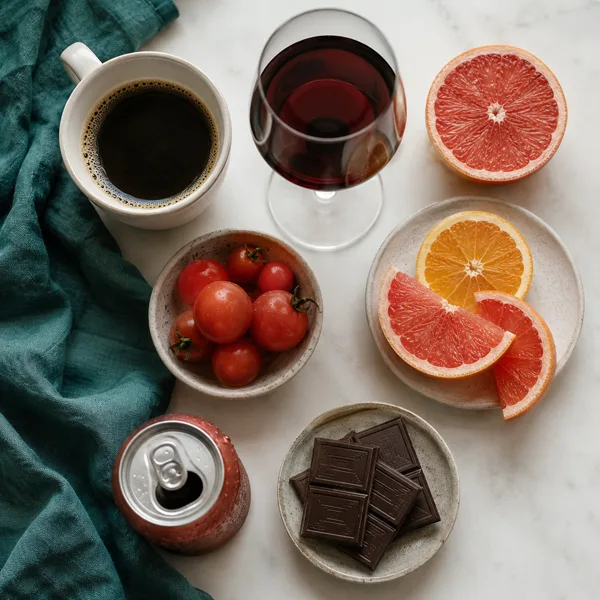
Below are the usual suspects, ranked roughly by how often they show up in research and in the journals my readers keep. Think of this as a starting hypothesis, not a verdict.
- Coffee (caffeinated and decaf)
- Black and green tea, energy drinks
- Alcohol (wine, beer, spirits)
- Carbonated drinks, including sparkling water
- Citrus fruits and juices
- Tomatoes and tomato-based sauces
- Chocolate
- Spicy foods
- Artificial sweeteners, especially aspartame
- Vinegar and pickled foods
- Cranberry juice (as juice, not capsules)
- Highly processed, salty foods
Caffeine, the number one repeat offender
Coffee, tea, energy drinks, and even some sodas combine two problems: caffeine is a diuretic and a bladder stimulant. Studies on overactive bladder (OAB) consistently link higher caffeine intake to more urgency and frequency. You do not necessarily have to quit, but cutting back, or switching your second and third cups to a low-acid or decaf option, is one of the highest-payoff experiments you can run. Volume matters as much as content: here is how much water an overactive bladder actually needs. Caffeine deserves its own page: how much is too much for your bladder.
Alcohol
Alcohol is also a diuretic, and it can dull the nerve signals that normally help you hold on. Many women notice more nighttime trips after wine. Spacing drinks with water and stopping a few hours before bed often softens the effect. If the night waking is your main complaint, see what actually causes nocturia in women. For the full picture, here is how alcohol affects bladder control.
Carbonated and fizzy drinks
Sparkling water, soda, and seltzer can provoke urgency even without caffeine. The carbonation itself appears to irritate some sensitive bladders. If you love bubbles, this is an easy one to test by going flat for two weeks.
Artificial sweeteners
Aspartame, saccharin, and similar sweeteners found in diet sodas and “sugar-free” products are frequently named as triggers. The mechanism is unclear, but the reports are common enough that swapping to a sweetener-free option is worth a try.
Citrus and acidic juices
Oranges, lemons, limes, grapefruit, and their juices are acidic enough to irritate the urothelium in sensitive people. You do not have to abandon vitamin C, but you might shift toward lower-acid fruits like pears and blueberries.
Tomatoes and tomato-based foods
Pasta sauce, ketchup, and salsa share that same acidity problem. For some women, a tomato-heavy dinner is a reliable predictor of a restless night.
Spicy foods
Chili, hot sauce, and heavily spiced dishes contain compounds that can irritate the bladder lining much like they irritate other tissues. If you notice urgency after a spicy meal, that is your bladder talking.
Chocolate and very salty foods
Chocolate contains a small amount of caffeine plus other stimulants, which is why it lands on most lists. Very salty foods are a sneakier issue: excess sodium makes you thirsty, you drink more, and the bladder fills faster. Salt may also contribute to nighttime urination in some people.
Irritating foods vs bladder-friendly foods: a quick comparison
| Common Bladder Irritants | Why It May Irritate | Gentler Swap |
|---|---|---|
| Coffee & energy drinks | Diuretic + bladder stimulant | Decaf, herbal tea, low-acid coffee |
| Alcohol | Diuretic, dulls nerve signals | Water spritzer, smaller pours |
| Soda & sparkling water | Carbonation irritation | Still water, cucumber water |
| Citrus & juices | High acidity | Pears, blueberries, watermelon |
| Tomato sauce | High acidity | Pesto, olive oil, herb-based sauces |
| Spicy dishes | Irritant compounds | Milder herbs and seasoning |
| Artificial sweeteners | Bladder stimulation | Unsweetened or lightly honeyed options |
Which foods are gentle on the bladder?
Cutting out triggers is only half the plan. Filling your plate with calmer choices makes the change sustainable. Bladder-friendlier options generally include water, non-citrus fruits like pears, bananas, blueberries, and watermelon, most vegetables (especially low-acid ones like squash and green beans), whole grains, lean proteins, eggs, and nuts. Plain water remains the single best drink for your bladder, which leads to a point that surprises most people.

What to drink and eat instead: a swap list that actually holds up
Cutting things out is only half the job. If nothing takes their place, most women drift back to the old habit inside a month. Here is the swap list, with one honest correction to advice you will see repeated everywhere.
| Instead of | Try | Why it helps |
|---|---|---|
| Regular hot coffee | Half-caff, or a smaller cup earlier in the day | Cutting the caffeine dose is what matters, not the brewing method (see the correction below) |
| Soda, sparkling water | Still water, or water with a slice of cucumber | Removes both the carbonation and, in diet versions, the artificial sweetener |
| Orange or grapefruit juice | Pear juice, blueberry, watermelon | Far less acidic, and pears and blueberries are among the best tolerated fruits |
| Aged cheese, sour cream | Mild cheeses, plain yogurt | Aged dairy is a common trigger, while plain yogurt brings live cultures |
| Tomato-based pasta sauce | Olive oil, garlic, or a squash-based sauce | Keeps the meal without the acid load |
| An evening glass of wine | Herbal tea, chamomile or peppermint | Alcohol is both an irritant and a diuretic, a bad combination before bed |
The correction worth knowing. A lot of bladder advice tells you to switch to cold brew or a dark roast because they are less acidic. The first part is true. A 2020 analysis in Scientific Reports measured it precisely: cold brew came out between 0.20 and 0.34 pH units less acidic than hot brew, with the dark roast showing the widest gap at pH 5.75 against 5.39 (PMC7404565).
Here is the part that usually gets left out. That same analysis found caffeine concentrations were comparable regardless of roast level or brewing temperature. So a cold brew swap lowers the acid and leaves the caffeine, and caffeine is the trigger with the strongest bladder evidence behind it, not acidity. If you make the switch and nothing improves, that is why. Cutting the dose is the lever that moves.
Plain yogurt deserves its own note, because it looks like it should be a problem and usually is not. It is acidic on paper, yet it carries live cultures, and the research on probiotics and bladder health is one of the more interesting threads in this field. Many women who react to aged cheese tolerate plain yogurt without trouble.
Should you drink less water to reduce leaks?
This is the most common mistake I see, and it backfires. When you cut your fluids too far, your urine becomes concentrated, and concentrated urine is itself an irritant. So you end up with a smaller volume of harsher liquid sitting against an already sensitive bladder, which can make urgency worse, not better. The goal is steady, moderate hydration spread through the day, easing off in the couple of hours before bed. Pale yellow urine is the simple target most clinicians point to.
How do you find your personal bladder triggers?
Because triggers are so individual, guessing rarely works. The approach urologists recommend is a structured elimination test built around a bladder diary. Here is the version I used.
- For one week, write down everything you eat and drink, plus every bathroom trip and any urgency or leaks. Do not change anything yet, just observe.
- Look for patterns. If urgency reliably follows your afternoon soda, you have a suspect.
- Remove your top one or two suspects for two weeks and see if symptoms ease.
- Reintroduce them one at a time, a few days apart, to confirm which one actually mattered.
This methodical approach beats blanket restriction, because most women can keep more of their favorite foods than they feared. Diet is also just one layer. It works best alongside pelvic floor exercises for women over 40 and, when leaks are frequent, a proper evaluation to sort out stress versus urge incontinence, since the right strategy depends on which type you have.
Does losing weight help an irritable bladder?
For many women, yes, and the effect can be larger than any single food swap. In a landmark randomized trial (Subak et al., New England Journal of Medicine, 2009), a modest weight loss of roughly 8 percent of body weight cut weekly incontinence episodes by nearly half in overweight and obese women. Excess abdominal weight increases pressure on the bladder, so even a gradual change can take real strain off the system. This is especially relevant during midlife, when shifting hormones also play a role, something we cover in our piece on menopause and bladder health.
What about cranberry and the microbiome?
Cranberry gets a lot of hype, and the reality is more nuanced than the marketing. The evidence for prevention is modest and depends heavily on dose and form, which we unpack in our honest look at whether cranberry actually works for UTIs. What is becoming clearer is that the urinary microbiome, the community of microbes living in your urinary tract, plays a role in bladder comfort. Supporting that ecosystem through steady hydration, a varied diet, and targeted nutrients is an area of growing interest, though it is no substitute for medical care when symptoms are persistent.
When it isn’t the food at all
Diet is worth testing, and it is free. But if you have cleaned up the obvious triggers for six to eight weeks and your bladder is exactly as angry as it was, food was probably not the driver, and it is worth knowing what else sits behind these symptoms.
The one most often missed is interstitial cystitis, also called painful bladder syndrome. The NIDDK describes it as a chronic condition causing “discomfort, pressure, tenderness, or pain in the bladder, lower abdomen, and pelvic area,” and estimates that between 4 and 12 million Americans may have it. The confusing part for anyone reading a list like this one: the NIDDK names alcohol, citrus juices, chocolate, and tomatoes among the things that commonly worsen it. The same foods. So a diet that partly helps does not rule interstitial cystitis in or out, and it is diagnosed by ruling other conditions out, which is a doctor’s job and not a diary’s.
The clearer dividing line is pain. Ordinary irritation is urgency and frequency. Persistent pain or pressure in the bladder is a different signal and deserves an appointment rather than another month of elimination.
Stop the diet experiment and call someone if you have:
- Blood in your urine, at any age and even once.
- Burning when you go, fever, chills, or lower back and side pain. That pattern points to infection, which no food change treats. Our guide to preventing recurrent UTIs covers the difference.
- Ongoing bladder or pelvic pain rather than urgency alone.
- Trouble emptying your bladder or a sudden inability to go.
None of that means the diet work was wasted. It means the diary you built becomes the most useful thing you can hand a clinician on the first visit.
Key Takeaways
- Caffeine is the most consistent irritant, acting as both a diuretic and a bladder stimulant, so it is the first thing to test.
- Acidic and carbonated items like citrus, tomatoes, soda, and artificial sweeteners are common triggers, but the science is mixed and individual.
- Triggers are personal, so a one-week bladder diary plus a short elimination test beats blanket restriction.
- Do not slash your water, because concentrated urine is itself an irritant; aim for steady, pale-yellow hydration.
- Modest weight loss of around 8 percent cut incontinence episodes by nearly half in a major trial.
- Diet is one layer, working best alongside pelvic floor work and a doctor’s evaluation, never as a cure on its own.
How we research this
Ellen Bennett compiles peer-reviewed evidence — naming each study by date and source — from the Urology Care Foundation, Mayo Clinic, the International Neurourology Journal, and the New England Journal of Medicine. We earn an affiliate commission if you buy through our links, but we flag weak or missing evidence regardless of who is paying. When the research does not support a marketing claim, we say so.
Editor’s Recommendation
Once I cleaned up the obvious irritants, I got curious about supporting the urinary microbiome from the inside, which is the angle FemiCore takes with its blend formulated to support a healthy urinary microbiome and normal bladder function. It is a supplement, not a fix, but it pairs sensibly with the dietary work above.
Made in the USA · GMP-certified · 60-day money-back guarantee
If you want the full breakdown of what it does and does not do, read our honest FemiCore review before deciding.
Frequently Asked Questions
What is the single worst drink for an irritable bladder?
For most people it is caffeinated coffee, because it combines a diuretic effect with direct bladder stimulation. If you only change one thing, scaling back caffeine usually gives the clearest result.
How long does it take to feel better after cutting bladder irritants?
Many women notice a difference within one to two weeks of removing a major trigger. That is why a two-week elimination window is the standard before you judge whether a food matters for you.
Are bananas good for the bladder?
Yes, bananas are low in acid and rarely reported as a trigger, which makes them a sensible choice when you are avoiding citrus and other acidic fruits.
Does drinking more water make leaks worse?
Not usually. Cutting water too far concentrates your urine and can irritate the bladder more. Steady, moderate hydration through the day, easing off before bed, is the better target.
Can changing my diet cure incontinence?
No. Diet can reduce irritation and may ease symptoms for some people, but it is not a cure. Persistent leaks deserve a medical evaluation to identify the cause and the right treatment plan.
Is sparkling water bad for the bladder?
It can be for sensitive bladders, since carbonation itself may provoke urgency even without caffeine. Try switching to still water for two weeks to see if it helps you.
The Bottom Line
The foods that irritate the bladder are real, but they are not a fixed list you can copy from someone else. Caffeine, alcohol, acidity, carbonation, and artificial sweeteners are the smart places to start testing, yet your true triggers will only show up when you keep a short diary and experiment honestly. Pair that with sensible hydration, pelvic floor work, and a doctor when leaks persist, and you give yourself the best shot at calmer days. Be patient with the process. Your bladder has been talking to you for a while; this is just learning to listen.
— Ellen Bennett

Ellen Bennett, Women’s Health Researcher. Ellen compiles peer-reviewed evidence on women’s bladder and pelvic health. About Ellen →
Last Reviewed: June 2026 by Ellen Bennett, Women’s Health Researcher. Sources: International Neurourology Journal, New England Journal of Medicine, Mayo Clinic, Urology Care Foundation.
References and further reading: Effectiveness of Fluid and Caffeine Modifications on Overactive Bladder (International Neurourology Journal, 2023), Subak et al., Weight Loss to Treat Urinary Incontinence (NEJM, 2009), Mayo Clinic on urinary incontinence, and Urology Care Foundation.