Published on November 10, 2026 — by Ellen Bennett, Women’s Health Researcher
Medical & Affiliate Disclosure: This article is for educational purposes only and is not medical advice. A feeling that you never empty fully can have medical causes, including prolapse, nerve problems and medication side effects, that need a doctor’s check. Some links are affiliate links; if you buy through them we may earn a commission at no extra cost to you.
Independent women’s health research · Written and fact-checked by Ellen Bennett, Women’s Health Researcher · Last verified: November 2026
You finish, stand up, wash your hands, and five minutes later you need to go again. Or you leave the bathroom with a nagging feeling that something is still in there. Most of us were never taught how to pee. We just do it the way we always have, often perched above a public toilet seat. After 40, that habit starts to matter.
The best position to empty your bladder is not complicated, and it costs nothing. But the research behind it has a twist that most articles miss: how you sit matters a great deal for some women and barely at all for others. Here is who benefits most, and exactly how to do it.
Quick Answer: The best position to empty your bladder is sitting fully on the seat, feet flat or on a small stool, leaning slightly forward with your forearms on your thighs, and relaxing your belly. Why not hover? In a 1991 study of women attending a urodynamic clinic, crouching over the seat cut urine flow by 21% and left 149% more urine behind. Take your time, then try again after 30 seconds.
Editor’s Recommendation
Leftover urine is where bacteria get their chance. Alongside better toilet habits, FemiCore supports a healthy urinary microbiome with standardized cranberry and five named Lactobacillus strains in one daily capsule, with a 60-day money-back guarantee.
Why Emptying Your Bladder Completely Matters After 40
Your bladder is meant to empty almost entirely each time. The urine left behind afterward is called the post-void residual. A small amount is normal. A large amount causes three problems you will recognize:
- More trips. If you leave a good portion behind, your bladder refills to “full” sooner, so you go more often, day and night.
- Dribbling and leaks. Urine that stays in the bladder or the urethra can leak out when you stand up or move.
- Infections. Bacteria that reach the bladder get flushed out each time you pee. Urine that sits there gives them time to multiply. That is one reason incomplete emptying shows up again and again in women with recurrent UTIs.
After 40, several things make complete emptying harder: weaker or overly tight pelvic floor muscles, prolapse after childbirth, lower estrogen, constipation, and some medications. If you often feel the urge but little comes out, read the urge to pee but nothing comes out.
What the Research Says About Hovering
| Study | Who | What it found |
|---|---|---|
| British Journal of Obstetrics and Gynaecology, 1991 | Gynecology outpatients; 80 women attending a urodynamic clinic tested in both positions | Crouching over the seat reduced average flow by 21% and increased leftover urine by 149% compared with sitting |
| Scientifica, 2019 | Young, healthy women who had never given birth | No difference in flow between hovering and sitting |
Read together, these two studies tell a useful story. A young, healthy pelvic floor can cope with hovering. A pelvic floor that has been through childbirth, menopause or bladder problems has less margin, and hovering forces it to stay tense exactly when it needs to let go. The 1991 authors even suggested that women with reduced bladder capacity may benefit from being encouraged to sit comfortably on the toilet whenever possible.
In other words: if you are reading this because your bladder is not behaving the way it used to, sitting is not optional. It is the first fix.
Editor’s Recommendation
Habits and exercises do most of the work. For daily urinary-microbiome support on top of them, FemiCore combines standardized cranberry with five named Lactobacillus strains in one capsule, with a 60-day money-back guarantee.
The Best Position to Empty Your Bladder, Step by Step
- Sit all the way down. Let your full weight rest on the seat. If public seats worry you, use a seat cover or toilet paper rather than hovering.
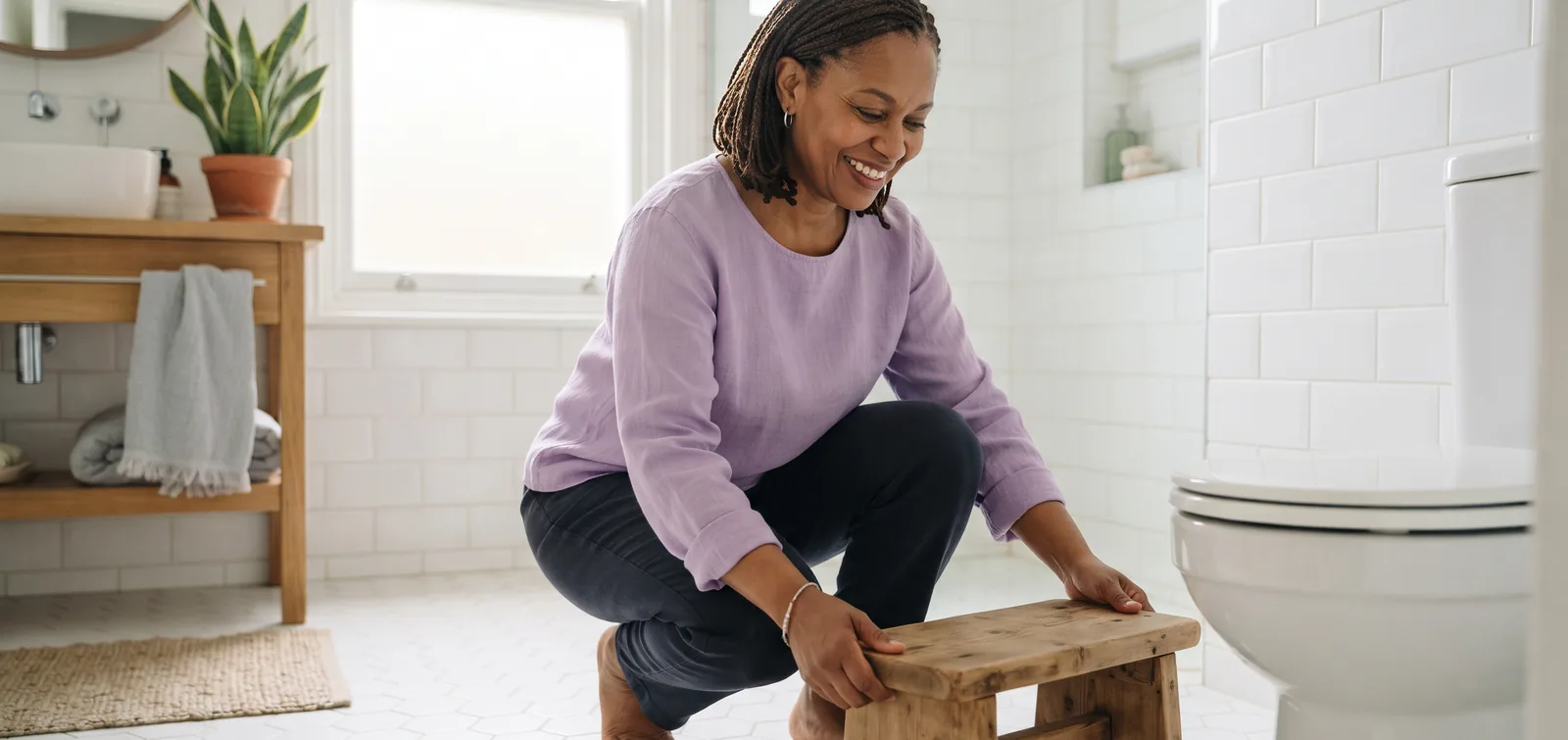
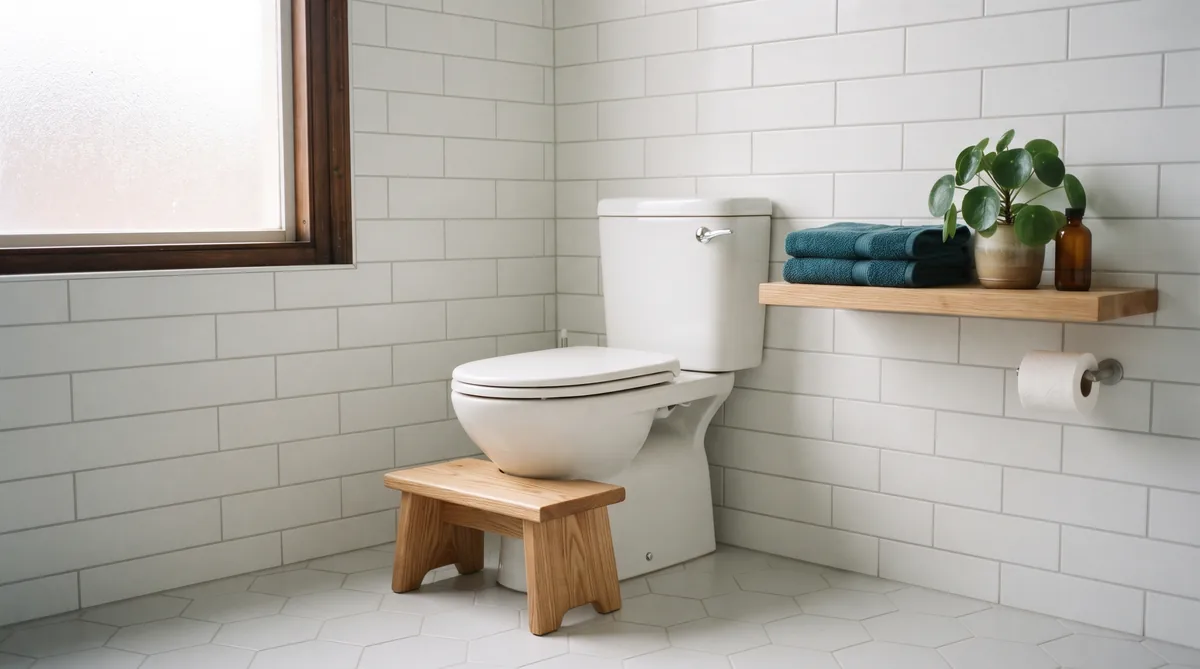
- Feet flat, knees apart. If your feet do not reach the floor comfortably, use a small footstool. Your knees should be about level with or a little above your hips.
- Lean forward slightly. Rest your forearms on your thighs with a straight back. Many continence nurses and pelvic floor therapists teach this position because it lines up the bladder outlet and lets the belly relax.
- Relax, do not push. Let your belly soften and breathe slowly. Straining with your abdominal muscles works against the pelvic floor and, over years, adds pressure that can worsen prolapse.
- Wait for the flow to finish completely. Do not rush the end. The last part of the flow is often slow.
- Double void. When you think you are done, stay seated, rock your pelvis gently forward and back or sit up straight, wait about 30 seconds, and try again. Often a little more comes out.
Habits That Sabotage Complete Emptying
| Habit | Why it backfires | Better option |
|---|---|---|
| Hovering over public toilets | Keeps the pelvic floor tense; less flow and more leftover urine in women with bladder issues | Seat cover or paper, then sit fully |
| Pushing to speed things up | Strains the pelvic floor and can worsen prolapse over time | Relax your belly and wait |
| Going “just in case” every hour | Teaches the bladder to signal at small volumes | A bladder training schedule |
| Holding for hours at work | Overstretches the bladder, which can weaken emptying | Planned breaks; see holding your pee at work |
| Ignoring constipation | A full bowel presses on the bladder and blocks emptying | Fiber, fluids and footstool for both |
That last one is underrated. A loaded bowel sits right behind the bladder. I explain the connection in constipation and bladder leaks.
When Position Is Not the Problem
If you sit properly, double void and still feel you never empty, the cause may be something a toilet stool will not fix:
- Prolapse: a bulge or heaviness in the vagina, or needing to press near the vagina to finish.
- A pelvic floor that will not relax: common in women with chronic pain or anxiety, and a reason Kegels sometimes make things worse. See why Kegels aren’t working.
- Medications: some antihistamines, antidepressants and bladder drugs reduce emptying. See medications that cause bladder leaks.
- Diabetes or nerve problems: these can dull the bladder’s signals. More in diabetes and bladder leaks.
A simple bladder scan in the office measures how much is left after you pee. The NIDDK explains urinary retention and its causes. A pelvic floor therapist can teach you to relax the muscles that need to let go. Slow breathing on the toilet helps too, and the same calm-attention technique is in mindfulness for urge incontinence.
Better habits outside, support inside
FemiCore pairs cranberry standardized to 30% PACs, which helps keep E. coli from clinging to the bladder wall, with L. crispatus and four more Lactobacillus strains. One-time purchase, no autoship.
Incomplete Emptying and UTIs: Where Supplements Fit
If repeat UTIs are what brought you here, toilet position is one half of the job. Each time you empty fully, you flush out bacteria before they can settle. The other half is making the bladder wall and the area around the urethra less welcoming to them in the first place.
That is where a daily formula earns its place. FemiCore combines cranberry standardized to 30% PACs, which interferes with how E. coli grabs the bladder lining, with five named Lactobacillus strains, including L. crispatus, the species most linked to a healthy vaginal environment that thins after menopause. The 2023 Cochrane review found cranberry products reduced UTIs by about 26% in women with recurrent infections, which I cover in does cranberry work for UTIs.
It does not replace a urine culture when you have symptoms, and it will not fix prolapse or a tight pelvic floor. What it does is support your urinary microbiome every day while your new habits do their part. Details on ingredients, price and the guarantee are in my full FemiCore review.
When to See a Doctor
- You cannot pee at all, or only dribbles despite a strong urge
- Pain, burning, fever or blood in your urine
- A bulge, heaviness or needing to press to finish
- New weakness or numbness in your legs or around your genitals
Key Takeaways
- The best position to empty your bladder: sit fully, feet supported, lean slightly forward, relax your belly.
- Hovering costs you: 21% less flow and 149% more leftover urine in women attending a urodynamic clinic (1991).
- Young, healthy women showed no difference, so the older and more symptomatic you are, the more position matters.
- Double void: wait 30 seconds and try again before standing up.
- Do not push, and treat constipation.
- Leftover urine raises UTI risk; pair good habits with daily urinary microbiome support if infections recur.
FemiCore: daily support for a healthier urinary tract
Standardized cranberry + five Lactobacillus strains · 60-day money-back guarantee · one-time purchase, no autoship
Frequently Asked Questions
What is the best position to empty your bladder completely?
Sit fully on the seat with your feet flat or on a small stool, knees apart, lean slightly forward with your forearms on your thighs, and relax your belly instead of pushing. When the flow stops, wait about 30 seconds and try again.
Is it bad to hover over the toilet?
For women with bladder problems, yes. In a 1991 study of women attending a urodynamic clinic, crouching over the seat reduced urine flow by 21% and increased leftover urine by 149%. A 2019 study of young healthy women found no difference.
What is double voiding?
Double voiding means emptying your bladder, waiting about 30 seconds while still seated, shifting your position slightly, and then trying again. It helps release urine that stayed behind the first time.
Does a footstool help you pee?
A small footstool helps if your feet do not rest flat on the floor. It lets you sit relaxed with your knees slightly raised, which also helps bowel emptying. A full bowel can press on the bladder and block emptying.
Why do I feel like I still need to pee after I just went?
Common causes are leftover urine from rushing or hovering, an overactive bladder, a urinary tract infection, constipation, prolapse or a pelvic floor that does not relax. If it persists, a doctor can measure leftover urine with a quick bladder scan.
Can incomplete bladder emptying cause UTIs?
It can raise the risk. Urine that stays in the bladder gives bacteria time to multiply instead of being flushed out. Emptying fully, staying hydrated and supporting the urinary microbiome all help.
The Bottom Line
The best position to empty your bladder is simple: sit all the way down, support your feet, lean forward a little, relax, and give it a second try before you stand. For a young, healthy bladder, posture barely matters. For a bladder that has been through childbirth, menopause or repeat infections, it can be the difference between emptying fully and carrying urine around all day. Start with your toilet habits, and if UTIs keep coming back, add daily support for your urinary microbiome alongside them.
— Ellen Bennett

Ellen Bennett
Women’s Health Researcher. Compiles peer-reviewed evidence on bladder, urinary, and pelvic health, naming each study and source. About the author →
Further reading: how to prevent recurrent UTIs naturally, nocturia in women and the complete guide to bladder leaks.
Research methodology. This article is based on a 1991 study of voiding position in the British Journal of Obstetrics and Gynaecology, a 2019 study of toileting position in young women in Scientifica, the 2023 Cochrane review of cranberries for preventing UTIs, and NIDDK information on urinary retention. Each figure was checked against the original abstract. We did not purchase or test FemiCore.
Medical disclaimer. This article is for information only and is not medical advice, diagnosis, or treatment. Dietary supplements are not intended to diagnose, treat, cure, or prevent any disease. Inability to urinate, fever, pain or new numbness need prompt medical care.
Last Reviewed: November 2026 by Ellen Bennett, Women’s Health Researcher. Sources: British Journal of Obstetrics and Gynaecology (1991); Scientifica (2019); Cochrane Database of Systematic Reviews (2023); NIDDK.