

Published on July 24, 2026 — by Ellen Bennett, Women’s Health Researcher
Medical & Affiliate Disclosure: This article is for educational purposes only and is not medical advice. Always consult your doctor. Some links are affiliate links; if you buy through them we may earn a commission at no extra cost to you.
When my niece had her first baby, she texted me at 3 a.m. — not about feedings, but because she had sneezed and leaked and was quietly terrified this was her body now, forever. I told her what I will tell you: postpartum bladder leaks are incredibly common, usually temporary, and there is real, gentle work that helps them heal. Here is the honest timeline and what to do.
Quick Answer: How long do postpartum bladder leaks last? Some leaking in the first 6–8 weeks after birth is very common. Most women regain bladder control within 3 to 6 months, though for some it takes up to a year. Pelvic floor exercises speed recovery. If leaks are not improving by 6 weeks — or still present past 6 months — see your doctor or a pelvic floor physical therapist. It is common, usually temporary, and treatable.
Why You Leak After Having a Baby
Pregnancy and birth put your pelvic floor through a lot. For nine months the growing weight of the baby presses down on those muscles, and pregnancy hormones soften the supporting tissues. Then a vaginal delivery stretches the pelvic floor and can briefly affect the nerves that help you control your bladder. The result is stress incontinence — leaking when you cough, laugh, sneeze, or lift your baby — because the muscles that normally snap shut are temporarily weakened and slower to respond.
It is worth knowing that a cesarean birth reduces but does not eliminate the risk, because much of the strain comes from pregnancy itself, not just delivery. So leaks after a C-section are normal too, and not a sign you did anything wrong.
The Honest Recovery Timeline
Most articles are vague about this on purpose. Here is the real range, based on the research.
| Time after birth | What’s typical |
|---|---|
| First 6–8 weeks | Leaking is common as tissues and nerves recover |
| 3–6 months | Most women regain bladder control, especially with pelvic floor work |
| Up to 12 months | For some, leaks continue improving through the first year |
| Beyond 12 months | 10–20% still have some leaks — worth medical evaluation, and still treatable |
A 2024 systematic review in NIH’s PMC confirms this pattern: postpartum incontinence is common early on and resolves for most women over months, while a meaningful minority still experience it years later. Translation for the 3 a.m. panic: the odds are strongly in your favor, and doing the work tilts them further.

What Actually Speeds Recovery
Pelvic floor exercises — started gently. Kegels are the most evidence-backed step, and you can usually begin gentle ones within days of an uncomplicated vaginal birth. The catch is doing them correctly: lifting and squeezing the pelvic floor, not bearing down or clenching your abs. If you have been faithfully squeezing with no change, see why Kegels aren’t working, and use the routine in pelvic floor exercises as a template.
Consider a pelvic floor physical therapist. This is standard postpartum care in many countries and underused in the US. A therapist can check that you are engaging the right muscles and rule out issues like a separated abdominal wall (diastasis recti) that a plain Kegel routine misses.
Protect the healing pelvic floor. Avoid heavy lifting beyond your baby early on, manage constipation so you are not straining, and use “the Knack” — a quick pelvic-floor squeeze right before you cough or lift — to reduce leaks while you rebuild strength.
Editor’s Recommendation
Recovery here is about the pelvic floor and time — no supplement replaces that. If you also want daily urinary-microbiome support, FemiCore is the formula we rate #1, best seen as a support, not a cure. Check with your doctor first if you are breastfeeding.
Not sure a supplement is worth it while nursing? I kept it honest in does FemiCore really work. For the bigger picture, see the complete guide to bladder leaks.
When to See a Doctor
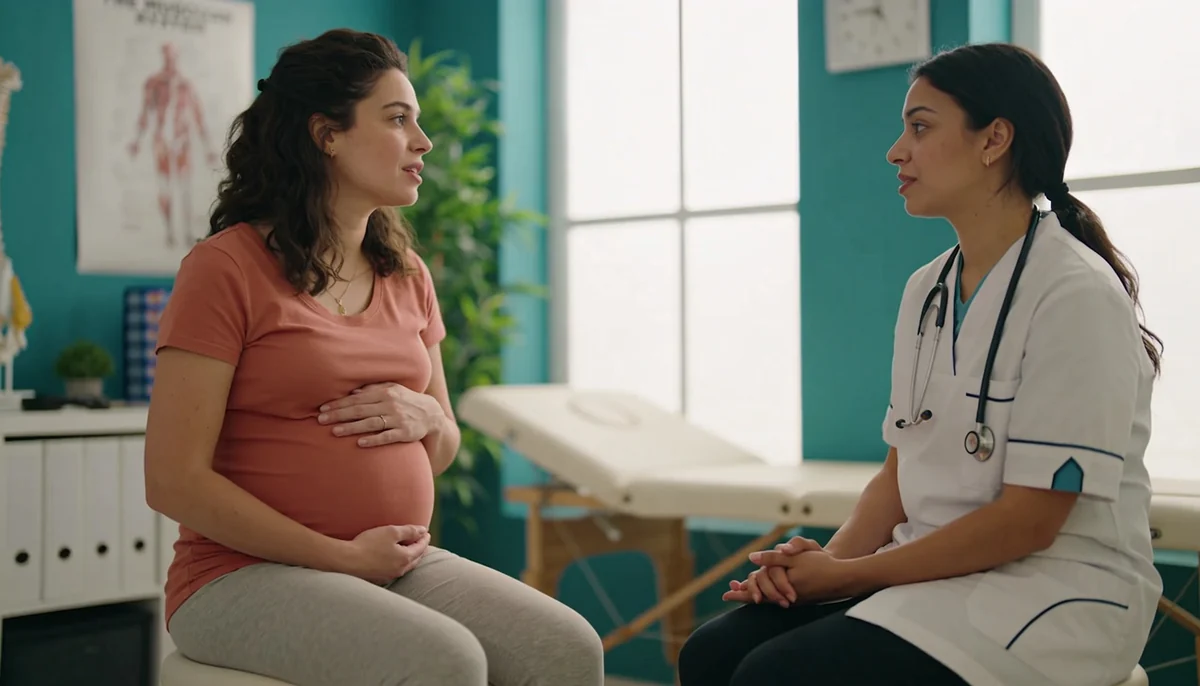
Book a visit if your leaks are not improving by your 6-week postpartum check, if they are getting worse, or if they are still around past 6 months. Also seek care sooner for any leaking of stool or gas, a heavy dragging feeling or bulge in the vagina (possible prolapse), or pain, burning, or blood in your urine (possible infection). None of these mean disaster — they mean you deserve a proper assessment rather than white-knuckling it.
Key Takeaways
- Postpartum leaks are very common in the first 6–8 weeks.
- Most women recover in 3–6 months, some up to a year, with pelvic floor work speeding it up.
- C-section lowers but doesn’t remove the risk — pregnancy itself strains the pelvic floor.
- Technique matters: correct Kegels and, ideally, a pelvic floor physical therapist.
- 10–20% still leak past a year — treatable, so get evaluated.
- See a doctor if no improvement by 6 weeks, a bulge, stool leakage, or pain/blood.
Frequently Asked Questions
How long do bladder leaks last after having a baby?
Leaking in the first 6–8 weeks is common. Most women regain control within 3 to 6 months, and some continue improving up to a year. Pelvic floor exercises speed recovery. See a doctor if it has not improved by 6 weeks or persists past 6 months.
Is it normal to leak urine weeks after giving birth?
Yes. Stress incontinence from a stretched, healing pelvic floor is very common in the early postpartum weeks and usually improves over the following months, especially with pelvic floor training.
Will postpartum incontinence go away on its own?
Often it improves on its own as you heal, but pelvic floor exercises make recovery faster and more complete. If it is still present past 6 months, don’t wait it out — it is treatable with proper care.
Can I still leak after a C-section?
Yes. Much of the strain on the pelvic floor comes from pregnancy itself, so leaks after a cesarean are normal too, just somewhat less likely than after a vaginal birth.
When can I start Kegels after birth?
After an uncomplicated vaginal birth you can usually begin gentle Kegels within days, but check with your provider first — especially after a C-section, tearing, or complications. Technique matters more than intensity.
Should I see a pelvic floor physical therapist?
It is very worthwhile, especially if leaks persist or you suspect abdominal separation. A therapist confirms you are using the right muscles and tailors a plan — standard postpartum care in many countries.
The Bottom Line
Postpartum bladder leaks are one of the most common — and least talked about — parts of recovery. For most women they fade within months, and gentle, correct pelvic floor work is what tips the timeline in your favor. Be patient with a body that just did something enormous, and see a professional if it lingers. That 3 a.m. fear almost never becomes the forever you imagine.
— Ellen Bennett
Last Reviewed: July 2026 by Ellen Bennett, Women’s Health Researcher. Sources: ACOG, NIDDK, NIH/PMC, Mayo Clinic, Urology Care Foundation.

Ellen compiles evidence from NIH, NIDDK, ACOG, Cochrane, and the Urology Care Foundation to help women make calm, informed bladder-health decisions. More about Ellen →